Where You Can Put a Tiny House: Legal Placement, Zoning Rules, and Real Lifestyle Costs
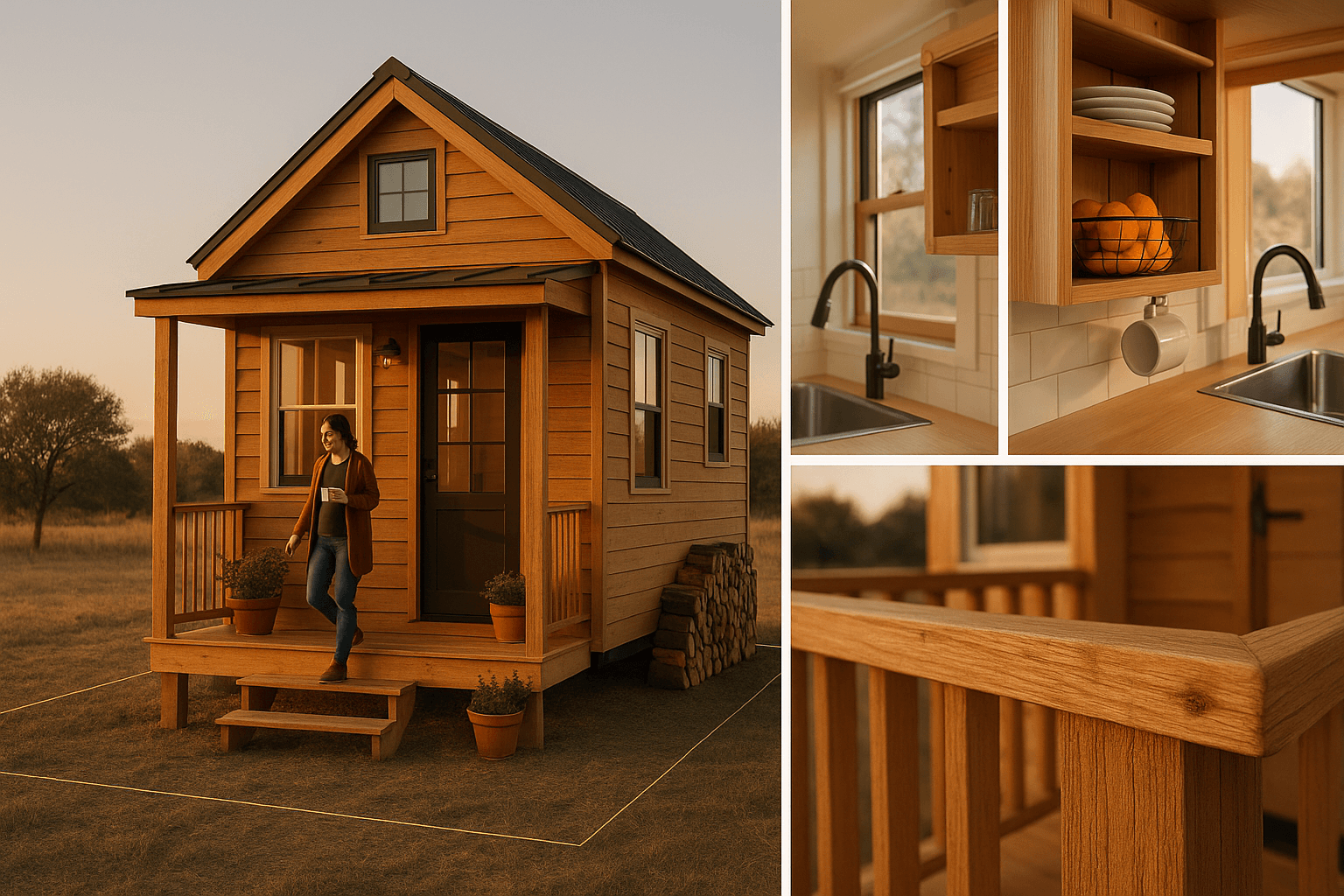
The smartest tiny house question isn't "What should I build?" It's "Where can I legally put it?" Because your placement choice—ADU, rural land, RV park, tiny home community—shapes everything: your commute, privacy, utility costs, and whether you can actually live there full-time.
At Tinyhouses.to, we see this pattern everywhere: people design their dream layout first… then discover it doesn't fit their only legal placement options. The better path? Choose your placement pathway first, then design for it.
Here's how zoning, utilities, and lifestyle tradeoffs actually work—plus a checklist you can use anywhere.
Three gates to "legal" tiny house living
Tiny house legality comes from three overlapping rule-sets. Think of them as gates you must pass:
Gate 1: Land use (what's allowed on this parcel)
Zoning tells you whether a parcel can host:
- A primary dwelling (single-family residential)
- An ADU (accessory dwelling unit / granny flat)
- An RV/caravan (temporary or seasonal)
- Agricultural use (sometimes allows caretaker dwellings)
- Special overlays (coastal, wildfire, heritage zones)
Gate 2: Building standards (what structures qualify as dwellings)
Building codes focus on "habitable dwelling" requirements:
- Minimum room sizes and ceiling heights
- Emergency egress and fire safety
- Insulation and ventilation standards
- Foundation requirements for permanent structures
- Wind/snow load ratings
Gate 3: Occupancy rules (what living is permitted)
This is where people get surprised:
- You may be allowed to park a tiny house on wheels…
- But not allowed to sleep in it full-time…
- And separately restricted from renting it out short-term
Key insight: Allowed to park ≠ allowed to occupy ≠ allowed to rent.
Enforcement reality: Most tiny house setups "work" until a neighbor complains or an inspector notices unpermitted hookups. Your best legal strategy holds up when someone asks questions.
Choose your category first (foundation vs. wheels changes everything)
Foundation tiny house = treated like a small dwelling
- Building permits, inspections, code compliance required
- More stable legality for full-time living
- Straightforward addressing and mail delivery
- Higher upfront costs (foundation, utility connections, approvals)
Best for: Settling in one place, "normal" address for banking/school/healthcare, fewer forced moves.
Tinyhouses.to connection: Use our AI designer to prioritize inspector-friendly features—proper egress, ventilation zones, compliant electrical layouts—then browse foundation-ready models.
Tiny house on wheels = often treated like an RV
- Easier to move, sometimes easier to park
- Harder to legalize as permanent residence
- Parks require certifications and enforce stay limits
- May avoid building permits but face occupancy restrictions
Best for: Mobility, seasonal living, testing regions before buying land, lower land commitment.
Tinyhouses.to connection: Design for road-legal dimensions, RV-style hookups, and lightweight materials. Browse THOW-specific models and rentals to test the lifestyle.
Five placement pathways (legal routes + lifestyle reality)
1) ADU/backyard placement
Legal pathway: Permitted accessory dwelling on existing residential lot.
Common blockers:
- Owner-occupancy requirements
- Setbacks, height limits, lot coverage caps
- Fire access requirements (driveway width)
- Utility connection rules
- Maximum ADU size limits
Lifestyle reality:
- Commute: Usually excellent (metro/suburban areas)
- Privacy: Moderate (close to neighbors and main house)
- Stability: High if properly permitted
- Utilities: Most reliable
Design for this: Height restrictions, sound-conscious layouts, privacy-aware windows.
2) Rural land (your own parcel)
Legal pathway: Permanent dwelling (foundation) or approved temporary dwelling during construction.
Surprise blockers:
- Septic approval (soil tests, setbacks, capacity requirements)
- Well permits and water rights
- Minimum dwelling size rules
- Fire access requirements (grade, width, turnarounds)
- "No full-time RV" ordinances (even on private land)
Lifestyle reality:
- Commute: Often longer (time becomes real cost)
- Privacy: Highest
- Nature access: Best-in-class
- Utilities: Most challenging and expensive
Design for this: Off-grid solar space, mechanical rooms, mudroom entries, gear storage.
3) RV parks/campgrounds
Legal pathway: THOW treated as recreational vehicle; rent pad with hookups.
Common blockers:
- Park policies excluding tiny houses
- Certification requirements (RV industry standards)
- Age/appearance restrictions
- Stay limits (30/90/180-day caps)
- Insurance requirements
Lifestyle reality:
- Commute: Varies (often on town edges)
- Privacy: Lower (neighbors close, shared facilities)
- Convenience: High (predictable hookups, services)
- Stability: Medium (policies can change)
Design for this: Shore power connections, tank access, sound-dampening for close neighbors.
4) Tiny home communities
Legal pathway: May be structured as RV parks, planned developments, or eco-villages.
Blockers:
- Waitlists and limited inventory
- Community rules (appearance, pets, noise)
- Monthly fees for amenities
- Unclear legal classification
Lifestyle reality:
- Community: Strongest option (shared gardens, workshops, safety)
- Privacy: Medium (private home, shared spaces)
- Stability: Higher than random parking
- Fees: Ongoing costs for amenities
5) Short-term stays (driveway parking, land-share, farms)
Legal pathway: Often falls under camping rules or temporary occupancy.
Blockers:
- Duration limits on camping/overnight stays
- Short-term rental regulations
- Graywater disposal restrictions
- Complaint-driven enforcement risk
Lifestyle reality:
- Flexibility: Highest
- Stability: Lowest
- Practical friction: Mail delivery, school enrollment, healthcare continuity
Design for this: Self-containment (water storage, battery systems, waste tanks).
Utilities: where legal placement often fails
Many tiny house plans fail not because the house is illegal—but because water/waste/power can't be approved.
Water options
- Municipal connection (simplest if available)
- Well (permits + drilling costs + ongoing testing)
- Water hauling (practical but may not qualify for "permanent dwelling")
Waste (the #1 dealbreaker)
- Septic systems require soil tests, setbacks, minimum capacities
- Composting toilets may be allowed, restricted, or require additional graywater plans
- Graywater rules vary dramatically by region
Design insight: When using Tinyhouses.to AI, decide early: full septic hookup, black tank + pump-out, or composting + approved graywater system.
Power and addressing
- Grid connection may require electrical permits and inspections
- Off-grid solar usually allowed but may not satisfy "habitable dwelling" codes
- Legal address affects insurance, banking, school enrollment, healthcare, deliveries
Local research checklist (works anywhere)
Use this before buying land, signing leases, or committing to builds:
Land use/zoning:
- What is the parcel's zoning designation?
- Are dwellings allowed? Secondary units/ADUs?
- Are RVs/THOWs allowed to park? For how long?
- Any overlay restrictions (coastal, floodplain, wildfire)?
Building rules:
- Minimum dwelling size requirements
- Setbacks (front/side/rear distances)
- Height and lot coverage limits
- Fire access requirements
Occupancy permissions:
- Full-time occupancy allowed?
- Temporary/seasonal occupancy permitted?
- THOW overnight rules and time limits
Utilities/health:
- Water: municipal hookup or well permitted?
- Waste: septic allowed? Composting toilet acceptance?
- Graywater disposal rules
- Electrical permit requirements
Who to ask:
- Local planning/zoning office (land use)
- Building department (structure requirements)
- Environmental health (septic, wells)
- Utility providers (connection policies)
Tinyhouses.to workflow: Once you know your pathway (ADU, rural, RV park, community), design around those constraints first—then shop marketplace models that match.
Placement reality matrix
Use this quick comparison before committing:
| Placement | Best for | Commute | Privacy | Hookups | Legal stability | Main friction |
|---|---|---|---|---|---|---|
| ADU/backyard | Metro access, stable address | Low | Medium | High | High (if permitted) | Setbacks + neighbor relations |
| Rural land | Nature + autonomy | High | High | Medium | High (if utilities work) | Septic/well + access costs |
| RV park | THOW convenience | Medium | Low | High | Medium | Park policies + stay limits |
| Tiny community | Community living | Medium | Medium | High | Medium/High | Fees + waitlists |
| Short-term hosting | Flexibility, travel | Varies | Varies | Low/Medium | Low | Address + enforcement |
This matrix shows why "design for placement" matters. A park-focused THOW and an ADU cottage may look similar—but they live completely differently.
Design smart: match your tiny house to your placement
For ADU/foundation placement:
- Code-friendly egress windows and loft access
- Mechanical ventilation strategy
- Utility room planning (water heater, electrical panel)
- Privacy-conscious window placement
For RV park/THOW placement:
- Road-legal dimensions (where required)
- Simple hookup access (shore power, water, sewer)
- Tank sizing and freeze protection
- Storage for outdoor gear (small interior, big outdoor life)
For rural/off-grid placement:
- Climate-appropriate insulation packages
- Solar + battery space with proper ventilation
- Water storage and pump systems
- Mudroom entry and durable finishes
Tinyhouses.to advantage: Our AI designer generates layouts based on your actual constraints—then you can browse global models that match your placement reality instead of shopping blind.
Common placement questions answered
Can I live full-time in a tiny house on wheels?
Sometimes. Many places treat THOWs like RVs—easier to park than occupy full-time. Check local RV occupancy limits and campground licensing rules.
Is backyard placement legal?
Often possible via ADU rules, but depends on setbacks, height limits, utilities, and dwelling classification. Your planning office has the fastest answers.
Do I need building permits?
Foundation tiny houses: usually yes. THOWs: may avoid building permits but still face occupancy, hookup, and parking rules.
What's the difference between parking and occupying?
- Parking: storing the unit on land
- Occupying: sleeping/living in it
Many jurisdictions allow one but restrict the other.
What blocks placement most often?
Globally: septic approvals, setback/fire access requirements, minimum dwelling size rules, "no full-time RV" ordinances, and park policies.
Are composting toilets legal?
Varies. Some jurisdictions allow them with conditions; others require septic/sewer for full-time dwellings. Graywater rules are often the bigger challenge.
How do I get mail and a legal address?
Addressing typically requires permitted dwellings and approved access. RV/THOW living may need alternative mail solutions—which can complicate banking, insurance, and healthcare.
Design for where you'll actually live
The smartest tiny house decision is placement-first thinking. Know your legal pathway, understand the lifestyle tradeoffs, then design a home that thrives in that reality.
Ready to design smart? Tinyhouses.to's AI generator helps you create layouts based on your actual placement constraints—ADU setbacks, RV park dimensions, or off-grid utility needs. Explore your first design free at Tinyhouses.to.