Viral Tiny House Trends of 2026: 5 That Age Well—and 5 You'll Regret by Winter
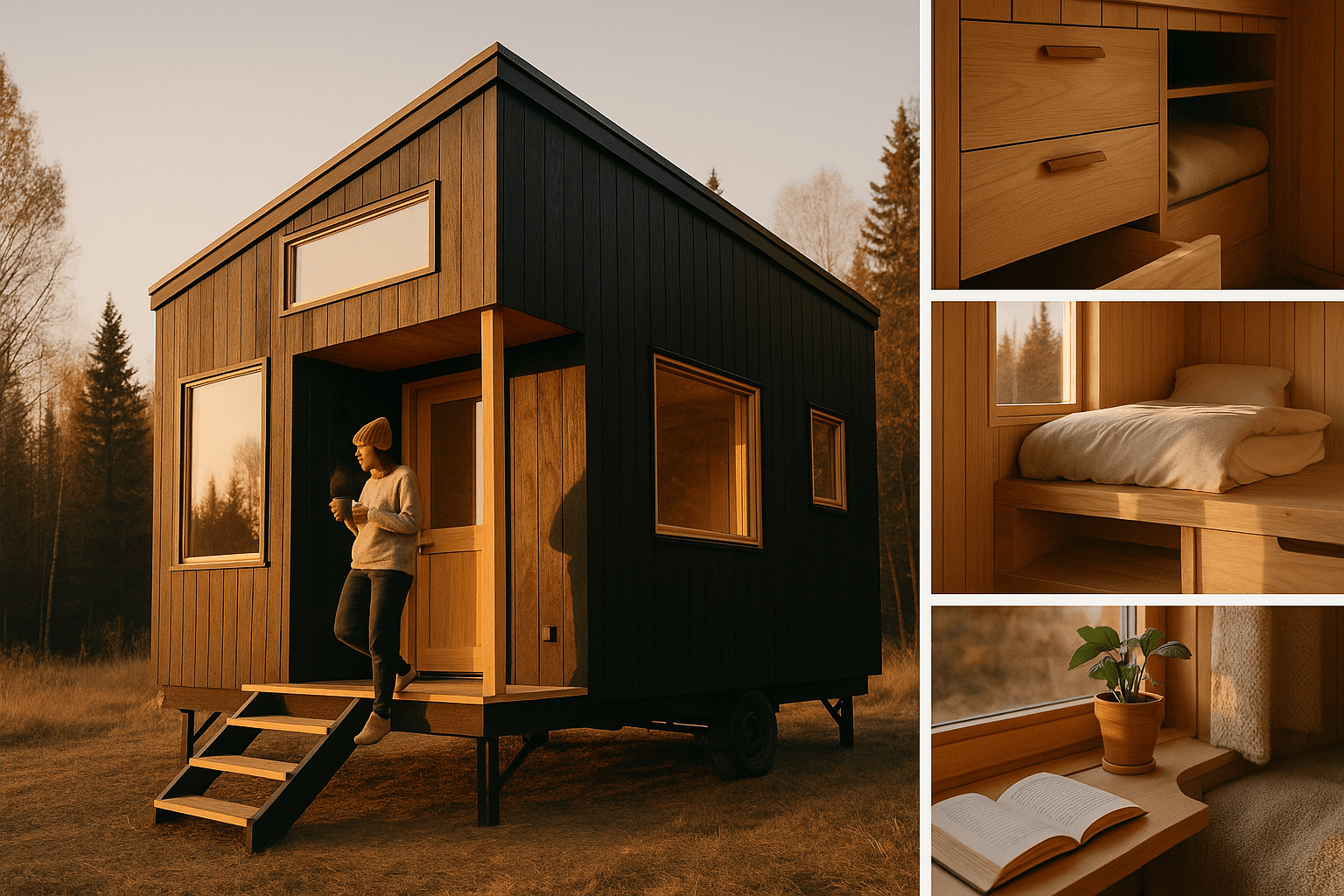
Most 2026 tiny house trends are buildable—but many aren't buildable where you live, and even fewer are comfortable when you run them through real life: winter moisture, guests, laundry humidity, sick days, and work calls. Smart builders keep the vibe but stress-test every "viral" feature for code, comfort physics, and maintenance before committing—using AI-assisted design to iterate in minutes, not months.
The 2-minute "buildable + comfortable" filter
A trend isn't "good" or "bad." It either survives three constraints—or it's social bait.
1) Buildable (can you permit/insure/inspect it?)
Buildable means it fits your legal category and life-safety basics—not just that a creator built it.
- Which rulebook are you actually under?
- IRC Appendix Q (only if adopted locally)
- ADU rules (often foundation-based, tied to a primary residence)
- RV / Park Model standards (common for THOW sold as RV-like units)
- Engineered custom (possible, but costs more and needs the right pro)
- Egress + emergency access are non-negotiable
- Loft windows, clear openings, safe stairs/guards, and headroom are where viral designs fail fastest
- Serviceability
- Shutoffs, P-traps, junction boxes, mini-split lines, filters, and roof penetrations need access without demolition
2) Comfortable (does it stay dry, quiet, and stable?)
Tiny houses amplify physics:
- Condensation + mold risk happens when humid air meets cold surfaces
- Winter comfort targets: ~30–50% indoor RH (varies by climate and house tightness)
- The fix is rarely "a nicer material." It's ventilation + air sealing + fewer thermal bridges
- ERV/HRV + continuous exhaust is how small spaces stay fresh without dumping all your heat
- Overheating is year-round
- Small air volume + big glass = fast temperature spikes
- South/west glazing, skylights, and glass doors look stunning—but can turn a tiny home into a greenhouse
- Noise + privacy are comfort, not luxury
- Barn doors, open lofts, and hard finishes are beautiful and loud
- Soft finishes, door seals, and simple zoning are what make "tiny" feel calm
3) Maintainable (can you clean it fast and fix it cheaply?)
Viral finishes often hide future labor.
- Cleaning effort scales with seams, grooves, micro-textures (fluting, slats, open shelves, pebble floors)
- Moisture-prone details (untreated wood in wet zones, unsealed microcement) can look premium and age poorly
Truth filter: If you can't describe how it's vented, shaded, and serviced, it's probably bait.
5 viral 2026 tiny house trends that age well
Each of these trends works because it improves daily living—not just the reveal shot.
1) Zoned micro-rooms (instead of "everything open concept")
What it is: Pocket doors, curtains, partial-height partitions, or "micro-rooms" that let different activities coexist.
Why it's trending: People want calm, not constant togetherness—especially WFH.
Why it works long-term:
- Reduces noise bleed and visual clutter
- Creates privacy without adding square footage
- Improves sleep quality when someone else is up late
Make-it-buildable details:
- Favor pocket doors or sliding panels with good tracks + seals (barn doors are often noisy and leaky)
- Use "soft zoning" (curtains, acoustic panels) where hard walls would break light
2) A real mudroom moment (even in 180–300 sq ft)
What it is: A bench, hooks, boot tray, and a wet-control strategy near the entry.
Why it's trending: More nature living means more weather, gear, and mess.
Why it works long-term:
- Prevents winter chaos: wet boots + coats + snow melt + condensation
- Protects your main space from grit and moisture
Make-it-buildable details:
- Include a boot tray/drain pan, not just a cute rug
- Plan a coat-drying strategy (air movement matters as much as storage)
- Add a place for a broom/vacuum ("one-broom rule": if it doesn't have a home, it becomes clutter)
3) Right-sized glazing + exterior shading (fewer windows, better windows)
What it is: Thoughtful window placement, not maximum glass.
Why it's trending: The aesthetic is still bright and modern—but more grown-up.
Why it works long-term:
- Less overheating and less heat loss
- Better privacy and better furniture placement
Make-it-buildable details:
- Prioritize cross-ventilation over "one huge hero opening"
- Add exterior shading (awnings, screens, overhangs) especially on south/west exposures
- Think "view windows" + "light windows," not "glass wall everywhere"
4) Modular storage walls (closed storage as calm luxury)
What it is: A single "storage spine" with adjustable shelves, drawers, and a few curated open bays.
Why it's trending: Minimalist families are tired of visual clutter masquerading as design.
Why it works long-term:
- Closed storage hides reality (laundry, pantry overflow, kid stuff)
- Adjustable modules adapt as seasons and hobbies change
Make-it-buildable details:
- Mix 80–90% closed + 10–20% open (display only)
- Keep heavy storage low (especially for THOW weight balance)
5) Wet-room bathrooms with robust ventilation (done like a system)
What it is: A fully waterproof bathroom where showering doesn't soak your life—because it's engineered, not improvised.
Why it's trending: Sleek, modern, space-efficient bathrooms are a signature "2026 tiny luxury" look.
Why it works long-term:
- Fewer failure points when properly waterproofed
- Easier cleaning if surfaces are simple and slopes are correct
Make-it-buildable details:
- Proper slope to drain, continuous waterproofing, and sane penetrations
- Ventilation sized for reality: shower steam in a tiny volume is intense
- Consider ERV/HRV integration or at least continuous exhaust planning
5 viral 2026 trends you'll regret by winter
Each "regret trend" is paired with the long-term consequence creators don't show.
1) All-glass façade / garage-door glass wall
The trend: A dramatic, full-front opening for indoor-outdoor living.
What creators don't show:
- Overheating in sun + shoulder seasons
- Heat loss and cold radiant discomfort in winter
- Condensation on big cold surfaces
- Privacy and security compromises
Do this instead (keep the vibe):
- Use a smaller "hero window" + operable side windows for cross-ventilation
- Add exterior shading and insect screening
- If you insist on big glass, spec it intentionally (glazing performance + shading plan) and treat it like a system
2) Skylight-heavy roofs
The trend: Multiple skylights for a bright, Scandinavian feel.
What creators don't show:
- Summer heat spikes and glare
- Winter condensation and drip risk
- More roof penetrations = more leak/maintenance exposure over time
Do this instead:
- One well-placed skylight with a shade (or skip it and upgrade wall windows)
- Prioritize a simpler roofline—especially for harsh weather
3) Open shelving everywhere
The trend: Airy kitchens and living areas with no upper cabinets.
What creators don't show:
- Cleaning effort (dust + grease film) becomes constant
- Visual clutter makes 200 sq ft feel chaotic
- Breakables + pets/kids is a daily stressor
Do this instead:
- Keep a few open "display bays" but make most storage closed
- Add one tall pantry cabinet—it's the tiny-house peacekeeper
4) Ultra-textured finishes in high-use zones
The trend: Fluted panels, slat walls, pebble shower floors—texture reads as "premium" on camera.
What creators don't show:
- Micro-grooves trap grease, dust, hair, and moisture
- Pebble floors hold soap scum; fluting holds cooking film
- Mold loves texture in wet zones
Do this instead:
- Use texture as an accent away from cooking steam and shower splash
- Keep wet and cooking zones smooth + wipeable
5) Hidden mechanicals inside built-ins
The trend: Seamless cabinetry with everything concealed.
What creators don't show:
- Repairs can require demolition to reach a shutoff, P-trap, or junction box
- Filters get ignored if access is annoying
- Mini-split lines and roof penetrations still need service clearance
Do this instead:
- Design a service spine (one accessible wall/bench) for plumbing/electrical/HVAC
- Add clean access panels in logical places
The Regret Test (copy/paste checklist)
Use this to evaluate any 2026 trend before you fall in love.
How to use it: If you can't answer these with a clear, physical location in your plan, the trend isn't ready.
1) Winter week
- Where do wet boots and coats go to dry (not just to hang)?
- Can you enter without tracking snow/water through the whole house?
- Do windows show likely condensation points (big glass, cold corners)?
- Is heat delivery even (loft vs main floor; bathroom comfort)?
2) Guest night
- Where does guest luggage live without blocking walkways?
- Can a guest reach the bathroom at night without climbing over someone?
- Is there any real privacy (sound + sight), even temporarily?
3) Laundry day
- Where is the hamper when it's full?
- Where does laundry dry (clearance + airflow), and what does that do to humidity?
- Where do detergent, lint tools, and cleaning supplies live?
4) Sick day
- Can someone rest while someone else cooks or takes a call?
- Is the bathroom close and comfortable (warmth, ventilation, smells contained)?
- Can you darken and quiet a sleep zone during the day?
5) Work day
- Where is the desk, and how do you control glare?
- Do you have acoustic separation for calls?
- Where do cables, printer gear, bags, and chargers live?
How AI-assisted design stress-tests viral trends
This is the "trend-to-reality converter" approach—so you copy the outcome (calm, modern, nature-connected), not the fragile detail.
Step 1: Start with the trend you love
Bring a reference (a link, screenshot, or just a description like "Japandi, warm oak, big view window").
Step 2: Enter your real constraints
The design changes dramatically based on:
- Climate (cold winter vs humid coastal vs hot inland)
- Occupants (solo, couple, family)
- Habits (big cooking, long showers, WFH, pets)
- Category (ADU vs THOW vs cabin foundation)
Step 3: Generate 2–3 variants on purpose
- Variant A: trend-forward (more glass, more openness)
- Variant B: life-forward (more storage, more shading, more zoning)
- Variant C: resale-forward (timeless layout, simple roof, service access)
Step 4: Run the Regret Test and iterate
Ask the AI:
- "Run Winter Week. Where do wet items go? Where will condensation form?"
- "Run Work Day. Where is glare worst? Where are calls quiet?"
- "Show service access: shutoffs, traps, junctions, filters."
Step 5: Turn it into a builder-ready brief
Once you have a life-ready design:
- Export a clear summary of decisions (ventilation intent, shading intent, storage targets)
- Browse real-world options to rent similar homes (try the lifestyle) or buy from the marketplace (when you're ready)
Keep the vibe. Ditch the bait.
Copy these outcomes from 2026 trends:
- Calm light (without overheating)
- Minimal surfaces (without cleaning punishment)
- Indoor-outdoor living (without glass-wall regret)
- Seamless design (without service nightmares)
And when in doubt: if it doesn't survive winter + guests + laundry + sick day + work day, it's not a home yet—it's content.