Viral Tiny Homes Are Lying to You: The 9-Point Reality Check
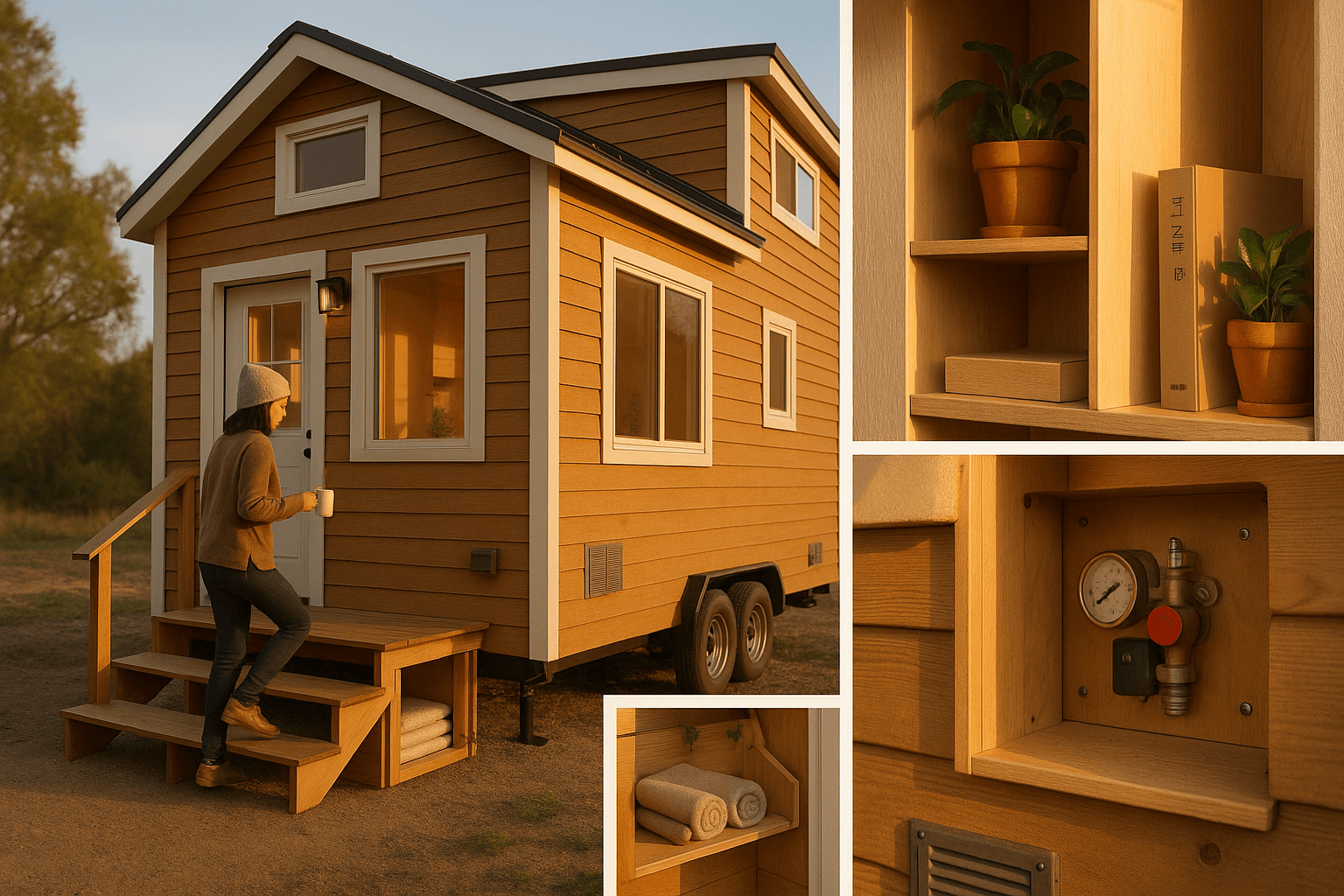
That "innovative" tiny home trending on TikTok? It's probably just a pretty render that can't actually be built, towed, or lived in comfortably.
Viral tiny homes are optimized for scrolls—not for real life. They hide width limits, skip safety features, ignore mechanical systems, and pretend condensation doesn't exist. The result? Designs that look spacious on screen but would be illegal to tow and miserable to inhabit.
Here's how to tell what's actually buildable from what's just content bait—plus how TinyHouses AI turns any viral concept into a spec that actually works.
The viral design trick (what you're really seeing)
Viral tiny homes feel "spacious" because they're shot for engagement, not engineering.
Common red flags we see repeatedly:
- No mechanicals visible: No water heater, electrical panel, or HVAC—because they "ruin the aesthetic"
- Cheated camera angles: Wide lenses make 24 inches look like 42 inches
- Magical loft physics: Tall headroom + thick insulation + trailer height somehow equals "towable"
- Spa bathrooms: That ignore door swings, knee space, and where moisture actually goes
- Glass box fantasies: Massive windows with no structure story or condensation plan
If a design doesn't show stairs, egress, mechanical zones, and real clearances, it's not a plan—it's a thumbnail.
The 9-point "buildable or bait" audit
1. Width reality: The 8'6" law
The problem: Most towable tiny homes max out at 8'6" wide without oversize permits. Viral designs quietly assume 9-10 feet because it photographs better.
Quick check: Does the interior show a full island + walk-around space + opposite storage? That's probably too wide for legal towing.
TinyHouses fix: Our AI converts layouts into actual width assumptions and flags "oversize likely" before you fall in love.
2. Height trap: The 13'6" bridge math
The problem: Trailer + structure + loft + roof usually needs to stay under 13'6" for normal roads. Viral designs stack tall roofs + comfortable lofts + thick floors and claim "towable."
Quick check: See a dramatic shed roof + a loft you can stand in + stacked windows? The math probably doesn't work.
TinyHouses fix: Set your max travel height and we'll redesign the roof pitch, loft thickness, and window placement to actually fit.
3. Stair safety: The invisible handrail problem
The problem: Viral posts love steep ladders and alternating treads—but skip handrails, landings, and door conflicts.
Quick check: Can you see where your hand goes? Is there space to stand before entering the loft? If not, it's a daily accident waiting to happen.
TinyHouses fix: We recommend stair types based on who's living there and flag collision points.
4. Loft egress: Skylights aren't escape routes
The problem: Sleeping lofts need emergency exits. Decorative windows and fixed skylights don't count.
Quick check: Is there an openable window you can actually reach from the loft? If the only "exit" is decorative, it fails basic safety.
TinyHouses fix: Our AI generates a window schedule showing what's openable and where egress actually works.
5. Bathroom reality: The wet room detector
The problem: Pocket doors and wet rooms look sleek but often ignore toilet clearances, door swings, and where towels dry.
Quick check: Would your knees hit a wall when using the toilet? Can you actually open the shower door? Where do wet towels go?
TinyHouses fix: We redraw bathrooms as dimensioned plans and flag "looks good, doesn't work" layouts.
6. Kitchen flow: The shoulder-check test
The problem: Islands look great until you add open drawers, fridge doors, and humans trying to pass.
Quick check: Picture unloading groceries while someone cooks. Can two people move without collision? Can appliance doors actually open?
TinyHouses fix: Our AI stress-tests plans for real-life moments—cooking, cleaning, and circulation.
7. Mechanical zones: The unsexy necessities
The problem: Every home needs space for water heaters, electrical panels, HVAC units, and service access. Viral designs pretend these don't exist.
Quick check: Is it "all cabinets and windows" with no utility space? Where would the electrical panel go? How do you service anything?
TinyHouses fix: We allocate mechanical zones and show you where equipment actually fits with proper access.
8. Condensation control: The mold risk calculator
The problem: Huge glass + minimal insulation + poor ventilation = wet walls and mold growth.
Quick check: All-glass facade + no visible ventilation strategy + unvented bathroom? That's a humidity disaster waiting to happen.
TinyHouses fix: We flag high condensation risk and suggest safer glazing, ventilation, and assembly strategies.
9. Storage math: The minimalist illusion
The problem: Viral layouts show calm, empty spaces but ignore where your actual stuff goes.
Quick check: Can you point to where clothes, groceries, cleaning supplies, and seasonal items live? If not, you'll be "living out of bins."
TinyHouses fix: We turn your inventory into storage requirements and build them into the plan without destroying the aesthetic.
The TinyHouses reality check workflow
Paste any viral link or upload screenshots to TinyHouses AI. In minutes, you'll get either:
- A buildable spec sheet with real dimensions, mechanical zones, and safety features
- A red-flag report explaining exactly what breaks and why
No more falling in love with impossible designs.
When viral meets reality
Some concepts can be saved. Others should be skipped entirely.
Salvageable issues:
- Stair conflicts → Re-route or change stair type
- Tight bathrooms → Re-layout fixtures
- Missing mechanicals → Add utility closets
- Condensation risk → Reduce glazing, improve ventilation
Skip entirely:
- Requires illegal width/height but claims "towable"
- Loft with no possible egress route
- Structural fantasies that ignore physics
Keep the vibe. Fix the physics. That's what TinyHouses AI does best.
Start with reality, not fantasy
Use viral content for inspiration—but demand proof. If it can't show you the stairs, egress, mechanicals, and clearances, it's not innovative design. It's just optimized content.
TinyHouses turns any viral concept into a buildable brief. Then helps you find builders, rentals, or existing models that match your actual needs—not just your Instagram feed.