Viral Tiny Homes Are Lying to You: The 12-Point 'Buildable & Livable' Checklist
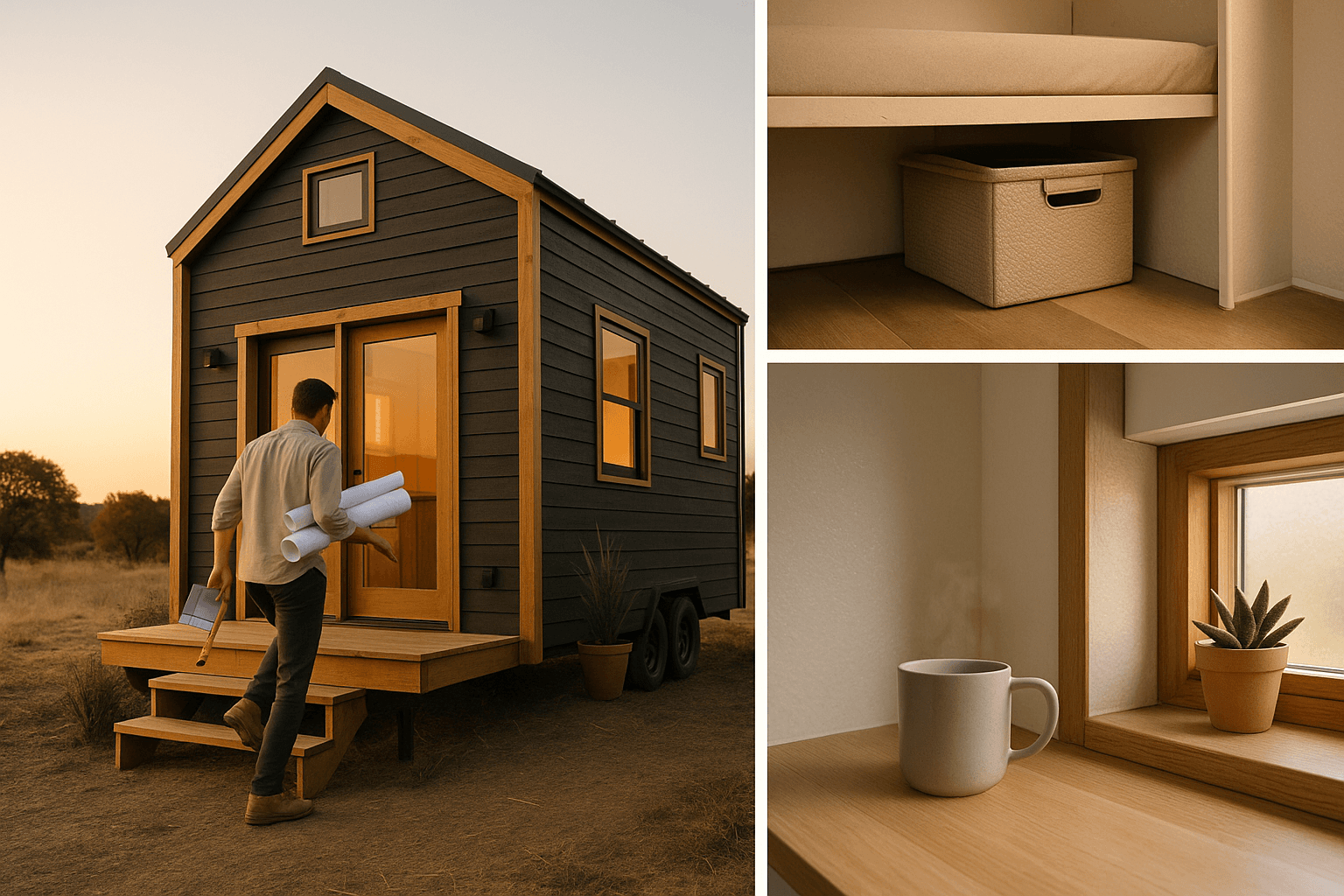
That glass cube tiny home has 2.3 million views. The floating loft design made you screenshot and save. The minimalist kitchen looks like a magazine spread.
But here's what viral tiny homes don't show: where the water heater goes, how you escape a loft fire, or why you'll hate that alternating-tread stair at 2 AM.
Most viral designs are optimized for camera frames—not gravity, moisture, towing limits, or daily routines. Use this 12-point checklist to score any render as Pass / Caution / Fail. Then turn the same concept into something you can actually build, price, and live in.
The 12-Point "Buildable & Livable" Checklist
If you hit 3+ Fails, it's probably content bait until proven otherwise.
1) Road Reality (Especially on Wheels)
Reality check: Most regions cap towable width around 8'6" (2.59 m) and practical tow height at 13'6" (4.11 m). Viral renders rarely include trailer deck height, floor buildup, roof thickness, vents, or AC units.
- Pass: Dimensions stated and include trailer + roof equipment; entry steps can travel
- Caution: Dimensions vague ("~tiny"), roof gear not shown
- Fail: Wide "modern cabin" proportions, oversized eaves, tall glass walls—no permit discussion
Quick fix: Design the exterior as a shipping envelope first, then create beauty inside those bounds.
How TinyHouses helps: Set max width/height constraints in our AI designer, then generate layouts that stay inside those bounds.
2) Weight + Heavy-Item Placement
Reality check: A small home easily hits 10,000–16,000+ lb depending on materials. Viral "glass box" or "concrete everywhere" concepts ignore axle ratings and weight distribution.
- Pass: Heavy items (tanks, batteries, appliances) balanced over axles
- Caution: Heavy finishes specified but tank/battery location unclear
- Fail: "All-stone bathroom," massive glazing, rooftop decks—no structural discussion
Quick fix: Put heavy components low and near axles; avoid high-mounted water storage.
How TinyHouses helps: Add constraints like "lightweight materials" or "off-grid setup," and our AI reorganizes around realistic heavy zones.
3) Egress You Can Actually Use
Reality check: A sleeping loft needs a real emergency exit—a window you can reach quickly, not decorative glass behind a bed.
- Pass: Loft has egress window and clear path to it; downstairs sleeping has two ways out
- Caution: Egress window blocked by furniture or too high to access
- Fail: Loft is sealed crawlspace; only escape is past steep stair/ladder
Quick fix: Place egress first, then design the loft around it.
How TinyHouses helps: Generate corrected loft designs with proper egress paths (plus alternate "main-floor bed" versions).
4) Loft Headroom + "Sit-Up" Comfort
Reality check: Viral lofts look roomy because of wide-angle cameras. Count roof thickness and insulation—many become knees-and-neck spaces.
- Pass: You can sit up comfortably in bed; clearance shown
- Caution: Loft works for sleeping only; changing clothes awkward
- Fail: Loft is basically a shelf—mattress nearly touches ceiling
Quick fix: Lower the loft, add a dormer, or switch to main-floor Murphy bed.
How TinyHouses helps: Our AI proposes variants (high loft vs dormer vs main-floor sleep) while keeping the exterior vibe.
5) Stairs/Ladder Safety
Reality check: Alternating-tread stairs look sculptural—and brutal at 2 AM. Ladders work for occasional access, not daily family life.
- Pass: Consistent risers, handrail(s), good lighting, landing strategy
- Caution: Steep stairs with one handrail; alternating treads
- Fail: Ladder-only access for primary sleeping; no handholds
Quick fix: Convert "stair art" into safer stairs with integrated storage and real handrails.
How TinyHouses helps: Choose "kid-friendly" or "aging-in-place," and our AI adjusts stair geometry accordingly.
6) Bathroom Usability
Reality check: Bathrooms fail two ways: you can't move in them, and they never dry. Wet baths look sleek but many people hate them daily.
- Pass: Door clears fixtures; shower has elbow room; dedicated ventilation
- Caution: Wet bath with limited drying/storage
- Fail: Shower is photo corner; no ventilation; door hits fixtures
Quick fix: Re-orient door swing, add vent path, reserve towel/linen zone.
How TinyHouses helps: Generate bathroom variants (wet vs dry) and show impact on the rest of the layout.
7) Kitchen Workflow
Reality check: Viral kitchens look like set pieces—beautiful fronts, nowhere to prep, appliances that block aisles when opened.
- Pass: Real prep zone; appliance doors open without trapping you
- Caution: Minimal counter but workable with drop-leaf
- Fail: Sink + cooktop jammed together; dishwasher opens into only walkway
Quick fix: Prioritize one continuous prep run, add "expansion" surfaces (fold-down, slide-out).
How TinyHouses helps: Tell our AI your cooking style ("daily cooking" vs "coffee + simple meals") and it right-sizes the kitchen for livability.
8) Furniture Clearances
Reality check: Content bait hides collision points—you can't pass when the bed's out, drawers don't open, bathroom door hits your knees.
Check these three collisions immediately:
Pull-out couch/bed + walkway past it
Bathroom door swing vs vanity/toilet
Kitchen aisle + open oven/dishwasher
Pass: Day mode and night mode both work without gymnastics
Caution: One tight pinch point
Fail: Layout only works in "photo mode" (everything closed, nobody moving)
Quick fix: Shrink/rotate furniture, switch door swings, create one clear "spine" path.
How TinyHouses helps: Our AI designs around actual furniture footprints and clearances—so the plan works when everything's in use.
9) Storage Math
Reality check: Viral homes show empty shelves and cute baskets. Real life needs:
Daily-access: shoes, coats, backpacks, pantry
Weekly: linens, toilet paper, cleaning supplies
Seasonal/bulk: bins, outdoor gear
Utility: vacuum, tools, spare filters
Pass: Storage distributed where you use it; utility zone exists
Caution: Storage exists but all overhead or under-bed
Fail: No place for coats, pantry, or cleaning tools
Quick fix: Design storage as system: entry drop zone, kitchen pantry, bath linen niche, one "ugly closet."
How TinyHouses helps: Input household size and lifestyle, and our AI sets storage targets—not just pretty shelving.
10) Moisture Management
Reality check: In tiny homes, humidity ruins comfort faster than almost anything—especially around trailer thermal bridges and big glass.
- Pass: Clear bath + kitchen ventilation; drying space for coats/shoes; materials consider condensation
- Caution: Vent fans exist but no drying zone
- Fail: Big glazing + no ventilation; "spa bathroom" with nowhere for moisture to go
Quick fix: Add continuous ventilation thinking, dedicated wet/dry drop zone, avoid condensation traps.
How TinyHouses helps: Input your climate + glazing preference, get buildable envelope/ventilation layout instead of moisture-prone glass concept.
11) Mechanical Access
Reality check: Instagram never shows the access panel you need when a pump fails. You need workable access to:
Plumbing traps, shutoffs, pumps/water heater
Electrical panel clearances
HVAC filter access + condensate routing
Pass: Mechanical core has access panels; nothing critical buried
Caution: Access exists but requires moving furniture
Fail: Systems "in the walls" with no service path
Quick fix: Create compact mechanical closet/bench with removable panels.
How TinyHouses helps: Our AI groups mechanical zones logically so innovation doesn't become expensive tear-out later.
12) Light, Privacy, Acoustics
Reality check: Open plans look calm but live loud. Tiny homes amplify pump cycling, mini-split noise, fridge hum, rain on metal roofs. Zero sound separation when someone's sleeping.
Floor-to-ceiling glass adds heat gain/loss, glare, privacy issues, condensation, and cost.
- Pass: Thoughtful glazing, shades/privacy plan, at least one quiet zone
- Caution: Big glass with some shading, minimal separation
- Fail: "All glass" with no privacy strategy, nowhere to escape noise
Quick fix: Strategic smaller windows, acoustic soft materials, pocket-door separation option.
How TinyHouses helps: Generate multiple window/privacy variants while keeping the exterior style modern but livable.
Fast Visual Tells of Content Bait
The infinite glass cube: Gorgeous, often impossible to heat/cool comfortably without big budget (and condensation risk)
The floating loft: No visible egress window, no headroom, ladder-only access
The stair sculpture: Alternating treads, no handrail, no landing—fine for shoots, risky at night
The "kitchen wall": Sink + cooktop + tiny counter; no pantry; appliances block only aisle
The bathroom photo corner: Wet bath with no drying/vent plan; door hits fixtures
The teleporting storage: Minimal cabinets, no utility closet, nowhere for coats/tools/linens
From Cool Concept to Buildable Reality
The fastest path from "saved reel" to "real plan":
- Lock constraints first: On wheels or foundation? Target dimensions? Sleeping count?
- Place wet room + mechanical core: Bathroom, kitchen plumbing wall, water heater, electrical panel access
- Prove egress: Especially lofts—window + reachable route
- Choose vertical circulation: Ladder vs stairs vs storage-stairs
- Run collision checks: Bed mode vs walkway, appliance doors, bathroom door swing
- Do storage math: Daily/weekly/seasonal + utility closet
- Only then go aesthetic: Glass, cladding, built-ins that don't break physics
This is exactly why TinyHouses exists: bridging inspiration to plans you can actually build, rent, or buy.
Turn Viral Concepts into Reality with TinyHouses AI
Got a screenshot or render of your dream tiny home? Here's how to make it buildable:
Step 1: Upload your concept into TinyHouses AI Step 2: Add constraints (on-wheels vs foundation, size limits, sleepers, climate, off-grid needs) Step 3: Generate corrected versions with proper egress, safe stairs, mechanical zones, storage targets Step 4: Use the specs to get quotes, find builders, eventually list on our marketplace
Try this: Score your favorite viral design with the checklist above—then run it through TinyHouses AI and see what changes. That gap is the difference between "content" and "comfort."
Design smarter. Build reality. Live anywhere.