That Viral Tiny Home Won't Actually Work—Here's How to Tell
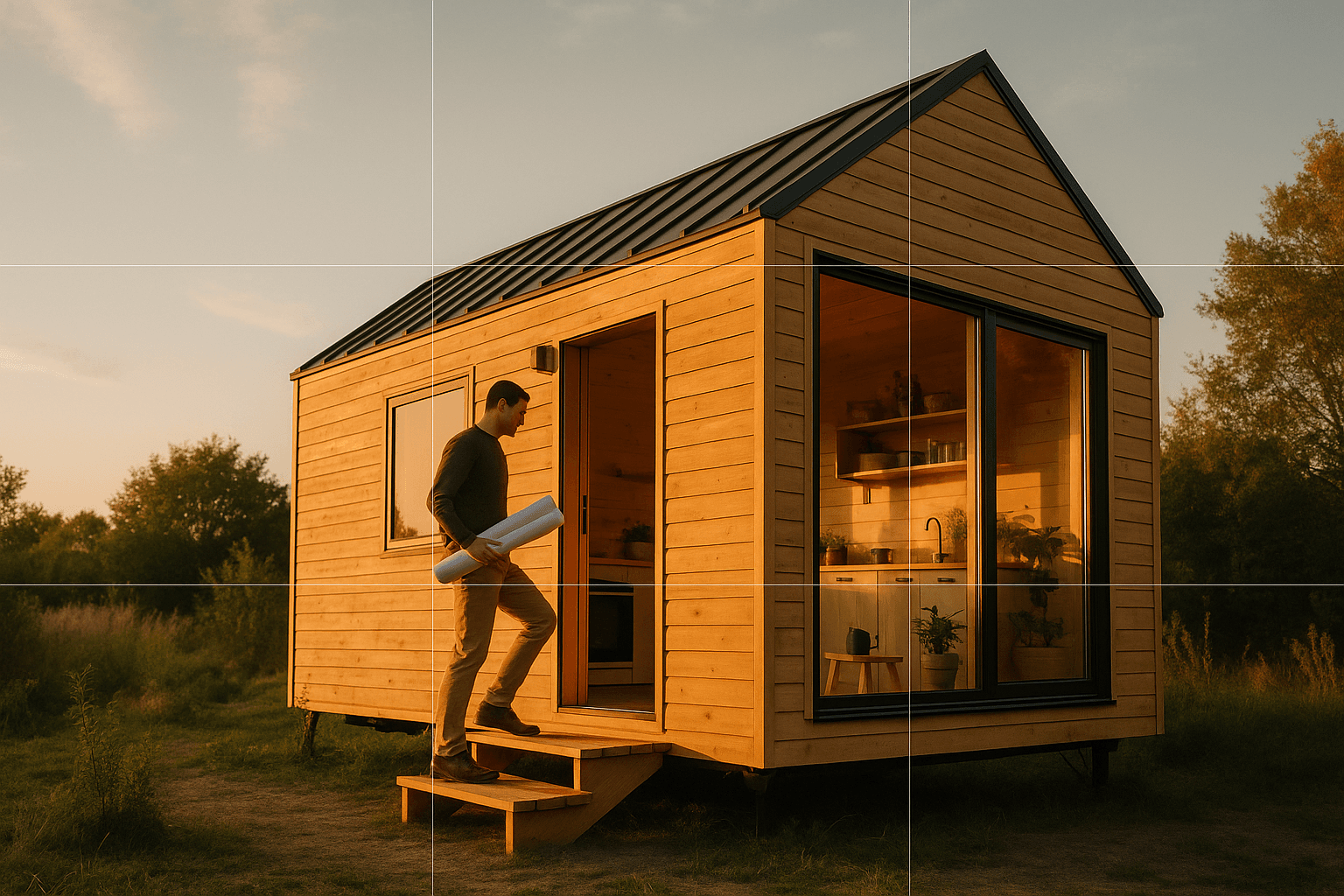
Those stunning tiny home videos flooding your feed? Most are inspiration first, construction never. The floating lofts, glass walls, and "space-saving" stairs that rack up millions of views often crumble when you try to permit, price, or actually live in them.
The fix is simple: run every viral feature through our Buildable vs Bait checklist before you fall in love. Then use our AI design tools to turn the inspiration into something you can actually build.
Why Viral Designs Skip the Important Stuff
Most viral tours conveniently avoid showing the parts that determine whether a tiny home is real:
- The underside (trailer specs, insulation, freeze protection)
- Wall sections (air barriers, vapor control, thermal bridges)
- Mechanical zones (water heater, ventilation, electrical panels)
- Safety details (egress routes, stair codes, guardrails)
Our reality-check rule: If the video doesn't show the boring structural stuff, assume it's concept art.
Our AI design platform surfaces these missing pieces fast—what the concept implies, what it omits, and how to make it compliant without killing the vibe.
The "Buildable vs Bait" Checklist
Scan this before you get your heart set on a design.
Structure: The "Looks So Open" Trap
Viral interiors love removing load-bearing elements—exactly what keeps the roof up.
Reality check spans:
- 2x6 floor joists: ~9-10 ft max
- 2x8 joists: ~11-12 ft max
- 2x10 joists: ~13-15 ft max
Red flags:
- "Floating" lofts with no visible support
- Dramatic overhangs presented as "simple"
- Heavy features (tile showers, tubs) placed for looks, not load paths
Smart fix: Hide structural posts inside storage walls. Keep the open feel while respecting physics.
Egress: "How Do You Escape a Fire?"
Gorgeous loft content usually fails this basic safety question.
What goes wrong:
- Ladder-only sleeping areas with no emergency escape window
- "Space-saving" stairs that don't meet local codes
- Missing or inadequate guardrails
Reality note: Many jurisdictions reference IRC Appendix Q for tiny houses, but adoption varies wildly.
Fast sanity check: If someone's sleeping there, how do they get out in an emergency? If the only answer is "down the ladder," it's content bait.
Windows: The "All-Glass" Budget Bomb
Wall-to-wall glazing sells views on social media. In real life, it often means:
- Sky-high heating and cooling costs
- Summer overheating from solar gain
- Condensation and comfort issues
- Major cost jumps for high-performance glass
Buildable alternative: Keep your hero view window. Add exterior shading. Balance glazing with actual insulating walls.
Plumbing: "Where Does Everything Actually Go?"
Most viral layouts break plumbing's hidden rules.
Key constraints:
- Drain lines need ~1/4" slope per foot
- Long runs fight headroom and freeze protection
- Smart layouts stack wet areas around one "wet wall"
Red flags:
- Kitchen at one end, bathroom at the other "for symmetry"
- No visible space for water heaters, venting, or access panels
Smart fix: Consolidate your kitchen, bathroom, and laundry around a shared utility wall.
Moisture: Tiny Homes Magnify Everything
In 200 square feet, one shower can spike humidity fast.
What viral glass-heavy designs ignore:
- Condensation on cold surfaces
- Need for continuous air barriers
- Ventilation requirements (often ERV/HRV systems)
- Climate-appropriate vapor control
Comfort essentials: Dedicated exhaust fans, balanced ventilation, and materials that handle real life.
Viral Feature Reality Check
| Viral Feature | Real Constraint | Smart Alternative |
|---|---|---|
| Full glass wall | Heat loss, condensation, big cost | Hero window + shading + balanced WWR |
| Floating loft | Needs load paths | Hide posts in storage walls |
| Rooftop deck | Waterproofing, transport limits | Ground deck + clerestory windows |
| Split kitchen/bath | Long drains, freeze risk | Stack wet zones in service core |
| Space-saving stairs | Code compliance issues | Compact conventional stairs where required |
| Multiple skylights | Leak/condensation risk | One well-placed skylight + simple roof |
The 5-Minute Reality Check
Before you save that viral video to your "dream home" folder:
- Count the load-bearing walls removed for that "open concept"
- Trace the emergency escape route from sleeping areas
- Look for the mechanical closet (water heater, electrical, ventilation)
- Check the plumbing logic (are wet areas stacked?)
- Ask about the trailer specs if it's on wheels
If you can't answer these basics from the video, it's inspiration—not a plan.
Turn Inspiration Into Reality
You absolutely can have an innovative tiny home with glass, lofts, and wow moments. The difference between a dream and a money pit is respecting structure, moisture, egress, and utility realities.
Our AI design tools help you keep the inspiration while ditching the fantasy. Upload screenshots of viral designs, and we'll extract the buildable elements, flag the problems, and generate corrected plans you can actually take to builders.
The goal isn't to stop watching viral tiny homes. It's to stop treating them like blueprints.
Questions to Ask Before You Pay
Bring these to any builder or fabricator:
Structure:
- "What are the longest spans, and how are they supported?"
- "What's the estimated finished weight for towing?"
Safety:
- "Is this loft legally a sleeping area here?"
- "What's the emergency escape plan?"
Comfort:
- "What's the ventilation strategy for this glazing?"
- "How do we prevent condensation in this climate?"
Utilities:
- "Where do the main drain lines run?"
- "Where's the mechanical equipment?"
Our platform generates these verification checklists automatically from your specific design—so you don't discover deal-breakers after putting down a deposit.
Design Your Reality
Ready to turn viral inspiration into a buildable plan? Our AI design generator helps you create tiny homes that work in the real world—structure, comfort, and style included.