Where to Put Your Tiny House: The Real Rules on Zoning, Permits & Legal Placement
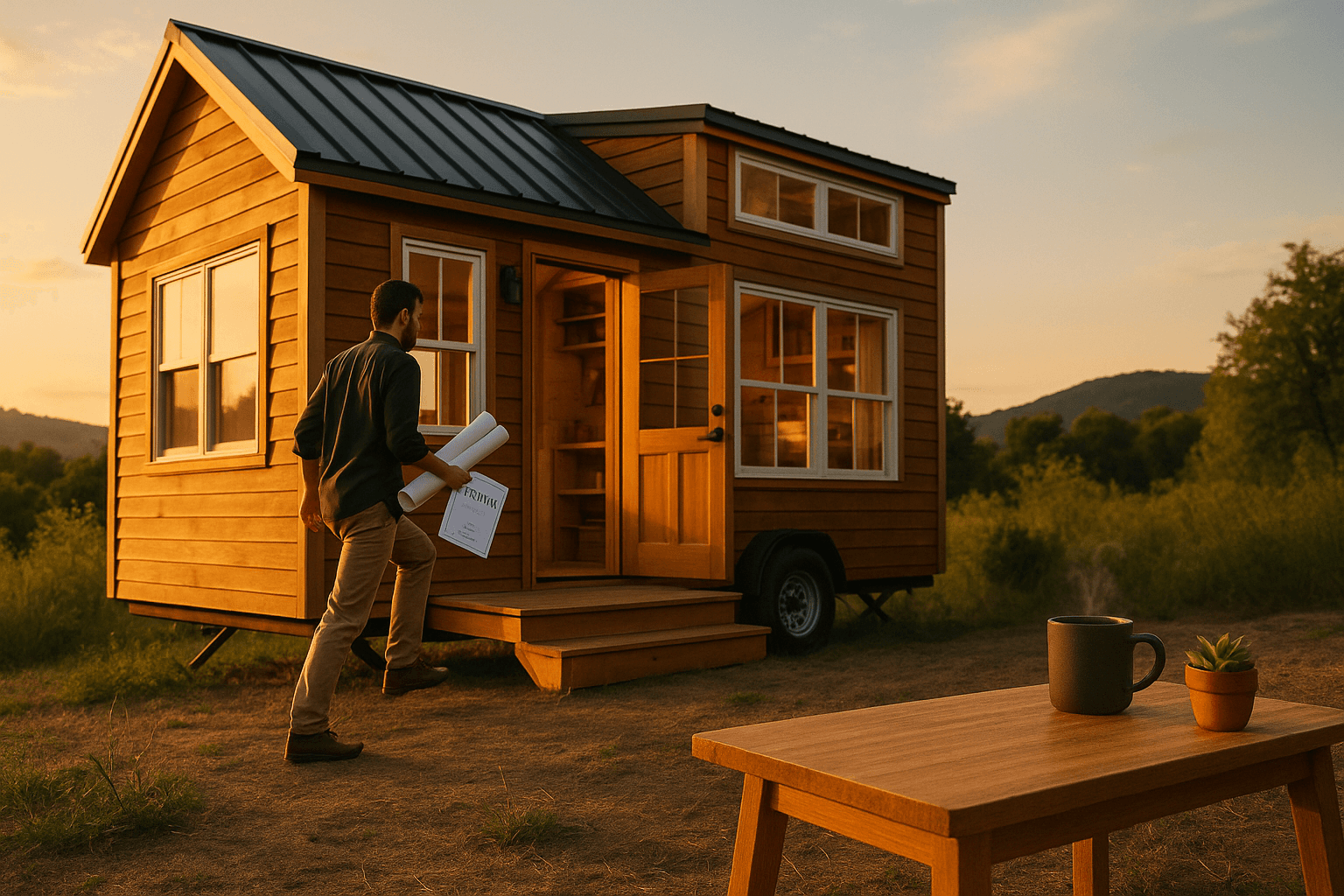
The secret to tiny house success isn't finding the perfect design—it's finding the right place to put it. Get this wrong, and you'll own a beautiful home with nowhere legal to live.
Most tiny house headaches come from working backwards: buying first, then scrambling to find legal placement. At TinyHouses, we flip this script. Browse homes and rentals by placement type, then use our AI designer to create layouts that work within real zoning constraints—egress rules, ceiling heights, fire safety basics.
Here's how to match your dream home with the right legal foundation.
Know Your Tiny House Type (The Rules Change Everything)
Before you look at land or listings, nail down two decisions:
Foundation vs Wheels: Different Rules, Different Paths
Tiny House on Foundation (THOF)
- Treated as: A dwelling
- Best placement: Residential lots or ADUs
- Common blockers: Setbacks, minimum size rules, inspections
Tiny House on Wheels (THOW)
- Treated as: RV or travel trailer (usually)
- Best placement: RV parks, THOW-friendly counties
- Common blockers: Full-time living bans, time limits
Primary Home vs ADU vs Rental: The Use Matters
- Primary residence: Highest scrutiny—you're asking for full recognition as a home
- ADU (backyard unit): Often the smoothest urban path if local rules allow it
- Short-term rental: Separate rule layer that can override everything else
The Four Most Common Legal Paths
Path 1: ADU/Backyard Cottage (Urban Winner)
This is often your best bet near cities. You're working within existing ADU frameworks rather than pioneering tiny house rules.
What works:
- Permitted ADU on a lot where they're allowed
- Tiny aesthetic built to local ADU standards
- Clear utility connections and legal address
What blocks it:
- ADUs not allowed in your zone
- Setback constraints or parking requirements
- Owner-occupancy rules (some cities require you to live in the main house)
Questions to ask planning:
- Are ADUs allowed in this zone?
- Maximum size and setback requirements?
- Can it have a full kitchen and separate address?
Path 2: THOW as RV (Where RV Living is Legal)
The most common trap: assuming wheels make everything legal.
What works:
- Long-term RV parks that allow extended stays
- Private land in areas that permit RV occupancy
- Following "readily moveable" requirements
What blocks it:
- Full-time living bans outside approved parks
- Time caps ("no more than 120 days")
- Restrictions on permanent utility hookups
Critical check: Does local code allow full-time RV occupancy on private land?
Path 3: Rural Primary Dwelling
More freedom, but septic and access can kill projects.
What works:
- Permitted small dwelling with compliant utilities
- Counties flexible on size and style
- Proper fire access and water/septic
What blocks it:
- Minimum dwelling size requirements
- Septic soil issues or setback problems
- Fire access standards (driveway width, turnarounds)
Path 4: Short-Term Rental/Glamping
STR rules override everything. A code-compliant structure can still be banned as a rental.
What works:
- STR-friendly zones with clear permitting
- Properties already operating legally
What blocks it:
- Permit caps or moratoriums
- Neighbor notification requirements
- Business licensing and tax obligations
The Permit Stack: What Gets Checked
Most legal placements need multiple approvals. Miss one, stall everything.
Typical approvals:
- Zoning clearance (use allowed, setbacks)
- Building permit (structure, foundation)
- Trade permits (electrical, plumbing, HVAC)
- Septic/well permits (often the gating item)
- Fire authority review (access, defensible space)
- Address assignment (emergency services)
Safety items that get checked often:
- Egress windows/doors (especially loft sleeping areas)
- Loft access safety (stairs vs ladders)
- Ceiling heights in lofts
- Smoke and CO alarm placement
- Fire separation from property lines
Our AI designer helps you think through these constraints early—creating layouts that work with common inspection requirements before you're at the permit counter.
Smart Workarounds (Legal Strategies)
These aren't hacks. They're legitimate paths that work in the right circumstances.
The ADU Strategy: Permit as ADU, keep tiny aesthetic. Risk: Calling it a "shed" to skip permits backfires when neighbors complain.
The RV Strategy: THOW in approved RV areas. Risk: Time limits and occupancy bans are common.
Temporary Use Permits: Limited-duration housing (during main home construction). Risk: They expire.
Caretaker Units: Agricultural zone allowances. Risk: Must maintain qualifying agricultural use.
Tiny House Communities: Pre-solved zoning and utilities. Risk: Strict community rules and limited availability.
How to Evaluate Land Fast: A Field Checklist
Zoning Quick Check:
- Does zoning allow: primary dwelling/ADU/RV occupancy/STR?
- Minimum lot size, setbacks, height limits?
- Overlays: floodplain, fire hazard, historic districts?
Utilities Reality Check:
- Municipal water/sewer available?
- Septic feasible (soil tests, setbacks)?
- Legal hookups for THOW, or tank-only requirement?
Access & Safety:
- Legal access (easement or frontage)?
- Fire department requirements (width, turnarounds)?
- Address assignment possible?
Script for calling planning:
- "This parcel is zoned [X]. Is a [primary dwelling/ADU/RV occupancy] allowed?"
- "Any minimum size, height, or setback rules for small footprints?"
- "For wheels: Is full-time occupancy allowed outside RV parks?"
- "What permits needed for utilities?"
- "Fire access or address requirements?"
Research Your Local Rules: Keywords That Work
Instead of Googling "tiny house legal," search your jurisdiction's code for:
- "Accessory Dwelling Unit"
- "Guest house"
- "Park model"
- "RV occupancy"
- "Tiny house ordinance"
- "Short-term rental permit"
The TinyHouses Advantage: Placement-First Design
Most people do this backwards. They buy a tiny house, then try to find legal placement. That's where the stress and surprise costs happen.
Our approach:
- Start with placement: Choose your path (ADU, rural, THOW, STR)
- Browse smarter: Filter marketplace listings by placement type
- Design within constraints: Use AI to create layouts that respect common code requirements
- Try first: Rent in your target location to test the lifestyle
Design your dream tiny house at TinyHouses.to/design—starting with the legal foundation that makes it possible.
Common Questions Answered
Can I live in a THOW on my land full-time? Sometimes, but many jurisdictions restrict full-time RV occupancy outside approved parks. Ask directly about "full-time RV occupancy on private land."
Is a tiny house an RV or a house? Foundation = house/dwelling. Wheels = usually RV (unless your area has movable tiny house rules).
Easiest way to place near a city? Usually the ADU path—cities already have frameworks for this.
Do I need a building permit? Foundation builds and ADUs typically yes. Even when structures are exempt, utilities and septic usually need permits.
Most common permit denials?
- Wrong zoning for the intended use
- Setback or height conflicts
- Septic/well problems
- Fire access issues
- THOW occupancy not allowed
Penalties for illegal placement? Fines, utility disconnection orders, forced removal, future permit difficulties. Usually triggered by complaints or unpermitted utility work.
Legal tiny living isn't about finding loopholes. It's about matching home type, intended use, and local rules from day one—then designing within those real constraints.