Tiny House on Wheels vs. Foundation: Legal Differences, Permitting Paths & Best Use Cases
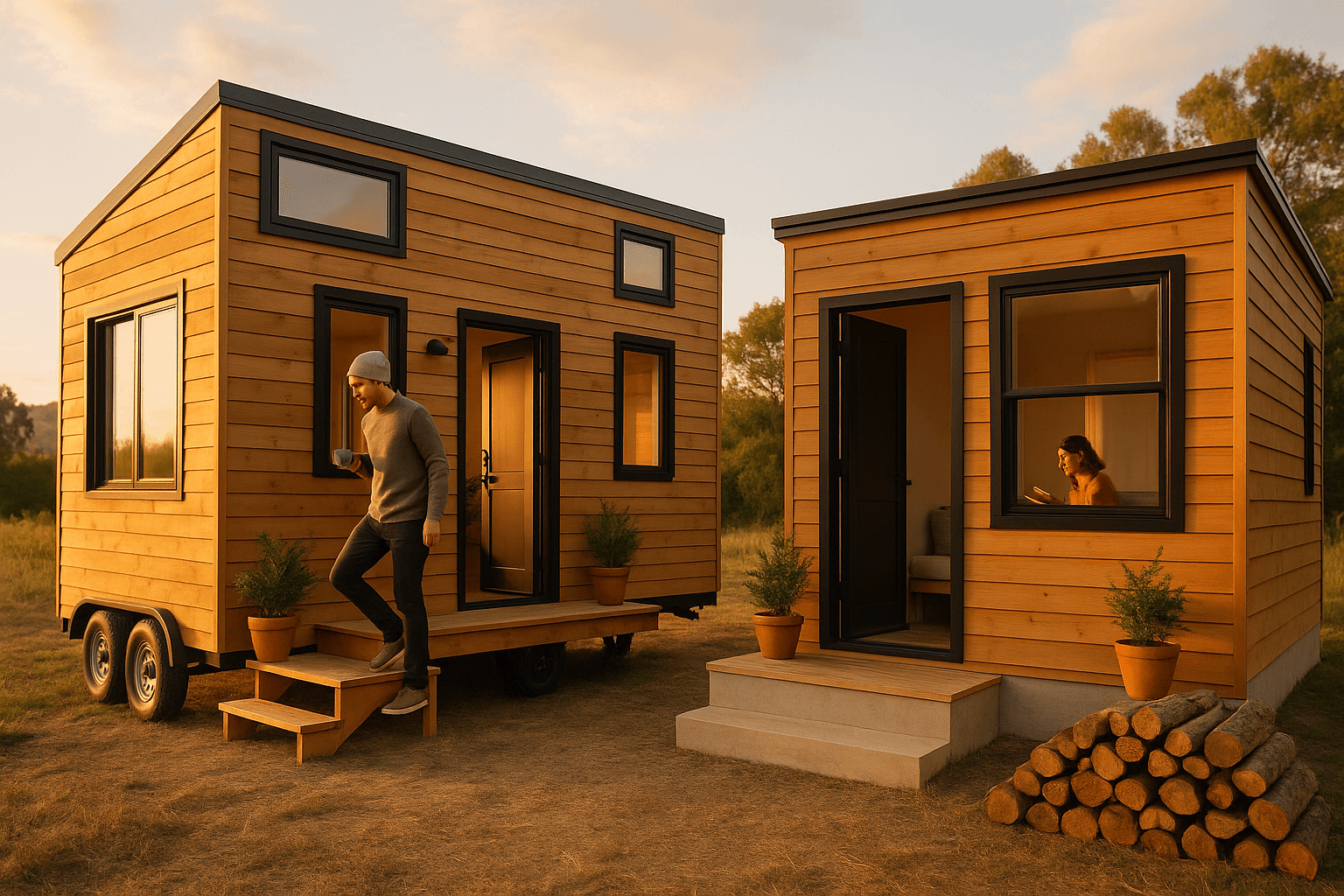
A tiny house on wheels (THOW) and a tiny house on a foundation can look identical—but legally they're treated like different species: vehicle (RV/trailer) vs residential building (house/ADU). That single classification choice determines what you'll need to do (DMV vs building department), where you can place it (RV rules vs zoning/ADU rules), and which route is typically easier to permit for legal full-time living.
At-a-glance: THOW vs foundation (legal + permitting reality)
| Topic | Tiny House on Wheels (THOW) | Tiny House on a Foundation |
|---|---|---|
| Typical legal classification | RV / travel trailer, park model RV, or trailer conversion (jurisdiction-dependent) | Residential structure (primary dwelling, ADU, backyard cottage, etc.) |
| Primary approval pathway | Often DMV title/registration + legal siting/occupancy rules | Building permit + plan review + inspections + Certificate of Occupancy (CO) |
| "Easier to permit?" (most common pattern) | Easier to own/build without a building permit, but harder to live in full-time legally on private land | Harder upfront (permits/inspections), but often easier to legalize full-time living |
| Where people get stuck | Assuming "no building permit" = "legal to live in anywhere" | Underestimating code details (lofts, stairs, egress, energy, foundation) |
| Parking/siting | Usually allowed only in RV parks, tiny house communities, some private lots with limits | Sited like a house/ADU: setbacks, lot coverage, parking, addressability |
| Utilities | Often RV-style hookups, tanks, off-grid systems; permanent sewer hookups can be restricted | Permanent connections and inspections are standard; easier address/mail/emergency access |
| Insurance | RV/trailer insurance; may require RVIA/NOAH-style documentation or pro build records | Homeowners/dwelling policy more straightforward after permits/CO |
| Resale | Often like a vehicle/trailer (titling matters; depreciation patterns) | More like real property (appraisal/comps possible if legally permitted) |
| Rentals | STR can be possible where RV/STR rules allow; LTR can raise habitability/tenant law questions | Clearer for STR/LTR when it's permitted + has CO |
The real legal difference: classification (vehicle vs residential building)
Tiny House on Wheels (THOW): usually treated as an RV/trailer
A THOW is commonly classified as one of the following (varies by country/state/county/city):
- RV / travel trailer: Built to recognized RV standards and titled/registered through the DMV.
- Park model RV: Often under ~400 sq ft and built to ANSI-type park model rules in many markets.
- Trailer/cargo trailer conversion: Often the hardest category because it may not be recognized as a legal habitable RV—creating friction with insurance, registration, and long-term occupancy.
- Occasionally an ADU: Rare, but some jurisdictions increasingly allow "movable tiny homes" as ADUs if they meet specific safety/utility requirements.
What this means in practice: You might skip the classic building permit process—but you can still be blocked by zoning (where RV living is allowed) and occupancy duration rules (how long you can live in it).
Tiny house on a foundation: usually treated as a residential dwelling/ADU
A foundation tiny house is typically treated as a residential structure:
- A primary dwelling (small home)
- An ADU (backyard cottage / accessory unit)
- Part of a cottage court or small home cluster (where allowed)
What this means in practice: There's usually a clear pathway: permit → inspections → CO. It can be paperwork-heavy, but it's the path most building departments already understand.
How TinyHouses helps: When you design with our AI platform, we treat "classification" as a first-class decision—not an afterthought. Filter for classification readiness (like "RV-ready documentation" vs "ADU-ready plan set") so you're not guessing which category a build is aiming for.
Permitting paths: what you'll likely need
Foundation tiny house permitting (the classic building-department route)
Typical steps you'll see:
- Zoning check (is a tiny home/ADU allowed on this lot?)
- Building permit application (plans, site plan, energy docs)
- Plan review (code compliance)
- Inspections (commonly):
- Foundation
- Framing
- Electrical
- Plumbing
- HVAC (where applicable)
- Insulation/energy
- Final inspection
- Certificate of Occupancy (CO) (often the key to "legal to live in")
Common friction points (especially if your area is strict):
- Loft access and safety
- Egress windows in sleeping areas
- Smoke/CO alarms placement
- Ceiling heights / minimum room sizes
- Stair geometry or ladder specs
- Insulation/energy compliance
The data point that matters: IRC Appendix Q
Many jurisdictions use IRC Appendix Q (Tiny Houses) or a local variant. Where adopted, it reduces common pain points for tiny house layouts (especially lofts and stairs). If your area has Appendix Q, foundation tiny houses become much more "permitable" without redesigning everything to full-size-house assumptions.
How TinyHouses helps: When you use our AI designer, you can generate layouts that are Appendix Q–friendly (loft/stair strategies, egress-aware planning) and then match that design to marketplace models tagged "ADU-ready" or "foundation-permit pathway."
THOW permitting (often DMV + siting/occupancy reality)
A THOW often follows a different checklist:
- Title/registration (DMV or equivalent)
- Roadworthiness (lights, brakes, width/weight limits)
- Insurance eligibility (documentation matters)
- Siting rules (where can it be placed?)
- Occupancy limits (can you live in it full-time here?)
- Wastewater/utility compliance (often the hidden enforcement trigger)
Important nuance: A THOW can be "legal" as a trailer and still be illegal to occupy as a residence on a given property.
How TinyHouses helps: Our platform recognizes that "build legality" and "live-ability legality" are different problems. We help you design toward RV-ready configurations when wheels are the goal and discover rentals/communities where THOW living is actually allowed.
Zoning + land use: the deciding factor for most people
Even with a perfect build, you still need a legal place to put it.
Private land: the most misunderstood scenario
Common outcomes:
- Foundation tiny house: Often workable as a primary dwelling (if minimum size rules don't block it) or as an ADU if the main home exists and the zone allows ADUs.
- THOW: You may be allowed to park it, but not live in it full-time. Many places treat full-time RV occupancy as "camping" or restrict it to approved parks.
Backyard/ADU placement: foundation usually wins on clarity
If your goal is a legally recognized backyard unit:
- Foundation ADUs usually have a clear process: setbacks + utility connections + inspections + CO.
- THOW-as-ADU is sometimes possible but still uncommon and highly rule-specific.
RV parks / tiny house communities: the THOW shortcut (when allowed)
For many THOW owners, the simplest legal placement is:
- RV parks (where long-term stays are permitted)
- Mobile home parks (rules vary)
- Tiny house communities designed for THOWs
How TinyHouses helps: Our platform connects "design + placement." After you design, explore our marketplace with an eye toward where it can actually go—including rentals to test-drive a region/community before you commit.
Parking rules + occupancy time limits (the rule that surprises people)
A very common pattern:
- Parking is allowed; living is not.
- Or: living is allowed only for short durations.
Typical regulatory ideas you'll run into:
- "No living in an RV outside an approved park."
- "Maximum X days of occupancy."
- "Must be connected to approved water/sewer."
- "No permanent utility hookups to RVs on residential lots."
This is why the question "Which is easier to permit?" needs two answers:
- Easier to avoid building permits: THOW
- Easier to gain legal, stable residency: foundation (often)
How TinyHouses helps: Our AI selector recommends "wheels vs foundation" based on whether your priority is mobility or legal permanence, then gives you a "verify locally" checklist aligned with that choice.
Utilities + sanitation: the hidden compliance layer
Utilities are where enforcement often shows up—because neighbors notice cords/hoses, and inspectors notice unpermitted discharge.
Sewer/septic + toilets (where tiny projects often stall)
- Foundation homes typically tie into:
- Municipal sewer (where available), or
- A permitted septic system (new or existing capacity)
- THOWs often rely on:
- Black tank + dump station
- Composting toilet (legal acceptance varies)
- Graywater handling (often regulated)
If you're aiming for full-time living, the question isn't "Is my toilet clever?" It's "Is my wastewater method legally recognized where I'll park?"
Electrical hookups + "permanent connection" issues
- Foundation: permanent service, inspections, and meter are normal.
- THOW: RV-style hookups may be fine in parks, but can be restricted on residential lots—especially for long-term occupancy.
Addressability + emergency access
- Foundation homes more easily receive:
- A legal address
- Mail delivery
- Documentable compliance for emergency access
- THOWs can be harder to "make official" on a residential lot.
How TinyHouses helps: When you design with us, you can plan around your intended utility reality (off-grid weekend cabin vs full utility ADU) and then search marketplace listings that match—rather than buying a build that forces a utility strategy your jurisdiction won't accept.
Insurance, registration, and financing (practical legal impact)
THOW: insurance and registration hinge on documentation
THOWs are often insured as an RV/trailer, but many insurers want proof of build standard and/or professional documentation.
What commonly helps:
- Recognized build standard documentation (market-dependent)
- Clear VIN/title pathway
- Builder records, systems documentation, and safety features
Foundation: more straightforward once permitted
A foundation tiny house that's permitted and has a CO often fits into:
- Homeowners insurance or a dwelling policy
- More conventional lending options (still depends on lender and property type)
How TinyHouses helps: Our listings can be tagged for "paperwork readiness" (plan set availability, intended classification, documentation notes), making it easier to compare not just floorplans—but the real-world friction of insuring/registering.
Rental + resale implications (what changes legally)
Resale: vehicle-like vs real-estate-like
- THOW resale often behaves more like a vehicle/trailer transaction:
- Titling matters
- Depreciation patterns are common
- Foundation resale can behave more like real property:
- Appraisals and comps may exist if it's legally permitted
- Transfers are typically handled through real estate processes
Rentals: short-term vs long-term is a legal fork
- THOW rentals:
- Can be easier for short-term stays in jurisdictions that already regulate RV stays and STRs
- Can become complicated for long-term tenancy (habitability standards, landlord-tenant rules)
- Foundation rentals:
- Clearer footing when it has a CO and meets local rental rules
How TinyHouses helps: If rental income is part of your plan, we can point you toward designs and marketplace options aligned with that goal—like ADU-ready footprints for long-term rentals or "STR-friendly" tiny stays where local rules support it.
Which is easier to permit? A use-case decision guide
Choose a THOW when your priority is mobility or faster ownership
THOW is often the better match if:
- You want to move seasonally or travel
- You're planning to live primarily in RV parks/tiny house communities
- You prefer a DMV/registration path over building inspections
- You want to "start small" and keep optionality high
Expect to verify:
- Where full-time RV/THOW occupancy is allowed
- Time limits for living on private land
- Wastewater handling rules and hookup permissions
Choose a foundation tiny house when your priority is legal permanence
Foundation is often easier to legalize if:
- You want full-time living with a stable address
- You want an ADU in a backyard (common, clearer pathway)
- You want a Certificate of Occupancy and normal utility connections
- You want clearer insurance and rental legality
Expect to verify:
- ADU rules, setbacks, parking requirements
- Whether IRC Appendix Q (or local tiny house provisions) is adopted
- Utility tie-in requirements and any impact fees
The clean conclusion (most accurate across jurisdictions)
- Easier to "build and own" without local building permits: often THOW (if treated as RV/trailer)
- Easier to permit for legal full-time living on private land: often foundation, because there's a standard permit → inspections → CO path
A "don't get stuck" checklist
Use this as your pre-decision filter:
If you're leaning THOW
- Is it intended to be titled/registered as an RV/trailer where you live?
- Do you have a legal place to park and occupy it?
- Are long-term hookups allowed at that site?
- What's your wastewater plan—and is it recognized locally?
If you're leaning foundation
- Is your lot eligible for a tiny primary dwelling or ADU?
- Does your area use Appendix Q (or similar tiny house rules)?
- Can your design meet egress/loft/stair/energy requirements?
- What inspections will be required and in what order?
How TinyHouses helps: This is exactly what our AI-based config selector is built for: you tell us your goals (mobility, rental income, full-time living, land situation, utility access), and we recommend THOW vs foundation plus the specific "verify locally" items that usually decide the outcome.
FAQ
Is a tiny house on wheels legally an RV?
Sometimes. Many THOWs are treated as RVs or travel trailers, but it depends on local definitions and whether the build meets the standards/documentation your jurisdiction and insurer recognize.
Can I live in a THOW full-time on my own land?
Often this is the hardest scenario. Many places allow parking a trailer/RV but restrict full-time occupancy outside approved parks or specific zoning situations.
Do I need a building permit for a THOW if it's "just a trailer"?
You may not need a building permit to construct it as a vehicle, but you can still trigger permits or violations through siting, utility hookups, and residential occupancy.
What is IRC Appendix Q and why does it matter?
IRC Appendix Q is a tiny-house-focused section of the residential code that (where adopted) reduces common design friction points—especially around lofts and stair/ladder requirements.
Can a THOW be an ADU?
Occasionally, but it's still uncommon and rule-specific. Some jurisdictions are opening pathways if the unit meets safety/utility requirements.
Which is easier to insure and finance?
Foundation homes can be simpler after permits/CO. THOWs can be insurable as RV/trailer policies, but documentation and classification matter; financing can be more specialized.
Which option is better for Airbnb/short-term rentals?
It depends on local STR rules and where you'll place it. Foundation ADUs often have clearer housing status; THOWs can work well in jurisdictions that allow STRs in parks/approved sites.
Design your future, not your limitations
TinyHouses AI design generator helps you choose THOW vs foundation based on your land, lifestyle, and rental goals—then match your design to marketplace listings tagged by readiness. Start here: https://tinyhouses.to/design — your first 3 designs are free.