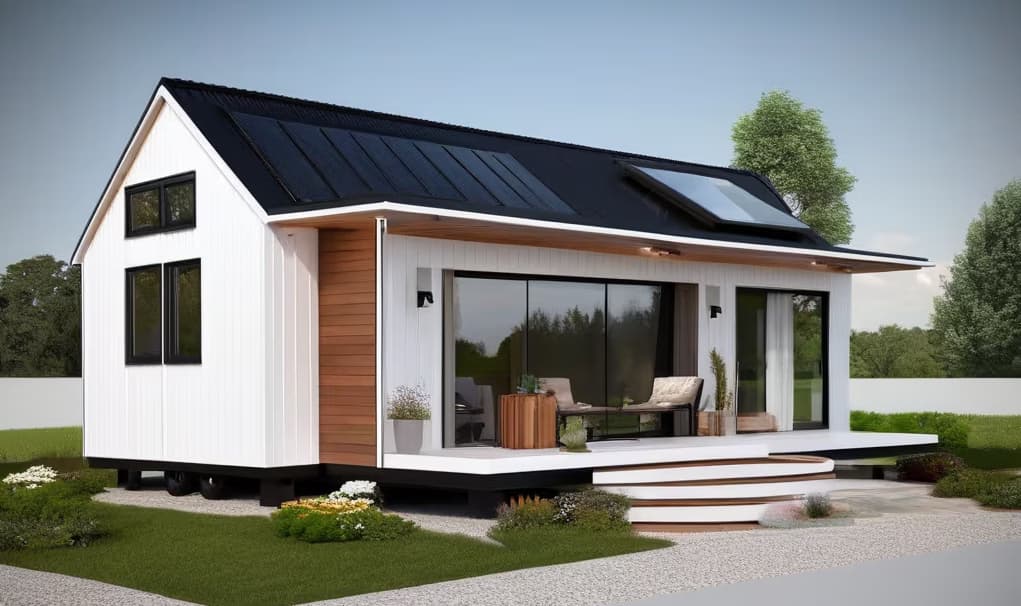
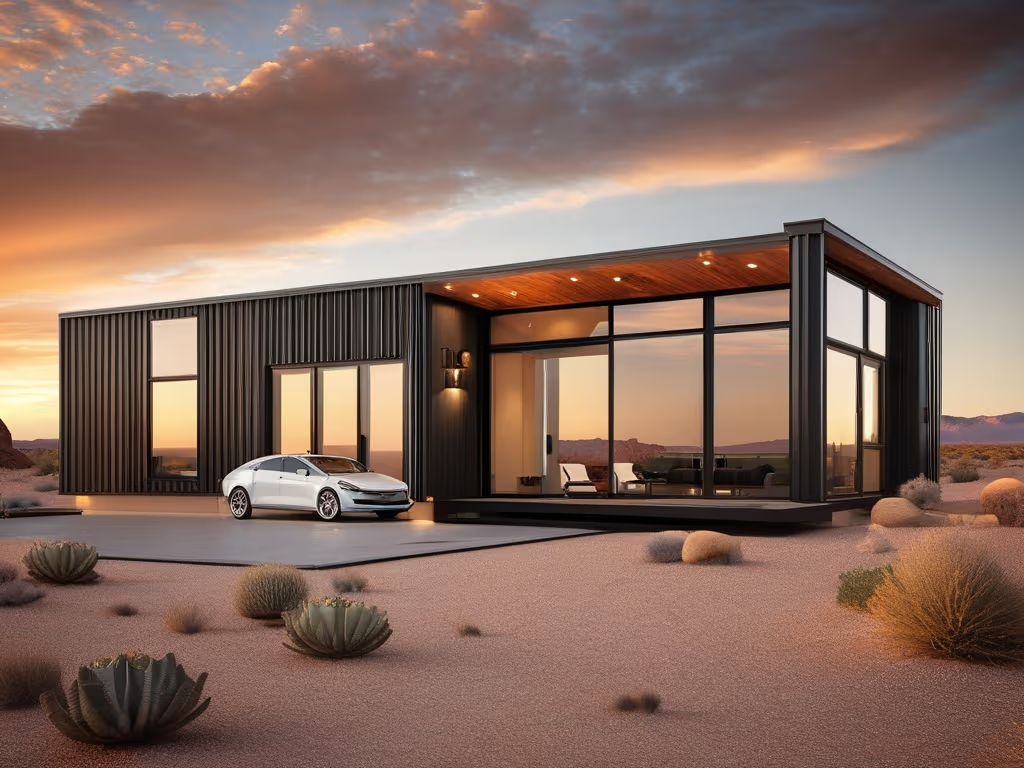
Tiny House on Wheels vs Foundation: The Complete Decision Guide

Choosing between a tiny house on wheels (THOW) and a foundation build? The decision boils down to three factors: (1) legal full-time living where you are, (2) how soon you need to move in, and (3) whether mobility actually matters to your lifestyle.
In practice: wheels win on flexibility and speed (though with more zoning gray areas), while foundation wins on legitimacy, comfort, and financing (with more permitting upfront).
At Tinyhouses.to, we see people choose the structure first—then discover their local zoning, utilities, or climate doesn't cooperate. The smarter approach? Design both scenarios with AI, compare the real tradeoffs, then browse actual rentals or listings that match what you can legally live in.
The 60-Second Decision Matrix
Use this before you fall in love with a floor plan. You'll still need local verification—especially for full-time occupancy.
| Your Priority | Tiny House on Wheels Wins When... | Foundation Tiny House Wins When... |
|---|---|---|
| Legal full-time living | You have confirmed legal parking (RV park/approved site) and accept higher uncertainty | You want the clearest path to certificate of occupancy and conventional legality |
| Speed to move-in | You can buy/build faster and place sooner (if legal parking exists) | You can wait for permits, inspections, and site work |
| Long-term comfort | You're fine with weight limits, vibration, and RV-style systems | You want thicker walls, quieter interiors, heavier finishes, standard house systems |
| Financing & insurance | You're comfortable with RV/personal property loans and specialty insurance | You want mortgage/ADU financing and standard homeowner insurance pathways |
| Land uncertainty | Your situation might change (lease ending, job move, wildfire risk) | You're staying put and want to build equity in the property |
| Resale strategy | You want a unit you can sell and move (RV-style market) | You want the home integrated into property value (real estate-style) |
How our AI designer helps: Generate two versions of the same lifestyle—a road-legal THOW layout and a foundation/ADU layout—then compare what you gain or lose in storage, mechanical space, insulation, and window strategy.
What These Labels Actually Mean for Permits
Tiny House on Wheels (THOW)
Built on a trailer, typically treated as an RV, travel trailer, or park model depending on size and jurisdiction. You'll see standards like RVIA, ANSI A119.5, or NFPA 1192.
Critical point: None of these labels guarantee full-time living rights on your land. That's decided by local zoning.
Foundation Tiny House
Usually permitted under residential building codes as an ADU (Accessory Dwelling Unit), small single-family dwelling, or detached structure. Some areas have adopted IRC Appendix Q (tiny house provisions).
How our AI helps: Keep two design tracks—THOW with road constraints and RV utility bay, foundation with code-compliant stairs, mechanical closet, and thicker walls.
Mobility Reality Check
Mobility is a capability, not a daily lifestyle. Most THOW owners move rarely after initial placement because:
- Legal parking is harder to find than buying the unit
- Moving requires transport scheduling, route planning, setup time
- Hookups and leveling take effort every time
When Wheels Matter
- You might relocate for work/family within 1–3 years
- You're on land you don't control long-term (lease, uncertain future)
- You want an exit option if zoning changes or neighbors complain
When Wheels Don't Matter
If you're staying put for years, you're paying for:
- Trailer plus road-rated components
- Weight-driven material compromises
- Ongoing maintenance (tires, brakes, bearings)
Design tip: Create your THOW with practical "move readiness"—exterior utility bay, protected hookups, secure storage—then compare to a foundation version that uses those same inches for comfort.
Permits: Where Most Decisions Are Made
THOW Permitting Reality
Easier to purchase, often harder to legally occupy full-time outside approved contexts.
Common friction points:
- Full-time occupancy rules for RVs on private land
- Minimum dwelling size requirements
- Whether THOWs qualify as ADUs
- Septic tie-in and address assignment requirements
Foundation Permitting Reality
Clearer full-time pathway if zoning allows a dwelling/ADU.
Typical requirements:
- Building permits and inspections
- Setbacks, height, lot coverage, parking
- Utility approvals (septic/well/power)
- Certificate of occupancy
Your Week One Action Plan
Call planning/zoning:
- "Can I have a second dwelling/ADU on this parcel? Size limits?"
- "Are tiny houses recognized under local rules?"
- "Is full-time RV/THOW occupancy allowed on private land?"
- "What are setbacks, fire access, and address rules?"
Call building department:
- "What code path for small foundation dwellings?"
- "Do you require stamped plans for small homes?"
- "What inspections for plumbing/electrical/mechanical?"
Pro tip: Bring clean AI-generated layouts of both options to get clearer, faster answers.
Cost Differences That Matter
THOW Adds These Costs
- Trailer plus road-rated components
- Weight-reducing materials and methods
- Transport, tie-downs, leveling systems
- Ongoing maintenance (tires aging, brake service, bearings)
Foundation Adds These Costs
- Site work (grading, excavation, drainage)
- Foundation type plus potential engineering
- Permanent utility connections and inspections
- Permitting fees and timelines
The Real Budget Driver: Your Land
On remote parcels, either choice can be dominated by:
- Power extension vs. solar plus storage
- Well drilling or water delivery/storage
- Septic design/permit/installation
- Driveway and fire access requirements
Design for cost control: Prototype a THOW with compact systems and RV-style hookups, plus a foundation plan with mechanical closet space and standard plumbing runs. Match these to real builders in our marketplace.
Daily Living Differences
Utility Hookups
THOW: Shore power inlet, water hose connection, sewer hose or contained waste Foundation: Hardwired electrical, standard plumbing tie-ins, typical fixtures
Space Planning Impact
THOW constraints:
- Weight limits affect finishes (tile/stone harder)
- Road vibration influences durability details
- Storage must stay secure in motion
Foundation advantages:
- Heavier, quieter wall assemblies
- Thicker insulation options
- More accessibility-friendly layouts
Design comparison: Generate two layouts with identical must-haves (two-person desk, washer, queen bed). See which option forces compromises.
Climate Performance
THOW Considerations
- Trailer corrosion risk (coastal/wet climates)
- Tire aging when parked
- Roof seams working under flex/vibration
- Underbelly protection, skirting strategy
Foundation Advantages
Without road-weight constraints:
- Thicker insulation
- Better airtightness details
- Heavier windows and doors
- Protected pipe routing
Cold climates: THOWs need careful freeze protection. Foundation builds are simpler to protect. Hot/humid: Both need excellent ventilation—small spaces change temperature fast.
Money Matters: Financing, Insurance, Resale
Financing Pathways
Foundation: Construction-to-permanent loans, ADU financing, traditional mortgages THOW: RV loans, personal property loans (often shorter terms), specialty tiny-home financing
Insurance Alignment
Foundation: More likely to fit homeowners policies once permitted THOW: Often RV or specialty coverage—full-time occupancy rules affect eligibility
Resale Behavior
THOW: Behaves like personal property—depreciation common (quality builds hold value better) Foundation: Behaves like real estate—value depends on permit status and local comps
Market reality check: Browse our marketplace to see how each category performs in your region.
Clear Recommendations
Choose THOW If:
- Maximum flexibility matters if life changes
- You need faster path to livable unit (with legal placement)
- You may move within a few years
- You're comfortable with RV-style systems
Choose Foundation If:
- You want clearest path to legal full-time residency
- Comfort in extreme weather is priority (quiet, insulation, durability)
- You prefer conventional financing/insurance
- You want to contribute to property value long-term
Consider Hybrid:
- THOW as temporary unit while building permitted foundation ADU
- Park model for semi-permanent placement (where allowed)
Top Mistakes to Avoid
Assuming THOW = automatic full-time living rights Fix: Get written confirmation from planning or documented ordinance references
Designing THOW like a regular house Fix: Design specifically for travel constraints or admit it's stationary
Underestimating rural utilities Fix: Treat water, waste, power, and access as primary design inputs
Ignoring climate until layout is set Fix: Window strategy and envelope thickness should be decided early
How AI design prevents mistakes: Test five variations quickly—catch expensive errors before they happen.
Design Both Futures Before You Commit
Don't choose blind. Use our AI designer to create both scenarios—then browse matching rentals or listings to test the lifestyle before you build.
Ready to compare? Design your THOW and foundation options at tinyhouses.to/design
FAQ
Can I legally live full-time in a THOW on my land? Sometimes—highly jurisdiction-dependent. Many areas restrict full-time RV occupancy outside approved contexts.
Which is cheaper overall? Depends on your land. THOW adds mobility costs, foundation adds site work and permits. Utility costs often dominate either choice.
What's easier to permit? Permitted foundation ADUs are clearer for full-time legality. THOWs may avoid building permits but trigger occupancy limits.
Can I get a mortgage? More likely with permitted foundation homes. THOWs typically use personal property financing.
Which is better for cold climates? Foundation builds handle robust insulation and protected plumbing more easily.
Will a THOW hold value? Behaves like personal property (depreciation common). Foundation behaves like real estate (tied to permits and comps).