Tiny House Toilets That Work: The Real Story Behind Composting vs Flush
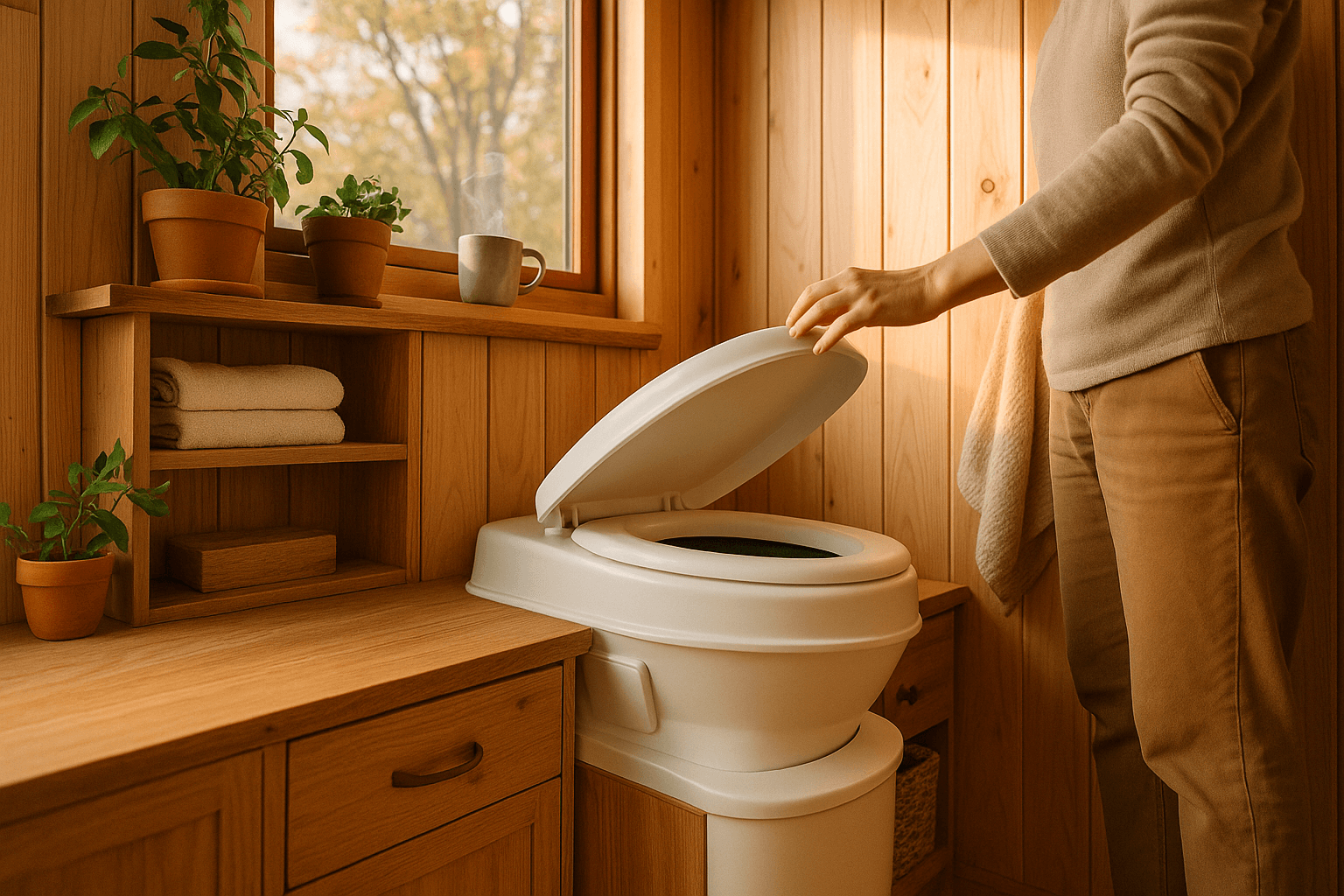
Your tiny house bathroom will feel "easy" or "exhausting" based on one thing: what you're willing to do every day — emptying, wiping down, dumping tanks, winterizing — and what your placement actually allows.
Most people pick a toilet first and design around it later. That's backwards. The smart move? Design the routine you can live with, then match the system.
Start with constraints, not preferences
Before you fall in love with a specific toilet brand, lock in the constraints that quietly control your options.
How you'll actually live
- Full-time: Guest-friendliness and maintenance frequency are dealbreakers. You need systems that work when you're tired, busy, or hosting friends.
- Part-time/weekends: You can tolerate more "setup" and less frequent maintenance.
With TinyHouses' AI designer, specify "full-time, two adults, guest use, low-maintenance" and generate layouts that prioritize comfort over aesthetics.
Your hookup reality
- Off-grid or limited water: Composting and incinerating toilets shine because they don't need flush water.
- Consistent sewer connection: Flush toilets become genuinely "normal" — no tank management.
- Sometimes on-grid, sometimes off: This hybrid reality pushes you toward flexible systems.
Filter TinyHouses listings by off-grid ready, sewer hookup, or dump access so your bathroom choice matches your real placement plan.
Climate changes everything
- Flush systems can freeze without winterization
- Composting toilets avoid frozen lines but still need smart venting
Use our AI designer to include winterization zones — heat tape routing, insulation strategy, service access — so your bathroom works in your climate from day one.
Toilet showdown: what daily life actually feels like
Composting toilets: no water, more routine
What they're great at:
- Zero flush water — perfect when water is scarce
- Ideal for off-grid living
- Many modern units separate liquids and solids, reducing odor
What you'll actually do:
- Empty liquids container regularly (more often than solids)
- Add bulking material to manage moisture
- Keep the fan running continuously
- Periodic deep cleaning and vent checks
Common problems:
- Fan failure = bathroom smells stale fast
- Too much moisture = ammonia odor
- Urine mixing with solids = messy cleanups
In TinyHouses' AI designer, we build composting setups with dedicated vent chases, service-access zones, and storage for supplies — so maintenance stays manageable.
Flush toilets: normal routine, infrastructure required
What they're great at:
- Guest-friendly (no learning curve)
- Familiar daily routine
- Works with standard bathroom layouts
What they require:
- Water supply plus either sewer connection or black tank
- Proper venting (smell control isn't optional)
- Winterization in cold climates
Black tank reality:
- Monitor levels constantly
- Regular dumping at stations
- Routine rinsing to prevent buildup
- Tank access for maintenance
With our AI layouts, we design flush systems like serviceable mini-RVs: tank access panels, winterization space, and clean vent routing that won't loosen with road vibration.
Incinerating toilets: high-tech, high-energy
When they make sense:
- Water and sewer options are impossible
- You have reliable power or fuel supply
What you're signing up for:
- Significant power or fuel requirements
- Ash handling and disposal
- Higher operating costs
- Proper venting and clearances
Shower reality: comfort vs space vs cleaning
You can absolutely have a great shower in a tiny house — if you design the layout and ventilation like it matters.
Wet bath (everything waterproof)
Pros: Saves space, simplifies footprint Daily reality: More frequent wipe-down, humidity management becomes critical
Separate shower (more home-like)
Pros: Better comfort, less "everything gets wet" Tradeoff: Takes precious floor area, forces compromises elsewhere
Use TinyHouses' AI designer to test both options against your must-haves. You'll immediately see what you gain and give up.
Odor control that actually works
Tiny spaces magnify small mistakes. Most odor issues are predictable and fixable.
Composting toilet odors usually mean:
- Fan off or weak airflow
- Leaks in vent path
- Solids too wet (need more bulking material)
- Liquids mixing with solids
Flush system odors usually mean:
- Dry P-traps
- Poor venting
- Black tank seal issues
- Buildup from infrequent cleaning
Universal bathroom smell = humidity
Even perfect toilets smell "damp" if ventilation is weak. Non-negotiables: real bath fan with proper ducting, and makeup air so the fan can actually move air.
Maintenance schedules: what you're really signing up for
Composting toilet routine:
- Daily: Quick fan check, proper use
- Weekly: Empty liquids (varies by household)
- Periodically: Empty solids, deep clean, inspect venting
Flush + black tank routine:
- Ongoing: Monitor levels, manage water use
- Per dump cycle: Dump and rinse
- Seasonal: Winterize in cold climates
Either system needs:
Storage for supplies, easy container/panel access, and service space that doesn't require dismantling furniture.
Graywater and blackwater: the legal reality
Your toilet choice isn't just about preference — it's about where you can legally park.
- Graywater (sinks + shower): Often easier to handle
- Blackwater (toilet): Triggers stricter regulations
Your placement and hookup options often choose your toilet for you. Use TinyHouses marketplace filters to narrow by waste strategy first — it's the fastest way to avoid expensive mismatches.
Design it right with TinyHouses
Most bathroom regrets come from choosing fixtures first and designing around them later. We flip that: design the routine you want, then match the system.
Feed this into our AI designer:
- Lifestyle: full-time/part-time, number of people, guest frequency
- Placement: off-grid/sewer hookup/dump access
- Climate: freezing winters yes/no
- Bathroom preference: wet bath vs separate shower
- Maintenance tolerance: minimal chores vs off-grid optimized
Generate options and compare how each changes vent placement, service access, shower comfort, and storage needs.
Then filter our marketplace by:
- Toilet type: composting/flush/incinerating
- Hookups: off-grid ready/sewer/dump access
- Layout: wet bath/separate shower
- Maintenance fit: your tolerance level
Ready to design your perfect tiny bathroom? Try TinyHouses' AI design generator: tinyhouses.to/design
Find the system you'll actually enjoy living with — not just the one that looks good in photos.