Tiny House Rules That Actually Prevent Fights (+ Printable Guest Card)
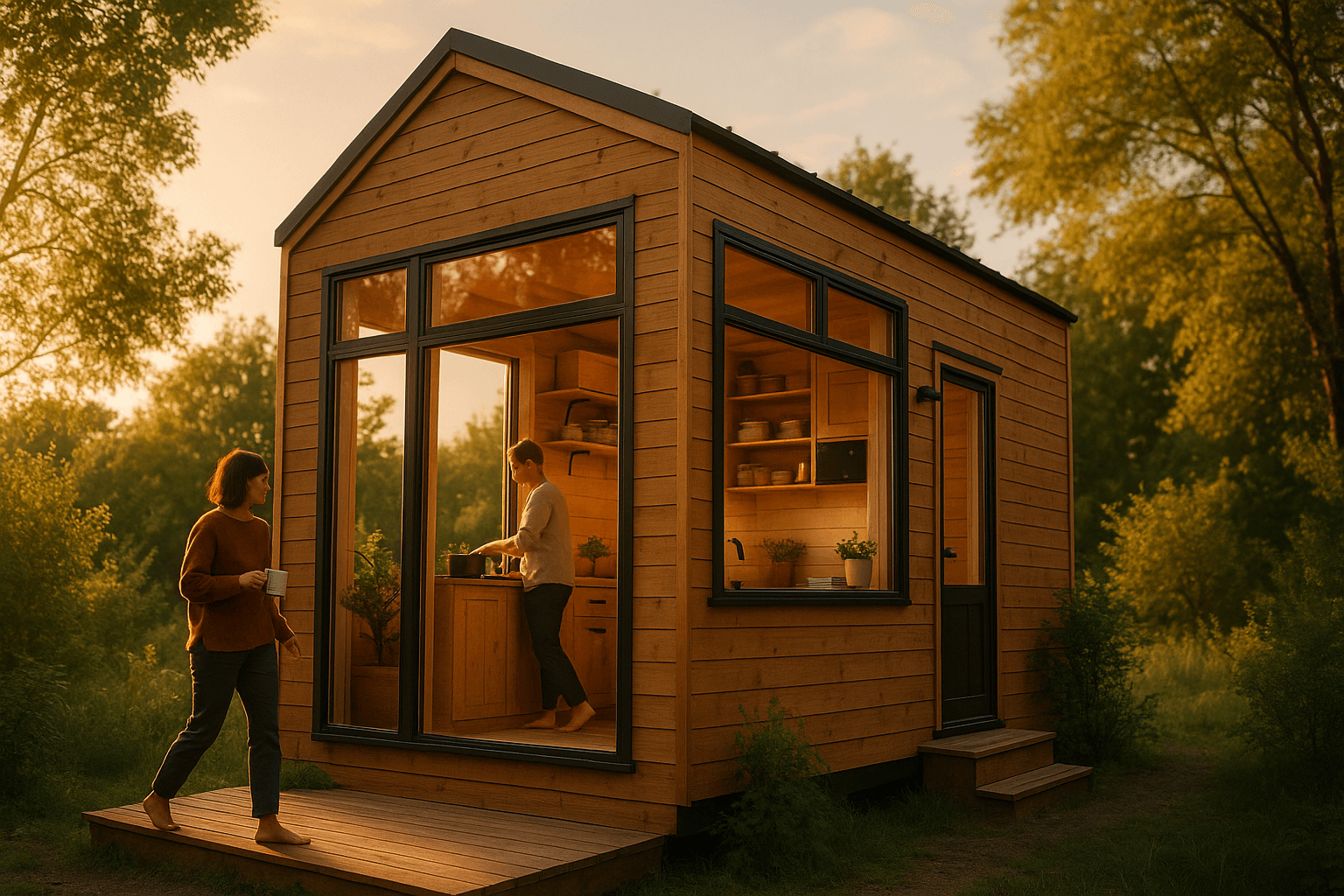
Living in 100-400 square feet changes everything. Your kitchen sink isn't just a sink—it's the only sink. Your counter isn't just prep space—it's the only prep space. When these single points of failure get clogged, the whole home jams.
Here are tiny-specific house rules that prevent the fights, mess, and burnout that generic advice can't touch. Plus a printable guest card for hosts.
Why tiny homes need different rules
In regular homes, "be respectful" works fine. In tiny homes, it doesn't tell anyone what to do with a pan blocking the only sink.
Small issues become big fast because:
- Clutter scales nonlinearly: Two items left out can erase your prep space or block the walkway
- Single points of failure: One sink, one toilet, one entry. When those clog, everything stops
- Noise amplifies: No spare rooms means your call becomes everyone's call
- Reset time is short but essential: A 5-minute reset can restore complete order—but skipping it compounds chaos
The tiny house metric: If it takes more than 10 minutes to fully reset your home, your system is failing.
The core rules (copy and paste these)
1. "The Sink Closes Every Night"
Why: The sink is your single point of failure. One pan blocks water, handwashing, and morning coffee.
Done looks like: Zero dishes in the sink at bedtime. If something needs soaking, it soaks in a bin next to the sink—never in it.
2. "Counters Are Not Storage. Ever."
Why: Tiny kitchens have the one-counter problem—prep space disappears instantly.
Done looks like: Only active items stay out (cutting board, ingredients, one appliance being used). Mail, keys, and backpacks never land on counters.
3. "Two Resets a Day: Morning + Evening (5 minutes each)"
Why: Tiny homes don't need marathon cleaning—they need frequent micro-resets.
Evening reset checklist:
- Sink clear
- Path clear
- Counters clear
- Towels hung
- Trash handled if it smells
4. "Nothing Lives on the Floor"
Why: Tiny entry pileups create tripping hazards and make the whole home feel chaotic.
Done looks like:
- Shoes in assigned spot
- Bags on hooks
- Jackets on hooks or in narrow closet
5. "One Bin In, One Bin Out" (Storage Quota Rule)
Why: Storage creep turns tiny homes stressful. Quotas prevent slow-motion clutter.
Done looks like: Any category (toys, clothes, gear) gets a fixed container. When full, add something only by removing something.
6. "Quiet Hours + Quiet Zones"
Why: No spare rooms means sleep and decompression need protection.
Done looks like:
- Explicit quiet hours (example: 9:30pm–7:00am)
- Bed/loft is sanctuary: no heated debates, no phone speaker, no loud scrolling
7. "Headphones for Everything"
Why: Tiny homes can't support overlapping audio.
Done looks like: Headphones required for calls, videos, music. Calls scheduled in blocks with visible "on a call" signal.
8. "Bathroom Readiness Standard"
Why: Another single point of failure—wet floors and missing supplies create instant stress.
Done looks like:
- Towel hung (not on bed)
- Floor wiped if wet
- Supplies checked weekly
9. "Moisture & Smell Protocol"
Why: Odors and humidity concentrate fast in small volumes.
Done looks like:
- Vent on during and after showers/cooking
- Trash out when it smells, not when it's full
- Wet items hung within 10 minutes
10. "Chokepoint Ownership"
Why: Tiny friction is often "who should do it?" not "how hard is it?"
Done looks like: One person owns each chokepoint by default:
- Sink close
- Bathroom restock
- Trash/compost
- Entry reset
Ownership can rotate weekly—but it's never ambiguous.
Rules by household type
Solo Living (Anti-Burnout Rules)
- "One-touch tidy": If you touch it, finish the loop (hang jacket, file mail, plug charger)
- "No homeless items": If it doesn't have a designated spot, it doesn't come inside
- Weekly 20-minute inventory: Empty random bin, check fridge duplicates, reset supplies
Couples (Anti-Conflict Rules)
- "No conflict in the loft": Take heated discussions outside or to the table with lights on
- "Scheduled alone time": 30-60 minutes daily where one person gets the home or outdoors solo
- "Storage treaty": Each gets defined zones; shared overflow has a strict limit
Families (Anti-Chaos Rules)
- "Toy rotation menu": Only portion of toys accessible; rest stored and rotated weekly
- "School runway": Shoes, backpacks, water bottles always in same zone
- "10-minute mess rule": Kids can't create mess they can't reset in 10 minutes (age-adjusted)
Guest protocols (firm but friendly)
The 2-minute guest briefing
- Shoes: where they go
- Bathroom: towel and floor rules
- Kitchen: sink-close rule, trash locations
- Quiet hours: exact times
- Systems: "Tiny tanks mean conservation matters"
Guest rules that don't feel rude
- "Leave it reset": Return home to sink-clear, counters-clear, path-clear
- "Ask before opening": Cabinets are personal zones
- "Towel limits": 1-2 towels per guest; hang after use
Printable guest card
TINY HOUSE RULES
- Sink closes nightly—no dishes left in sink
- Counters stay clear—no storage on prep surfaces
- Nothing lives on floor—shoes/bags in designated zones
- 5-minute resets morning + evening
- Quiet hours: _____ to _____
- Headphones required for calls/videos/music
- Bathroom ready: towel hung, floor dry
- Hang wet items immediately
- Trash out when it smells (not when full)
- Ask first if unsure—tiny systems are sensitive
Wi-Fi: _____ Password: _____
Emergency contacts: _____
Design your rules into the layout
Rules work best when your layout supports them. Use our AI design tool to build homes around real life:
- "Sink closes nightly" needs: drying rack zone, deeper basin, pull-out trash
- "Counters aren't storage" needs: entry shelf, hook wall, key drawer
- "Nothing on floor" needs: cubbies, bench storage, vertical hooks
- "Quiet zones" need: curtains, acoustic panels, micro-office nook
Design your tiny home around these rules at TinyHouses.to/design — then explore matching models to rent or buy worldwide.
Common questions
What if one person is messy, one is tidy? Stop arguing about "clean." Agree on minimum viable tidy: path-clear, sink-clear, surfaces-clear. Anything beyond that is personal preference.
How do couples get alone time? Schedule it, don't negotiate mid-meltdown. One person takes errands/walk while other gets solo home time.
What about kids' stuff? Toy rotation plus one-bin-per-category. Build kid-height storage so they can follow the system.
Best guest rules for hosts? Make rules about the space, not the person: "Tiny systems are sensitive—here's how we keep it comfortable."
Tiny living works when small friction stays small. These rules turn potential conflicts into simple systems—so you can focus on why you chose this life in the first place.