Tiny House on Wheels: The Complete Guide to Trailers, Weight, and Real-World Towing
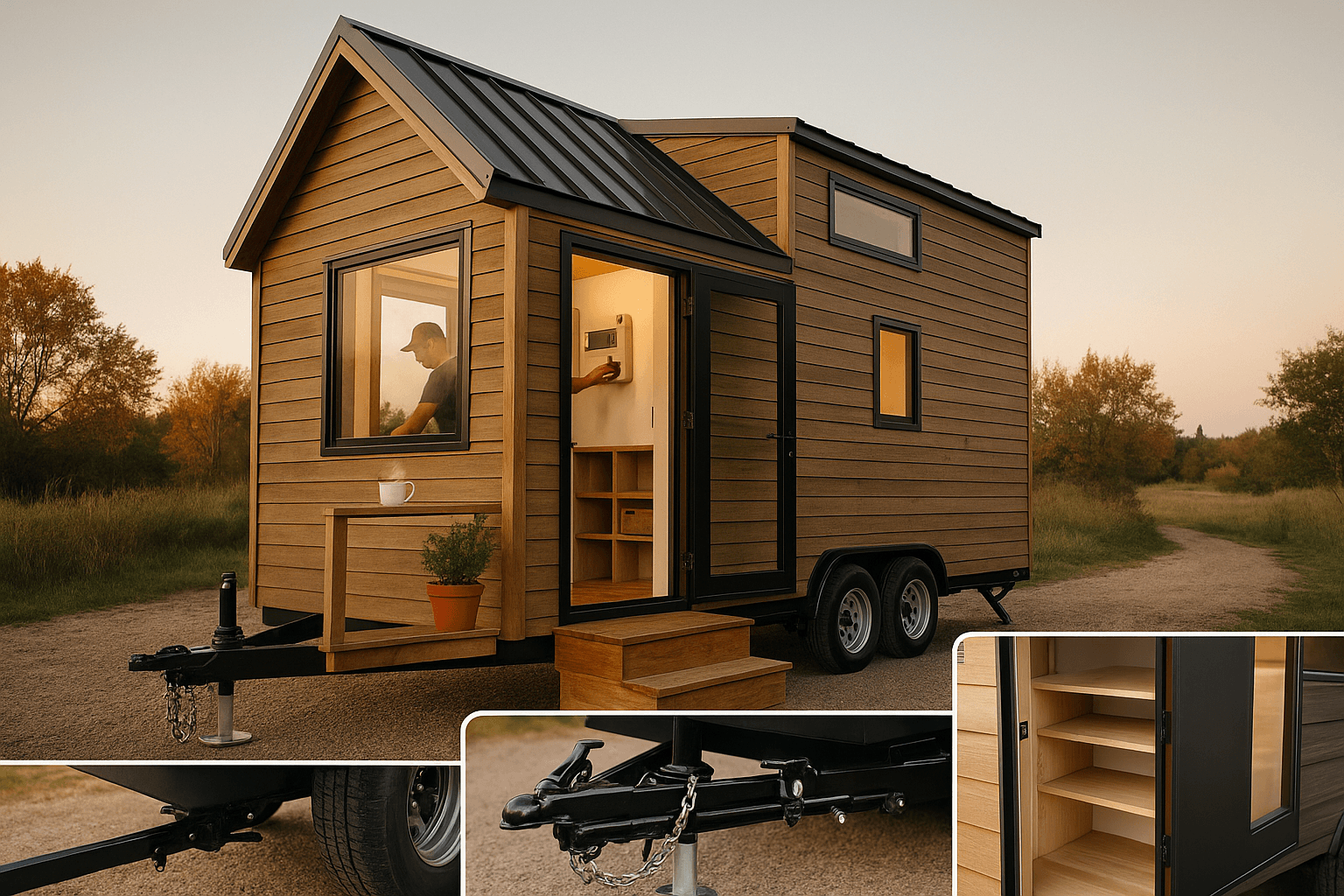
A tiny house on wheels (THOW) isn't just a small house—it's a house-like dwelling built on a road-legal trailer that's designed to be towed and connect to utilities like an RV or run completely off-grid. The difference between dreaming and living in one? Understanding your trailer specs, loaded weight, and utility plan from day one.
What makes a THOW actually work
A practical THOW combines:
- House-style construction (2x lumber framing, real insulation, residential windows)
- Certified road-legal trailer with VIN, lights, brakes, and safety chains
- Towable design (even if you only move it twice a year)
- Smart utility connections for hookups or off-grid living
With TinyHouses, you can design your THOW layout within common road limits first—then browse marketplace listings that match your towing capacity and off-grid needs.
THOW vs everything else
| Type | Mobility | Built for | Why it's different |
|---|---|---|---|
| THOW | Towable | Long-term living | Heavier, home-like feel; towing depends on trailer ratings |
| Travel trailer | High mobility | Frequent travel | Lightweight RV materials; standardized for road life |
| Park model | Delivered once | Permanent spot | Often too heavy for regular towing |
| Cabin | None | Foundation living | Not towable; different permits and codes |
Your trailer determines everything
Ignore Pinterest inspiration for a moment. Your trailer specs determine your legal reality, towing requirements, and what you can actually build.
Bumper-pull vs gooseneck trailers
Bumper-pull (most common)
- Hitches to a ball on your vehicle
- Simpler setup, more tow vehicle options
- Can be sensitive to weight distribution
Gooseneck (for longer/heavier builds)
- Hitches in the truck bed
- Better stability, higher weight ratings
- Allows loft space over the hitch area
- Requires pickup truck with bed hitch
The numbers that matter
When shopping trailers or finished THOWs, demand these specifications:
- GVWR (Gross Vehicle Weight Rating): Maximum loaded weight allowed
- GAWR (Gross Axle Weight Rating): What each axle can handle
- Dry weight: Empty trailer weight (often optimistic—verify)
- Payload capacity: GVWR minus dry weight (your stuff + water + systems)
- Tongue/pin weight: Downward pressure on your hitch
TinyHouses advantage: Our design process helps you plan within specific trailer classes, so you know whether your dream belongs on a lighter bumper-pull or needs a heavy-duty gooseneck.
Size limits shape every layout
Most U.S. THOW designs target these "no special permit" dimensions:
- Width: 8'6" (102 inches) for standard road travel
- Length: 16–30 ft trailer decks (longer gets complicated fast)
- Height: ≤13'6" total to clear bridges and utilities
How size affects livability
Loft considerations:
- More loft space = less ground floor footprint
- Impacts total height and stair placement
- Stairs improve daily comfort but add weight and space
Storage reality:
- Built-ins maximize space efficiency
- Heavy storage pushes you into higher GVWR classes
- Think vertically, but watch your height limits
With TinyHouses, generate multiple layouts at the same length—compare "ladder loft + spacious living" versus "stair loft + extra storage"—all within common road-legal targets.
Weight: the constraint nobody talks about
Most first-time buyers obsess over square footage. Experienced THOW owners know weight determines what you can tow, where you can go, and how safely you can stop.
Realistic weight expectations
Most livable THOWs land between 10,000–20,000 lb GVW depending on:
- Trailer length and axle package
- Framing materials and exterior choices
- Appliances and water system capacity
- Solar/battery system size
- Interior finishes and personal belongings
The loaded weight surprise
A "12,000 lb dry" THOW easily becomes 15,000+ lb loaded with:
- Personal belongings and seasonal gear
- Full water tanks
- Tools and outdoor equipment
- Battery bank and inverter system
Features that add serious weight
- Tile showers and stone finishes
- Solid-surface countertops
- Full-size appliances
- Large solar arrays with big battery banks
- Oversized water tanks
Save multiple design versions in TinyHouses—"hookup-ready" and "off-grid package"—to see how system choices affect space allocation and weight distribution.
Towing reality: it's a system, not just a truck
Towing a THOW safely requires matching multiple components: weight ratings, payload capacity, hitch limits, brakes, and real driving conditions.
Vehicle matching checklist
- Trailer GVWR and expected loaded weight
- Tongue/pin weight (eats into vehicle payload)
- Tow vehicle's tow rating and payload capacity
- GCWR (combined vehicle + trailer weight limit)
- Proper hitch class and receiver rating
Reality check: Most comfortable THOW towing happens with 3/4-ton to 1-ton trucks, especially for goosenecks over 24 feet.
Safety equipment (non-negotiable)
- Electric trailer brakes with in-cab controller
- Breakaway system (activates if trailer disconnects)
- Properly rated safety chains, lights, and tires
- Load-appropriate tire pressure monitoring
How often do people actually move?
Many THOW owners are "towable, not traveling." Common patterns:
- Seasonal moves (summer/winter locations)
- Land transitions (lease changes, new property)
- Initial delivery (builder to permanent site)
Browse TinyHouses marketplace with filters for "park-friendly" setups versus "frequent-move" builds based on your actual moving plans.
Utilities: hookups vs off-grid (most people choose both)
THOWs can plug in like RVs, run completely off-grid, or—most commonly—handle both scenarios.
Hookups-ready (RV park compatible)
- Power: 30A or 50A shore power connection
- Water: Potable water inlet with pressure regulation
- Waste: RV-style sewer connection for black/gray water
Off-grid capable
- Power: Solar panels + battery bank + inverter (backup generator)
- Water: Onboard fresh tanks + pump + filtration + refill strategy
- Waste: Composting toilet or cassette system + gray water plan
The hybrid approach (most practical)
Smart THOW owners design for:
- Hookups for daily living
- Battery/tank capacity for short off-grid stays
- Generator backup for extended autonomy
TinyHouses helps you design mechanical zones upfront—planning where connections land so your finished build works at RV parks without awkward exterior modifications.
Three common THOW tiers (planning framework)
| Size | Length | Typical use | Tow vehicle | Utility style |
|---|---|---|---|---|
| Compact | 16–20 ft | Solo/couple, minimalist | 1/2-ton to 3/4-ton | Hookups + light hybrid |
| Mid-size | 20–26 ft | Full-time comfort, storage | 3/4-ton to 1-ton | Hookups + hybrid off-grid |
| Large | 26–30+ ft | Family layouts, big systems | 1-ton+, often gooseneck | Full hookup + serious off-grid |
Start with the tier matching your lifestyle and towing reality, then use TinyHouses AI to generate layouts within that envelope.
Smart buying checklist
Bring these questions to any builder, seller, or listing:
Trailer specifications
- GVWR, GAWR, and axle count
- Tire load rating and wheel specifications
- Brake type with breakaway system confirmation
- VIN and road-legal compliance documentation
Weight documentation
- How was dry weight measured?
- Loaded weight assumptions and what's included
- Tongue/pin weight estimate or scale ticket
Utility connections
- Shore power type (30A vs 50A)
- Fresh water inlet and freeze protection
- Sewer connection type and tank setup
- Off-grid specs: solar watts, battery capacity, inverter size
Lifestyle reality check
- Where will you park most nights?
- Do you need winterization features?
- How often will you actually tow?
TinyHouses connection: These filters matter when moving from inspiration to action. Design first within real constraints, then shop by trailer type, utility readiness, and tow requirements.
Design within limits, live without compromise
Most THOW frustration starts with designing something beautiful—then discovering it's too wide, heavy, or incompatible with your parking plans.
TinyHouses solves this by letting you:
- Start from constraints: Choose target dimensions and design inside them
- Plan tow-vehicle-first: Create concepts matching your current truck or target class
- Compare system options: Save hookup-ready and off-grid versions to see space impacts
- Shop aligned listings: Browse marketplace filters for trailer type, tow class, and utility readiness
Design your towable dream home within real-world limits. Start your THOW layout at TinyHouses.to/design and browse marketplace listings that match your towing setup.