Tiny House 'Legal Hacks' That Actually Backfire (And What Works Instead)
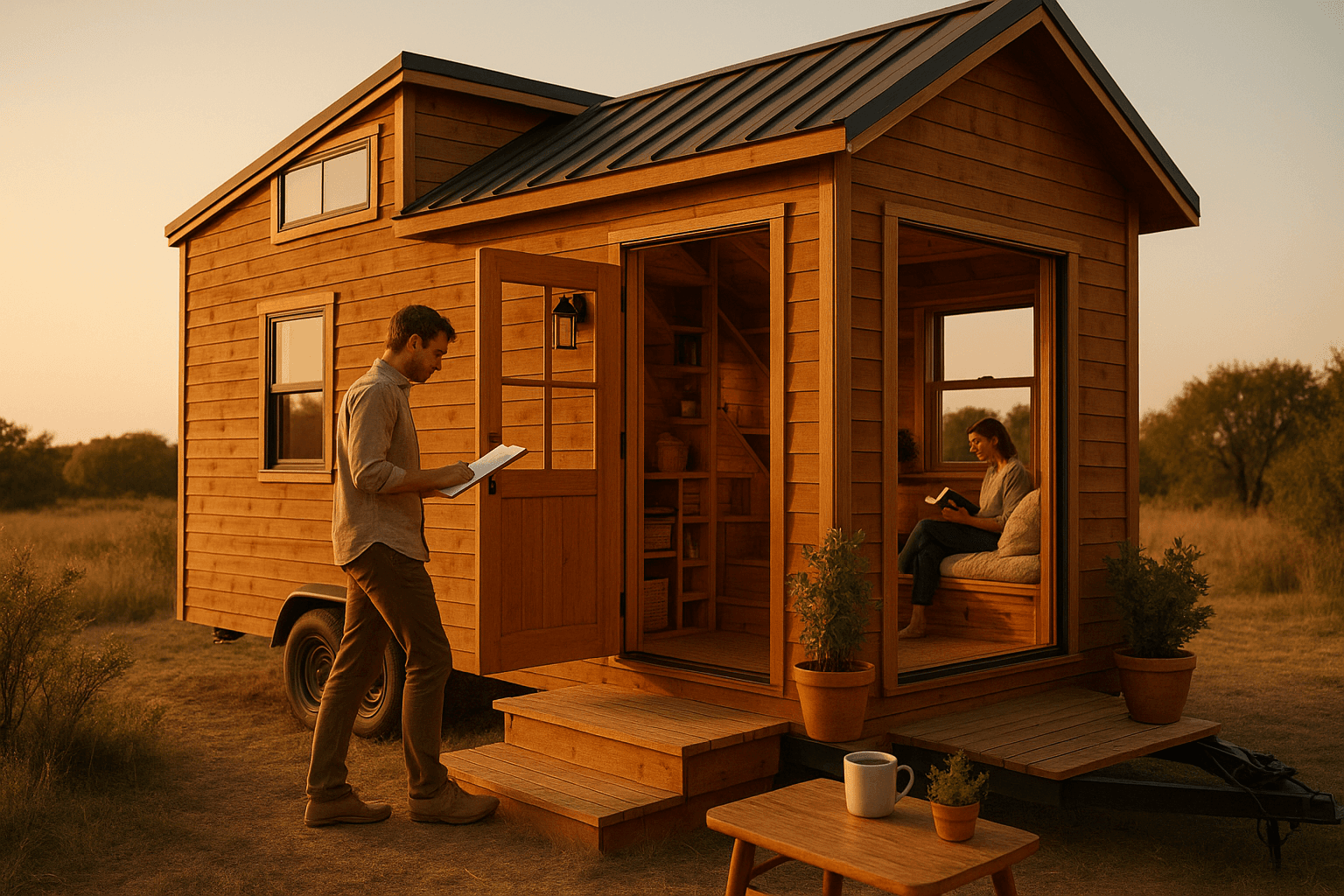
Those viral "tiny house legal hacks" you keep seeing? Most aren't real permission — they're borrowed time. They work right up until a neighbor complains, you file an insurance claim, or someone asks for your legal address. Here's what's actually legit, what's risky, and how to build a tiny house life that won't collapse when reality hits.
Why "hacks" go viral (and crash hard)
Most viral advice starts with something true-ish: "It's registered as an RV" or "It's temporary." The problem? Tiny house legality isn't one rule you can hack — it's a stack of requirements that all have to align.
Common crash points we see:
- Neighbor complains → code enforcement visits
- You need utilities → permitting triggers inspection
- Emergency call happens → occupancy becomes documented
- Insurance claim → adjuster asks "Is this legal?"
- Landowner sells → your handshake deal evaporates
At TinyHouses, we help you design around a legitimate pathway from day one. Better to start with clarity than scramble for excuses later.
The legality stack: why one "yes" doesn't override a "no"
Think of tiny house legality like a checklist — you need green lights across all these layers:
Zoning: What's allowed on that land (dwelling, ADU, RV occupancy)
Building standards: RV certification vs residential code compliance
Permits: Was it approved and inspected?
Utilities: Legal power, water, septic connections
Title: Vehicle registration vs real property
Insurance: Coverage for how you actually live
Private rules: HOA restrictions that override city permissions
Our AI designer helps you design around your chosen lane (RV park life vs permitted ADU) instead of hoping the law bends to fit your dream home.
Hack risk scorecard: what's legit vs gambling
| "Hack" Claim | Risk Level | When It's Actually Legal | Hidden Failure Points | Proof You Need |
|---|---|---|---|---|
| "RV classification = live anywhere" | Conditional | Licensed RV parks or jurisdictions allowing RV occupancy with clear terms | Zoning bans full-time living; insurance excludes stationary use; utility hookup restrictions | Written park confirmation of full-time stays; insurer quote for actual use; RV certification docs |
| "Just call it temporary" | High Risk | Real temporary use permits with defined terms (construction, caregiving, emergencies) | Expiration dates; renewal limits; complaint-triggered removal | Actual permit in hand; written removal timeline; utility connection approval |
| "ADU laws = backyard freedom" | Conditional | Following local ADU requirements: foundation + permits + code compliance | THOW may not qualify; minimum sizes; owner-occupancy rules; impact fees | Planning department email confirming eligibility; permit checklist; utility connection costs |
| "Ag exemption = no rules" | High Risk | Specific farm worker housing programs with proof requirements | Often doesn't waive septic/building codes; may require income thresholds | Written ag housing criteria; health department septic requirements |
| "Stay invisible" | Extremely High | Never truly legitimate — just undetected | Everything (complaints, mail patterns, emergency calls, liens) | No real proof exists — you're betting on staying hidden |
The expensive failure zones
Insurance gaps (the brutal surprise)
The problem: RV policies exclude full-time occupancy. Claims get denied if your setup is "unpermitted" or noncompliant.
TinyHouses approach: Get insurance quotes for your real life before you buy. Our marketplace conversations center on documentation that insurers actually accept.
Utility dead ends
The problem: "Off-grid" doesn't bypass septic permits, electrical safety codes, or water well requirements.
Smart move: Design with your utility reality in mind. RV park bound? Design for standard hookups. Going ADU route? Plan for permitted connections.
No legal address
Without one, you face ID problems, mail issues, school enrollment barriers, and banking friction.
Solution: Use TinyHouses rentals to test the lifestyle while you validate a long-term address pathway.
Forced removal chaos
When told to move, you often have days — not months. Towing permits, escorts, and storage yards add up fast.
Prevention: Pick lanes with low removal risk (approved communities) or permitted permanence (foundation ADUs).
Three legitimate pathways that actually work
RV Park Living (fastest start)
Best for: Solo/couples wanting mobility and quick entry Requirements: Park allows full-time stays; your home meets their specs TinyHouses advantage: Design THOW concepts optimized for park life, test with rentals first
Permitted ADU (most stable)
Best for: Families prioritizing stability, schools, and resale value Requirements: Zoning allows ADUs; you can meet code compliance and setbacks TinyHouses advantage: AI design around permit expectations, then find matching builders
Approved Communities (middle path)
Best for: Community living without individual permitting headaches Requirements: Properly entitled developments, not "fields where people park" TinyHouses advantage: Experience communities through rentals, shop globally for compliant homes
Pre-buy checklist (avoid expensive mistakes)
Before buying any tiny house:
- Build documentation: RV standards or residential code?
- Insurance reality: Can you get coverage for your intended use?
- Placement options: List 3-5 legal spots it could go today
Before renting land or buying property:
- Zoning confirmation: Full-time occupancy allowed for your unit type?
- Utility requirements: Legal wastewater plan and connection costs?
- Written lease terms: Removal timelines, compliance responsibility
- HOA restrictions: Do private rules override city permissions?
Scripts that get real answers
To planning/zoning: "Is full-time occupancy permitted at [exact address]? What permits are required for a [tiny house on wheels/foundation ADU]? Can you email me the specific code section?"
To landowners: "Have you had code enforcement contact about RV/tiny occupancy? What utilities are permitted on-site? If removal is required, what's the timeline?"
To insurers: "Please confirm in writing: coverage for full-time occupancy, stationary placement, and any permitting-related exclusions."
The bottom line
Most "legal hacks" are borrowed time, not real solutions. The safest path? Choose your lane (RV park, permitted ADU, or approved community), then design a home that fits that reality.
Start with our AI designer to create a tiny house concept around your actual pathway — not your wishful thinking. Then use our global marketplace to find builders and rentals that match your legal lane.
Because the best tiny house hack is building a life that doesn't need one.