The Hidden Systems That Make Tiny House Living Feel Effortless
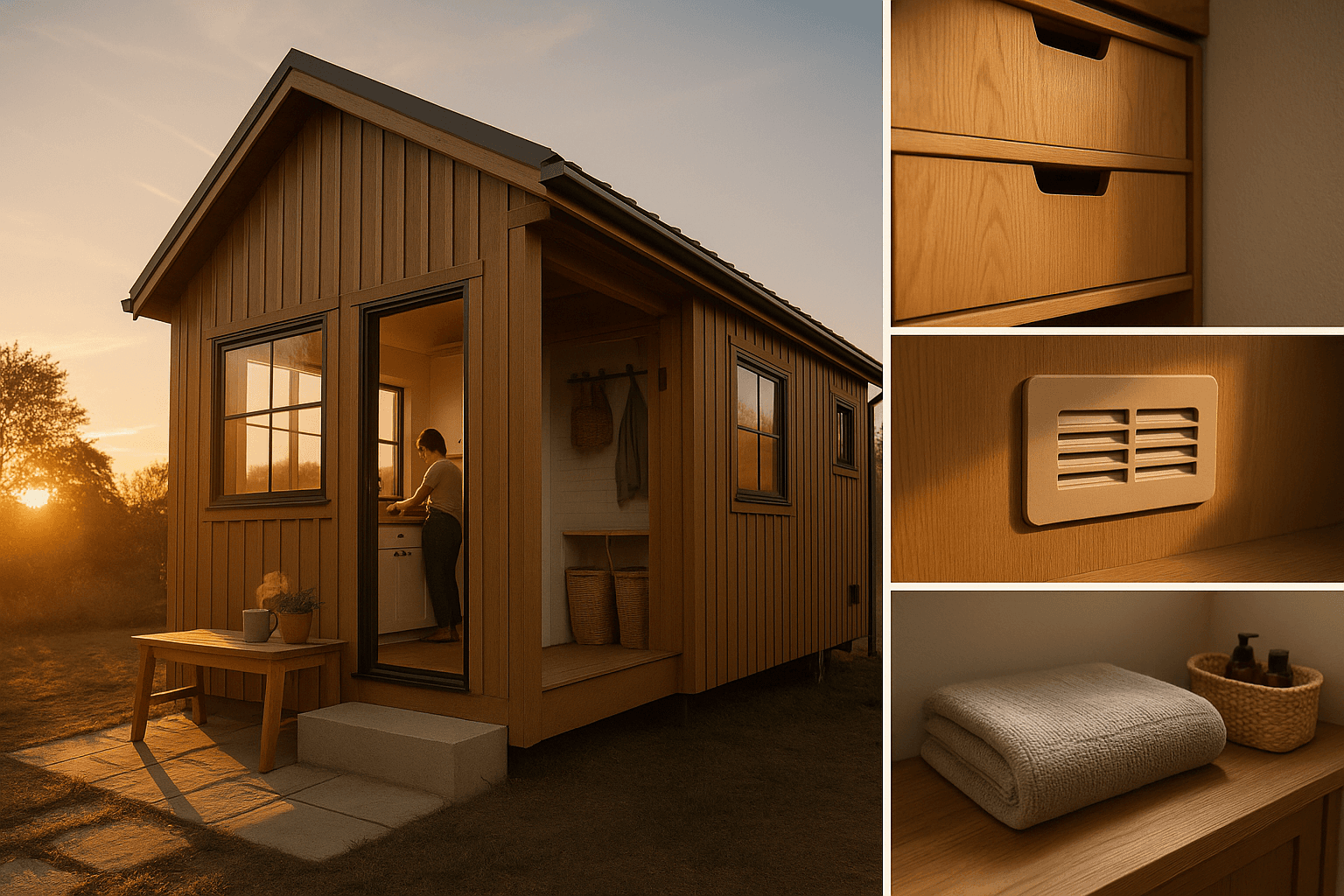
Tiny house tours show you the stage set—the finishes, the loft ladder, the "look how much storage" reveal. But daily life stays calm for a different reason: invisible systems.
In a tiny home, calm isn't about being perfectly minimalist. It's about reducing friction with a few repeatable flows—where things enter, where they pause, where they get processed, and how they exit.
The Calm Equation: zones + cadence + rules
A tiny house feels chaotic when everyday tasks don't have a default path.
What tours optimize for:
- Visual minimalism
- "Instagram angles" (clear counters, styled beds)
- Clever cabinetry
What real calm requires:
- Zones (where things live)
- Cadence (how often you reset)
- Rules (simple constraints that remove decision fatigue)
Your tiny-home friction audit
If any of these are "unclear," clutter multiplies:
- Where do shoes, jackets, bags, keys land within 5 seconds of entry?
- Where does laundry stage—dirty, drying, clean-but-not-put-away?
- Where does moisture go after showers, cooking, and wet gear?
- Where do trash/recycling/compost live—and how often do they leave?
Design smart from the start: Our AI design tools help you plan these systems into your layout—not improvise them later.
System #1: The Entry Drop Zone
Tour version: a cute door and a plant.
Real-life version: a micro-sequence that prevents "table drift" (when the dining table becomes the universal landing pad).
The minimum viable drop zone
Allocate one dedicated spot per daily-carry category:
- Shoes: a tray or single shelf (limit by space on purpose)
- Coats/bags: hooks at shoulder height + one lower row for kids
- Keys/wallet/earbuds: a bowl or slim ledge
- Mail/deliveries: a vertical slot (not a horizontal pile)
- Charging: one "charging shelf" so cords don't migrate
Make it work in wet climates, with pets, or kids
- Wet boots/gear: a "wet zone" tray + dedicated towel hook (non-negotiable)
- Dog kit: leash + poop bags + towel at the door (not in a drawer)
- Backpacks/sports gear: one bin per person; when it's full, something rotates out
System #2: Laundry Flow
Laundry isn't hard because of the clothes—it's hard because, in a tiny house, laundry has nowhere to wait.
If you run even one small load per day, you need a staging zone—or clean/dirty piles will spread across your only open surfaces.
Choose your laundry model
| Model | Good for | Must design for |
|---|---|---|
| Compact washer (in-home) | Low friction, frequent small loads | A drying plan + folding surface |
| Ventless dryer | Humid/cold regions | Airflow and time |
| Line-dry strategy | Low energy, gentle on clothes | A "drying lane" that doesn't block living space |
| Laundromat batching | Frees up home space | Bigger hampers + weekly cadence |
The 3-zone workflow
Design three distinct "states":
- Dirty: one hamper per person or one divided hamper
- In-process: a spot for drying or waiting-to-fold items
- Clean: a bin for "clean but not put away" (so it doesn't become a couch pile)
The 30-second rule
If retrieving or putting away an item takes more than ~30 seconds, it will live on countertops, chairs, or the bed.
Fixes that don't require more square footage:
- Put everyday clothing in the easiest-to-reach zone
- Use open bins for categories (socks, tees, gym clothes)
- Put folding where it naturally happens (bed edge, drop-leaf table, pull-out surface)
System #3: Moisture + Odor Control
In a tiny house, the air volume is small—so humidity and smells spike faster. "Fresh" tiny homes aren't lucky; they're operated.
Target range: 30–50% relative humidity
When RH climbs to ~60%+, condensation and mold risk rises—especially on cold surfaces.
Common moisture culprits
- Showers and cooking
- Drying clothes indoors
- Multiple occupants in small volume
- Wet boots, rain jackets, gear
The invisible moisture system
- Hygrometer: track RH so you're not guessing
- Bathroom fan habit: treat it like a "post-shower protocol"
- Vented range hood: vent cooking moisture outside when possible
- Dehumidifier placement: where air circulates (not trapped in corners)
- Make-up air protocol: planned window crack during/after cooking or showering
- Wet zone protocol: towels, shower mat, rain gear each get a drying home
Reality check: "It smelled like dinner all night"
That usually means moisture and odor weren't exhausted quickly, and soft goods absorbed it. The fix is faster air exchange + fewer damp items indoors.
System #4: Kitchen Output Flow
In tiny kitchens, "clean" is mostly about output flow. If waste has no easy path out, it stacks up fast.
The 3-stream system
Set up: Trash • Recycling • Compost
The win isn't the bins—it's the take-out cadence.
Realistic cadence that prevents overflow
- Compost: empty daily (it's the smell trigger)
- Trash: 2–3x/week (tiny bins fill fast)
- Recycling: weekly (or when one tote fills)
Countertop policy
Pick a simple rule like:
- Allowed to live out: one drying rack or one coffee setup
- Must be stored after use: prep tools, extra appliances, bulk food
This keeps your only prep surface usable.
System #5: The Weekly Reset
Tours feel calm because everything is reset. The secret is you don't reset constantly—you reset on schedule.
Nightly close (10–15 minutes)
Put the house back into "morning-ready" mode:
- Clear table/counters to baseline
- Start dish cycle / wipe sink
- Put laundry into correct state (dirty/in-process/clean)
- Return shoes/bags to drop zone
Weekly reset (60–90 minutes)
Make it a predictable block:
- Floors (crumbs are louder in small spaces)
- Bathroom (especially moisture zones)
- Bedding refresh
- Fridge scan (tiny fridges punish "mystery containers")
- Full trash/recycling/compost take-out
- Gear check: what migrated into living space this week?
Seasonal rotation
Tiny living works when storage is zoned by frequency:
- Daily (easiest access)
- Weekly (reachable, but not prime)
- Seasonal (harder access)
Label 2–4 seasonal bins and decide where they live before you move in.
Smart One-In-One-Out for Real Life
Generic minimalism advice breaks down with kids, hobbies, pets, or remote work. Instead of moral rules, use category caps.
Category caps (simple, enforceable)
Examples you can tailor:
- Mugs: 4–6 total
- Towels: 2 per person + 2 extras
- Toy storage: X bins (when full, rotate)
- Outdoor gear: one "active" shelf + one seasonal bin
Family version: rotation beats restriction
- Create one "active toy" shelf (what's out now)
- Everything else goes into toy library bin (rotate weekly)
- Add "hand-me-down pipeline": keep / donate / too-small
WFH version: project parking
- One drawer/bin per person for work gear
- One "meeting-ready reset" rule: laptop, cables, notes return after last call
- Single inbox for mail/deliveries so paper doesn't spread
Your Floor Plan Should Generate Your Routines
The most overlooked truth: systems are easier when they're placed.
A good tiny layout isn't only "where the bed goes." It's where the hamper lives, where wet boots dry, where compost exits, where backpacks land.
Design the operating manual with the home
With our AI design tools, you can:
- Generate storage zones (daily/weekly/seasonal)
- Map a drop zone (hooks, bench, mail slot, charging shelf)
- Choose a laundry workflow and place its staging
- Draft a moisture control plan (fan habits, dehumidifier placement)
- Create a weekly reset checklist tailored to your reality
Then use our marketplace to rent to test or buy a tiny house that matches the systems—not just the vibe.
Starter Systems Map
Copy, paste, and fill in:
Zones (where things live)
- Drop zone: ________________
- Laundry (dirty/in-process/clean): ________________
- Wet zone (boots/gear/towels): ________________
- Work/school parking: ________________
- Seasonal storage: ________________
Cadence (when resets happen)
- Nightly close: ________________
- Weekly reset: ________________
- Trash/recycling/compost: ________________
- Seasonal swap: ________________
Rules (category caps + defaults)
- Counters baseline: ________________
- Toy cap/rotation: ________________
- WFH project parking: ________________
- One-in-one-out categories: ________________
Design your invisible systems first. Our AI can translate your daily reality into a personalized tiny house plan—so your routines fit the layout before you commit. Start designing →