Tiny House Pricing Guide: What You'll Pay (and Why) in 2026
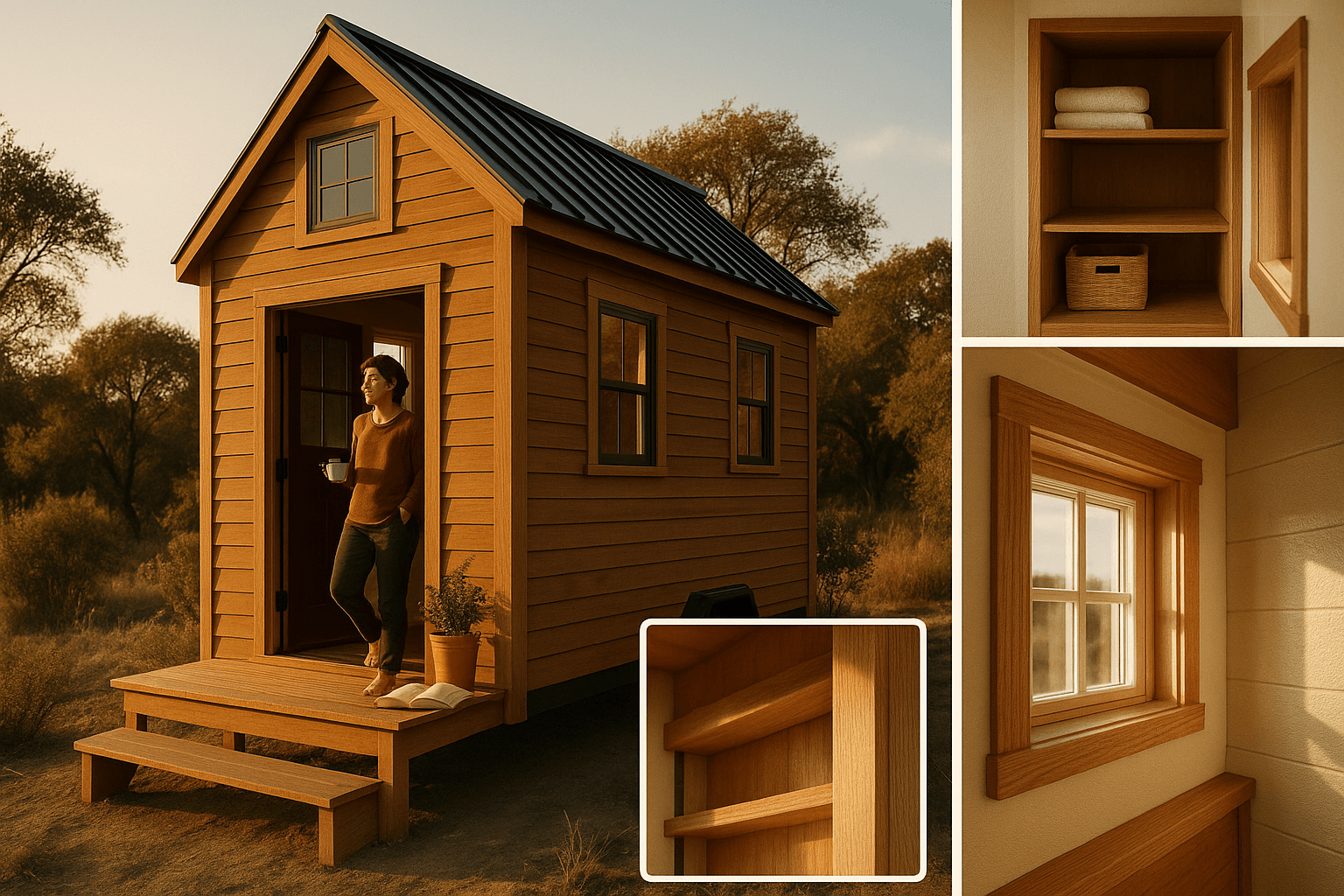
Tiny House Pricing Guide: What You'll Pay (and Why) in 2026
In 2026, buying a tiny house typically costs $15,000–$300,000+ (excluding land)—and the reason the range is so wide is simple: your price is driven by (1) type (on-wheels vs foundation), (2) build tier (shell/DIY/turnkey), and (3) the "all-in" reality (delivery, permits, utilities, site work).
At TinyHouses, we help you connect the dots between dream specs and real-world pricing: you can design your tiny house with AI, get a feature-driven cost range, then compare your design to real listings worldwide so your budget is grounded in what's actually available.
Tiny house price ranges in 2026 (sticker price, excluding land)
These are purchase prices for the structure itself (and sometimes the trailer), before the "hidden costs" that often decide whether your budget works.
Quick pricing table (2026-ready)
| Tiny house type / build tier | Typical price range | What it usually includes | What's commonly missing |
|---|---|---|---|
| DIY shell (weathertight) | $15k–$40k | Framing, exterior, roof, basic windows/door | Insulation details, plumbing, electrical, kitchen, bathroom, HVAC, finishes |
| DIY full build (materials + selective trades) | $30k–$80k | You manage build + hire help for key trades | Time, tools, rework/mistakes, inspections, code compliance varies |
| Turnkey tiny house on wheels (THOW) | $60k–$150k+ | Completed interior, systems, ready to live | Site setup, delivery, ongoing parking costs |
| Foundation tiny home (ADU-style small home) | $100k–$300k+ | Code-heavy build potential, more "house-like" | Site work, utility trenching, foundation, permits can dominate |
| Used tiny house | ~10–40% less than new | Faster purchase, sometimes upgraded | Delivery/refit can erase savings if it's far away or worn |
How TinyHouses helps: once you pick a direction (THOW vs foundation, shell vs turnkey), our platform is built to help you (1) design to a target budget and (2) validate that budget against global marketplace listings—not just generic ranges.
Cost per square foot (useful, but easy to misread)
People ask for $/sq ft, but tiny houses often run higher per square foot than conventional homes because the expensive parts—kitchen, bathroom, mechanical systems—don't shrink proportionally.
Directional $/sq ft ranges (2026)
- Tiny House on Wheels (THOW): ~$250–$600+/sq ft
- Foundation small home / ADU-style: ~$300–$700+/sq ft
What this means in practice: a beautifully specified 200 sq ft tiny house can cost more per square foot than a larger home—while still being a lower total cost.
How TinyHouses helps: our AI design approach is more accurate than $/sq ft guessing because it ties pricing logic to features (length, loft count, window package, off-grid tier, finish tier), then lets you compare to real comparable homes on the marketplace.
The biggest factors that change tiny house price (feature-by-feature)
If you want to control cost without sacrificing livability, think in price drivers—not vibes.
1) Type: on-wheels vs foundation (the biggest swing)
- THOW (on wheels) often costs less up front because you may avoid (or reduce):
- Foundation costs
- Some site work
- Certain permitting pathways (depends heavily on jurisdiction)
- Foundation builds often jump in total cost because of:
- Site work + foundations (frost depth matters)
- Utility trenching & hookups
- Permits, inspections, engineered plans
- Code requirements closer to a conventional home
TinyHouses angle: when you design on our platform, you can explore two versions of the same home—THOW and foundation—and keep the layout consistent while comparing what changes the budget.
2) Size & complexity: length is money, complexity is more money
A simple 16' layout and a 28' layout are not just "12 feet apart." Length cascades into:
- Trailer size (THOW)
- Material quantities
- Window/door count
- Roofing complexity
- Labor time
Complexity multipliers (these tend to push you into premium pricing faster):
- Multiple lofts
- Complex rooflines, dormers
- Slide-outs
- Large cantilevers
- Wet bath or tiled shower build-outs
TinyHouses angle: you can iterate layouts quickly—e.g., 20' vs 24' vs 28'—and see how space decisions affect your estimate and your ability to match real listings.
3) Build tier: shell vs semi-custom vs fully custom
- Shell can be a smart move if you:
- Have time, tools, and a controlled build environment
- Want to spread costs over time
- Turnkey is often cheaper than it looks once you account for:
- Your time (and the cost of delays)
- Mistakes/rework
- Paying for tools and learning curve
TinyHouses angle: our marketplace lets you compare shell listings vs turnkey listings side-by-side, using the same spec checklist, so you're not tricked by a low starting price.
4) Systems: RV-simple vs residential-comfort
Your system choices can push a tiny house from "weekend cabin" to "real home."
Common cost movers include:
- Plumbing: RV hookups vs residential plumbing, hot water type
- Electrical: basic shore power vs higher-capacity service, smart panels
- HVAC: electric resistance vs mini-split comfort
- Cooking: electric vs propane, ventilation level
TinyHouses angle: when you design with AI, you can specify your lifestyle (full-time, part-time, cold climate, remote living) and build a spec that aligns with it—then compare to listings that match those exact systems.
5) Climate durability: insulation, windows, moisture control
"Four-season" isn't a sticker—it's a build strategy. Price increases come from:
- Higher insulation levels
- Better windows (and more of them)
- Air sealing
- Moisture control / ventilation
- Snow load / wind rating considerations
TinyHouses angle: design for your climate first, then let the platform help you find builders/listings that already meet those requirements—so you don't pay twice retrofitting later.
6) Interior spec: the quiet budget killer (or value-maker)
The fastest way to blow a budget is death-by-upgrades:
- Custom cabinetry vs flat-pack
- Stone counters vs laminate
- Premium appliance packages
- Tile-heavy bathrooms
- Built-ins everywhere
Value-focused upgrades (often worth it for daily life):
- Better storage design
- A comfortable shower
- Durable flooring
- Ventilation and humidity control
TinyHouses angle: our AI design flow is ideal for testing "finish tiers" (simple, midrange, premium) while keeping the layout constant—so you can decide where upgrades actually matter.
Off-grid upgrades: what they add (and when they're worth it)
Off-grid isn't one thing. In 2026, it helps to think in tiers.
Off-grid cost tiers (simple framework)
| Off-grid tier | What it means | Typical add-on cost impact |
|---|---|---|
| Off-grid-ready | Prepped to add solar/water later; smart wiring & space planning | Low–moderate |
| Hybrid off-grid | Solar + batteries for basics; still uses occasional hookups/generator | Moderate |
| Fully off-grid | Designed to live independently long-term | Higher |
Common off-grid upgrades that change price
- Solar + batteries: biggest swing item; cost depends on how "home-like" your power needs are
- Water: storage tanks, pump, filtration; complexity rises in freezing climates
- Toilet choices: composting or incinerating systems can raise upfront cost but reduce reliance on sewer
- Heating/cooking: propane systems and safe storage vs all-electric strategy
When off-grid is worth it:
- You're buying access to locations (remote land, nature-forward living)
- You want resilience (power outages, rising utility costs)
TinyHouses angle: design an off-grid version and a grid-tied version in minutes, then browse the marketplace for comparable listings—so you can see what off-grid capability costs in real inventory, not just in theory.
Hidden costs checklist: the "all-in" budget most buyers forget
A tiny house can look affordable until you add the costs that make it livable—delivery, site work, permits, utilities, and setup.
Hidden costs (with realistic ranges)
- Trailer (THOW): ~$5k–$12k+ (length, axles, brakes)
- Delivery / transport: ~$1k–$10k+ (distance, permits, escorts)
- Crane / telehandler (if needed): varies by access and lift complexity
- Site prep: ~$1k–$20k+ (grading, gravel pad, drainage, driveway)
- Foundation (if applicable): ~$5k–$30k+ (pier vs slab; frost depth)
- Permits + plans + inspections: ~$500–$10k+ (jurisdiction-dependent)
- Utility connections: ~$3k–$30k+ (water, sewer/septic, well, trenching, service upgrades)
- Insurance: varies; THOW often RV-style, foundation more like homeowners
- Maintenance reserve: roofs/sealants, moisture management, tires/axles (THOW)
- Ongoing monthly costs: site rent/parking (highly local), utilities, insurance
TinyHouses angle: this is where a platform beats a spreadsheet. When you design and then browse, you can sanity-check whether your preferred homes are typically:
- Local enough to avoid expensive transport
- Built for your climate (reducing retrofit costs)
- Realistically legal/permit-ready for your area
3 example budgets (sticker price + hidden costs = "all-in")
These are simplified examples to show how totals stack up. Your jurisdiction and site access can move numbers dramatically.
Example 1: Budget THOW near hookups (simple, realistic first tiny)
| Cost item | Typical range |
|---|---|
| Turnkey THOW (budget builder) | $60k–$90k |
| Delivery | $1k–$5k |
| Site prep (gravel pad + minor grading) | $1k–$7k |
| Utility hookups (basic) | $3k–$10k |
| Insurance + initial setup | $500–$3k |
| All-in estimate | ~$65k–$115k |
TinyHouses shortcut: design a simple 20'–24' THOW with standard hookups in our AI tool, then filter marketplace listings to match length, layout, and finish tier—so you're comparing like-for-like.
Example 2: Midrange turnkey THOW with premium finishes (comfort-forward)
| Cost item | Typical range |
|---|---|
| Turnkey THOW (midrange) | $90k–$130k |
| Premium interior spec upgrades | $5k–$25k |
| Delivery (longer distance / escorts possible) | $2k–$10k |
| Site prep + access improvements | $3k–$15k |
| Utilities + service upgrades | $5k–$20k |
| All-in estimate | ~$105k–$200k |
TinyHouses shortcut: use AI to test which upgrades actually matter to you (storage wall vs dormer vs appliance package), then browse listings worldwide to spot builders who include those features as standard (often cheaper than custom add-ons).
Example 3: Foundation tiny home / ADU for rental income (code + site heavy)
| Cost item | Typical range |
|---|---|
| Foundation tiny home build | $100k–$300k+ |
| Site work + foundation | $10k–$50k+ |
| Permits, plans, inspections | $2k–$15k+ |
| Utilities (trenching, sewer/septic, service upgrades) | $10k–$40k+ |
| All-in estimate (excluding land) | ~$125k–$400k+ |
TinyHouses shortcut: design an ADU-style small home in the AI tool with your intended layout (studio vs 1-bed), then compare it against marketplace models and builders who already target ADU compliance—reducing expensive redesign loops.
Financing reality check (what changes your monthly cost)
Pricing isn't just purchase price—it's how you pay for it.
- THOW financing may look like an RV/chattel loan (terms and rates differ from mortgages).
- Foundation/ADU financing is more likely to fit mortgage products if code-compliant and on owned land.
TinyHouses angle: because you can compare designs and listings globally, you can also make smarter financing tradeoffs—e.g., choosing a spec that keeps you in a more financeable category (turnkey documentation, compliance-ready build approach, etc.).
How to compare tiny house listings fairly (so you don't overpay)
Two homes can both be listed as "28-foot tiny house" and be priced $40k apart for valid reasons.
Use this quick comparison checklist
- Type: THOW vs foundation
- Length / square footage: apples-to-apples
- Trailer included? (THOW)
- Systems level: RV-simple vs residential-comfort
- Climate spec: insulation/windows/ventilation
- Finish tier: budget vs midrange vs premium
- Off-grid level: ready vs hybrid vs full
- Delivery: included, optional, or on you
TinyHouses angle: our platform is designed for this exact problem—design a reference spec, then browse listings that match it. It's the fastest way to avoid comparing "pretty photos" instead of real specs.
FAQ: Tiny house cost in 2026
How much does a tiny house cost in 2026 all-in?
For many buyers, an "all-in" tiny house budget (excluding land) lands around:
- THOW: roughly $65k–$200k depending on finishes, delivery, and hookup needs
- Foundation tiny home/ADU: roughly $125k–$400k+ once you include site work, permits, and utilities
TinyHouses helps by letting you estimate based on features and validate against real listings.
Is it cheaper to build DIY or buy turnkey?
Sometimes DIY is cheaper, but DIY often becomes expensive when you account for tools, time, mistakes, delays, and paying trades to fix issues. Turnkey can be better value if you need speed, predictability, and professional execution.
On TinyHouses, you can compare shell vs turnkey listings and design both paths to see what actually fits your budget and timeline.
What's the real cost difference between on-wheels and foundation?
On-wheels often avoids the heaviest site and code costs, while foundation builds commonly add foundation + trenching + permits + inspections. That's why foundation totals can climb quickly even at similar square footage.
How much do off-grid upgrades add?
It depends on whether you mean off-grid-ready or fully off-grid. Solar + batteries and water systems are typically the biggest add-ons, and cold climates raise complexity.
Designing an off-grid and grid-tied version in TinyHouses makes the tradeoff obvious—then you can compare to off-grid-ready listings worldwide.
Do tiny houses hold their value?
- THOW can depreciate more like vehicles (condition, transport wear, market demand matter).
- Well-built, well-maintained models in good condition—especially when local—can hold value better.
TinyHouses helps you price-check by comparing used and new listings with similar specs.
What costs surprise first-time buyers the most?
Most surprises come from:
- Delivery + difficult access
- Site prep and drainage
- Utility trenching/service upgrades
- Permits and inspections
Can I legally park a tiny house anywhere?
Usually no—zoning and permitting vary widely. This affects total cost because legal placement may require added site work, foundations, or utility standards.
TinyHouses helps by letting you choose a design that matches your likely placement path (THOW flexibility vs foundation compliance), then find listings built for that reality.
What size is the "sweet spot" for price vs livability?
Many people find value around 20'–28' for THOW: enough comfort without exploding cost and transport complexity. Past that, complexity and logistics can rise quickly.
What features add the most value vs just add cost?
Often high-value:
- Storage design
- Better ventilation/moisture control
- Quality windows for comfort
- A practical bathroom
Often cost-heavy:
- Complex rooflines/dormers
- Tile-heavy wet baths
- Over-custom cabinetry everywhere
How much does it cost to ship a tiny house across states or internationally?
Transport can range ~$1k–$10k+ and rises with distance, escort requirements, permits, and access. International shipping can add taxes/VAT/import duties and logistics constraints.
TinyHouses' global marketplace makes it easier to compare "local deal" vs "far-away deal" and see when shipping erases savings.
What's a realistic monthly cost?
Monthly cost depends on your financing, plus ongoing:
- Site rent/parking
- Utilities
- Insurance
- Maintenance reserve
If you want, we can help you work backward: design to a target purchase price, then choose listings that keep your monthly burn rate realistic.
How TinyHouses helps you price your tiny house idea fast (and accurately)
Most people start with a budget and a Pinterest board. The smarter move is to start with a spec.
With TinyHouses you can:
Estimate (feature-driven): Use our AI design tool to set length, layout, finish tier, climate needs, and off-grid level—then get a cost range that moves with your choices.
Validate (market-driven): Browse our worldwide marketplace to find real tiny houses that match your design, so you can compare pricing across regions, builders, and build tiers.
Adjust intentionally: If the price is high, you'll know why—and what to change (simplify roofline, reduce window package, choose hybrid off-grid, etc.).
Avoid overpaying: the 2026 tiny house pricing rule
Don't shop tiny houses by sticker price. Shop by all-in cost:
- Base build price
- Delivery and access
- Site prep / foundation
- Permits and inspections
- Utility connections
- Insurance + maintenance
When you design first and compare second, you stop guessing—and start choosing.
Design your dream home. Explore pricing that matches reality. Start with our AI design tool and connect to our global marketplace.