Design Your Tiny House for Any Climate: The Complete Comfort Guide
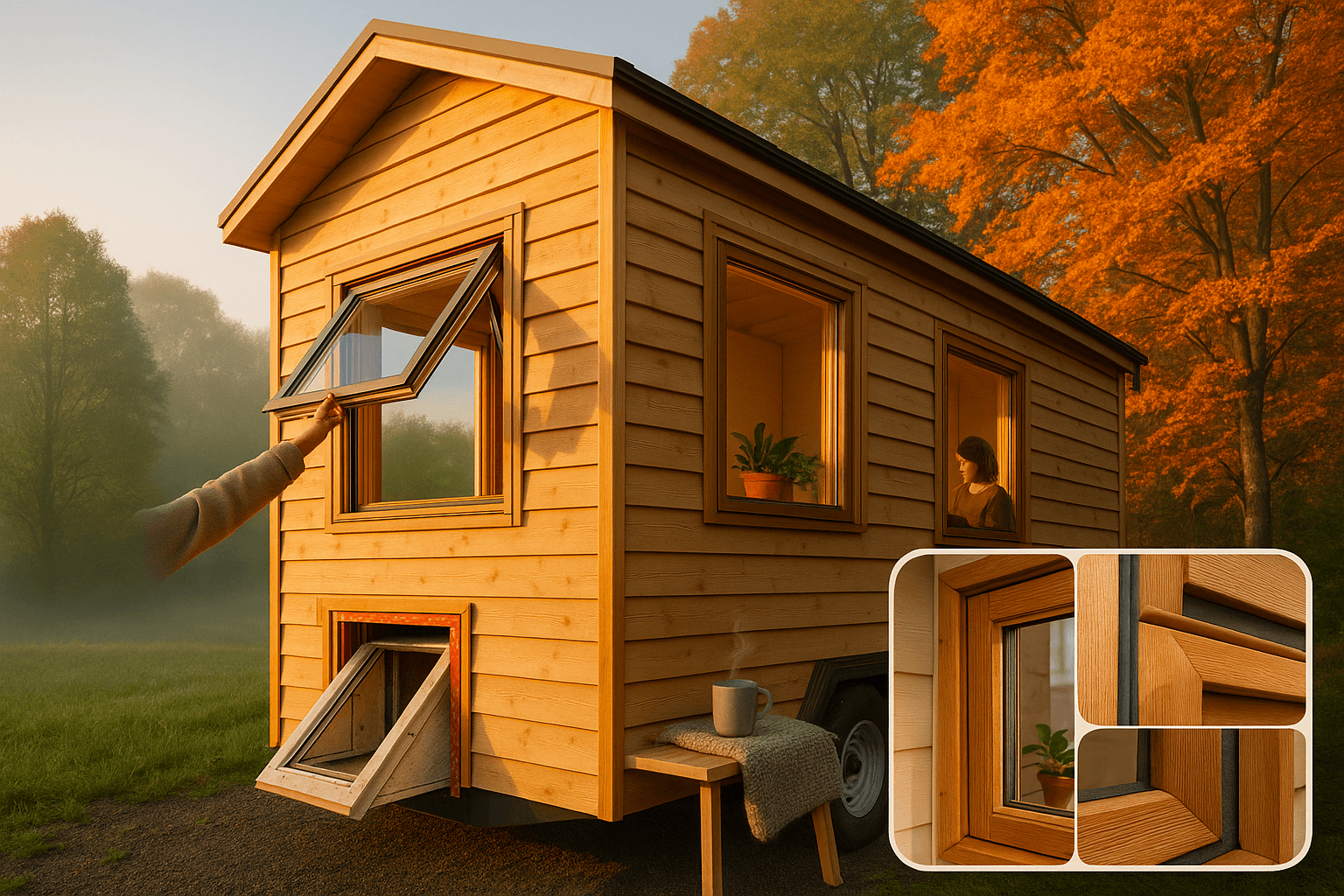
Tiny houses swing from hot to cold faster than regular homes—with more exterior surface per square foot, you feel every thermal mistake immediately. Year-round comfort comes from nailing three fundamentals: thermal envelope, strategic windows, and moisture control. Get these right, and your 200-square-foot home stays comfortable from desert summers to mountain winters.
Why Tiny Houses Are Different (The Physics You Need to Know)
Tiny homes are "skin-dominated" buildings—meaning you have way more exterior wall per square foot of living space. This amplifies every envelope decision:
- Small air leaks feel like major drafts
- Unshaded windows turn your home into an oven
- Poor insulation makes floors ice-cold or ceilings blazing hot
- Moisture has nowhere to hide—condensation shows up fast
The good news? Small improvements create dramatic comfort gains. Seal a few key air leaks, and suddenly your heater isn't running constantly.
The Comfort Sequence That Works
Treat comfort like a logical progression:
- Air-seal (stop drafts and humidity infiltration)
- Insulate (slow heat transfer through walls, roof, floor)
- Control moisture (prevent condensation and mold)
- Manage solar gain (strategic windows + shading)
- Ventilate smart (fresh air without energy penalty)
Skip steps or do them backwards, and you'll fight comfort problems all year.
Insulation Strategy: What Actually Works in Tiny Homes
Forget generic "more is better" advice. Tiny houses have unique constraints—shallow wall cavities, thermal bridging from trailer frames, and lots of corners where heat escapes.
Climate-Based R-Value Targets
These ranges work for most climates (always confirm local codes):
| Assembly | Target Range | Why It Matters |
|---|---|---|
| Roof/Ceiling | R-30 to R-60 | Loft comfort depends on this; intense solar loads |
| Walls | R-13 to R-30+ | Thin walls amplify thermal bridging |
| Floor | R-19 to R-40 | Trailer + wind = cold feet fast |
Tiny house reality check: Under-insulated floors and roofs are felt immediately—especially at night when temperatures drop.
Thermal Bridging: Your Comfort Enemy
Metal trailer frames conduct heat like crazy, creating cold spots and condensation risks. Wood studs bridge heat too, though less dramatically.
What helps:
- Continuous insulation (rigid foam or similar) to wrap around framing
- Thermal breaks where metal connects to living space
- Careful trailer detailing to avoid cold rims under the floor
Material Choices (What Works Where)
Closed-cell spray foam
- Best for: tight cavities, air sealing priority
- Watch out: cost, environmental impact, future repairs
Mineral wool
- Best for: fire resistance, moisture tolerance, sound control
- Watch out: needs excellent air sealing to prevent drafts
Fiberglass
- Best for: budget builds, wide availability
- Watch out: performs poorly with air movement—detailing must be perfect
Rigid foam board
- Best for: continuous layers, reducing thermal bridging
- Watch out: fire/vapor requirements, careful seam sealing
Air Sealing: Where Tiny Houses Win or Lose
Air leaks in tiny houses feel like open windows. Focus on these critical spots:
- Trailer-to-floor junction (biggest leak source)
- Plumbing/electrical penetrations (bathroom, kitchen, exterior connections)
- Window and door rough openings (proper flashing + foam)
- Roof penetrations (vents, fans, skylights)
- Loft transitions (where roof meets walls)
Pro move: Get a blower door test. It's the only way to verify you actually sealed what you think you sealed.
Windows: Beyond "More Light"
In tiny houses, windows can make or break comfort. Three numbers matter most:
- U-factor: Heat loss resistance (lower = better winter comfort)
- SHGC: Solar heat gain (higher = more heat, good or bad depending on climate)
- Air leakage: Draft resistance (lower = tighter)
Climate-Smart Window Strategy
Cold climates:
- Prioritize low U-factor
- Consider higher SHGC on south windows (free winter heat)
- Minimize north-facing glass
Hot climates:
- Prioritize low SHGC, especially east/west
- Shade first, size second
- Design for cross-ventilation
Mixed climates:
- Balanced specs + flexible shading
- Operable windows on opposite sides for airflow
Placement Beats Area
Instead of "how many windows," ask "where do I need sun and air control?"
For cross-ventilation: Operable windows on opposite walls For stack effect: High exhaust point + lower inlet on shaded side For lofts: Dedicated ventilation strategy—heat rises and gets trapped
Shading: The Overlooked Comfort Tool
Overheating kills tiny house comfort faster than anything else. A small space can't absorb much solar gain before becoming unbearable.
Shading Rules That Work
- Exterior beats interior (stop sun before it hits glass)
- Overhangs work for south glass (block high summer sun, admit low winter sun)
- East/west glass is hardest to shade (vertical fins, screens, shutters)
- Cool roof colors reduce heat absorption
Ventilation: Fresh Air Without Energy Waste
Tiny homes get stale and humid fast. One shower can spike humidity to uncomfortable levels. One cooking session fills the space with particles and odors.
System Options
Exhaust-only (bath fan + range hood):
- Good for: simple builds, mild climates
- Watch out: can create negative pressure, pulling drafts through leaks
HRV (heat recovery ventilator):
- Good for: cold/dry climates
- Transfers heat between incoming/outgoing air
ERV (energy recovery ventilator):
- Good for: hot-humid and mixed climates
- Transfers heat AND moisture
Spot Ventilation Essentials
- Bathroom: Properly ducted fan + timer (non-negotiable)
- Kitchen: Real exhaust, not just recirculating fan
- Keep ducts short (tiny houses make this easier if planned)
Moisture Control: Preventing the Silent Destroyer
Condensation appears where warm, moist air meets cold surfaces. In tiny houses, this happens at:
- Window glass and frames (winter nights)
- Corners and behind furniture (low airflow)
- Metal trailer areas (thermal bridging)
- Loft rooflines (warm air rises to cold surfaces)
Climate-Smart Vapor Control
Cold climates: Prevent moist indoor air from reaching cold layers Hot-humid climates: Prevent humid outdoor air from condensing on cool indoor surfaces
Dehumidification note: In humid regions, a standalone dehumidifier often works better than relying on AC alone (which can short-cycle and not dehumidify properly).
Climate Playbooks: Quick Design Defaults
Cold Climates (Long Winters)
Priorities:
- Aggressive air sealing + high roof R-value
- Low U-factor windows; south-facing solar gain
- HRV for fresh air without heat loss
Watch out: Trailer thermal bridging, loft overheating even in winter
Hot-Humid Climates (Sticky Summers)
Priorities:
- Shading + low SHGC glass (especially east/west)
- Air sealing to control humid infiltration
- ERV + dehumidification plan
Watch out: Humid outdoor air infiltration, oversized AC
Hot-Dry Climates (Big Day/Night Swings)
Priorities:
- Exterior shading and solar control
- Night flushing (cross-vent when temps drop)
- Dust filtration
Watch out: Overglazing without shade, insufficient operable area
Mixed/Marine Climates (Variable Conditions)
Priorities:
- Balanced envelope + flexible shading
- Strong ventilation (often ERV)
- Moisture resilience
Watch out: Relying only on "open windows" strategy
How TinyHouses Helps You Design Climate-Smart
Comfort isn't one upgrade—it's coordinated choices. TinyHouses makes this easier two ways:
1. Climate-Based AI Design
Our AI generator lets you input:
- Climate zone + humidity profile
- Sun exposure and view preferences
- Mobility needs (wheels vs. foundation)
Get tailored suggestions for:
- Insulation strategy and R-value targets
- Window specs and placement logic
- Ventilation approach (HRV vs. ERV)
- Condensation risk areas to watch
2. Marketplace Matching
Once you have a climate-tuned design, browse listings worldwide for:
- "Cold-climate package" builds
- High-performance window options
- ERV/HRV-equipped models
- Air-sealed, tested assemblies
This bridges "good advice" to homes you can actually buy or rent.
Design your climate-ready tiny home: Start with TinyHouses' AI generator to create layouts optimized for your specific climate and comfort needs. Try the design tool here →