Tiny House Build Cost Breakdown: Real Numbers, Hidden Costs, and How Design Choices Change Your Price

Tiny house builds typically cost $25,000 to $300,000+—and the biggest price swings come from design decisions (rooflines, windows, plumbing layout) more than square footage alone.
At TinyHouses, we treat cost like a design feature. Generate multiple AI concepts, compare how choices change your likely cost tier, then cross-check against real options in our global marketplace when building isn't your best path.
Build cost ranges you can actually budget around
Your final number depends on:
- Size (fixed costs like kitchen + bath don't shrink much)
- Mobility (on-wheels vs foundation)
- Labor (DIY vs builder)
- Systems (grid-tied vs off-grid)
All-in cost ranges (2026 reality check)
- DIY build (basic finishes, some hired trades): ~$25,000–$60,000
- Hybrid (DIY + pro for shell/systems): ~$50,000–$110,000
- Professional builder, mid-range finishes: ~$90,000–$180,000
- High-end/custom, premium finishes + off-grid: ~$180,000–$300,000+
Why "tiny" can still be expensive: tiny homes often run ~$300–$800+ per sq ft because the kitchen, bathroom, and mechanical systems cost almost as much as they do in a larger home.
How TinyHouses helps: generate 2–3 AI design variants (simple roof vs dormers, fewer vs more windows, wet wall vs spread-out plumbing) and use those as a cost sanity-check before you fall in love with an expensive plan.
Cost breakdown by category (realistic ranges)
Use these buckets to compare quotes apples-to-apples.
| Category | Typical cost range | What drives the price most |
|---|---|---|
| Trailer (THOW) | $5,000–$12,000 (standard) / $12,000–$20,000+ (heavy-duty) | Length, axle rating, custom steel |
| Foundation (THOF) | $8,000–$30,000+ | Excavation, soil, access, frost depth |
| Framing + sheathing + wrap | $6,000–$25,000 | Size, roof shape, wall height |
| Roofing | $2,000–$10,000+ | Metal vs shingles, pitch, dormers |
| Siding | $3,000–$18,000+ | Vinyl vs cedar/metal, labor |
| Windows + exterior doors | $3,000–$20,000+ | Count, size, custom units |
| Electrical (grid-tied) | $1,500–$6,000 (DIY/partial) / $4,000–$12,000+ (pro) | Panel size, complexity, code compliance |
| Plumbing | $1,500–$6,000 (simple wet wall) / $6,000–$15,000+ (complex) | Fixture locations, winterization |
| HVAC | $800–$4,000+ | Mini-split vs resistance heat |
| Water heater | $400–$2,500+ | Tank vs tankless, electric vs propane |
| Insulation | $1,500–$8,000+ | Batt vs spray foam, thickness |
| Interior finish + trim + paint | $1,500–$10,000+ | Paneling vs drywall, detail level |
| Flooring | $800–$6,000+ | LVP vs hardwood, bathroom detailing |
| Kitchen | $3,000–$25,000+ | Cabinets, counters, appliances |
| Bathroom | $1,500–$15,000+ | Shower build, toilet type, tile |
| Built-ins + loft stairs + storage | $1,000–$15,000+ | Custom carpentry, multi-function furniture |
| Permits + fees | $500–$5,000+ | Jurisdiction, inspections |
| Plans + engineering | $1,000–$8,000+ | Stamped drawings, wind/snow loads |
| Delivery/transport | $1,000–$10,000+ | Distance, escorts, oversize loads |
TinyHouses insight: When you create an AI design, treat this table as a checklist. Ask: "Which line items did my design quietly make bigger?" More windows → higher windows cost and potentially higher HVAC needs.
Labor: the cost lever people underestimate
Labor commonly becomes 30–60% of total cost when you're not DIY.
Why tiny homes can be labor-heavy:
- Tight spaces mean slower installs (electrical, cabinetry, tile)
- Complex rooflines add framing + flashing time
- Custom built-ins are essentially fine carpentry
TinyHouses angle: If builder quotes feel "high for something small," use our AI designer to generate a simplified version of your concept (fewer angles, fewer custom built-ins) and re-quote that. You'll often see the "labor tax" drop.
Hidden costs that blow up budgets
These rarely show up in YouTube tours—but they show up on your credit card.
Hidden-cost checklist
- Tools + consumables (DIY): blades, fasteners, tapes, adhesives ($1,000–$5,000+)
- Moisture control: flashing tapes, rainscreen, proper ventilation
- Non-standard appliances: compact/European sizes cost more than standard
- Safety + egress: loft egress windows, stair/guardrail compliance
- Insurance + registration (THOW) and inspections
- Storage + temporary housing during build
- Change orders + rework: late design changes are expensive in tiny builds
The most common budget trap
Falling in love with a look before locking the layout.
A tiny house is basically a collection of expensive micro-systems (kitchen + bath + mechanical). If the layout forces longer plumbing runs, custom windows, or complicated roof detailing, costs spike fast.
TinyHouses fix: Generate a few AI iterations early—before you start buying windows, ordering a trailer, or committing to custom cabinetry.
How design choices change the price
This is where tiny house budgets are won or lost.
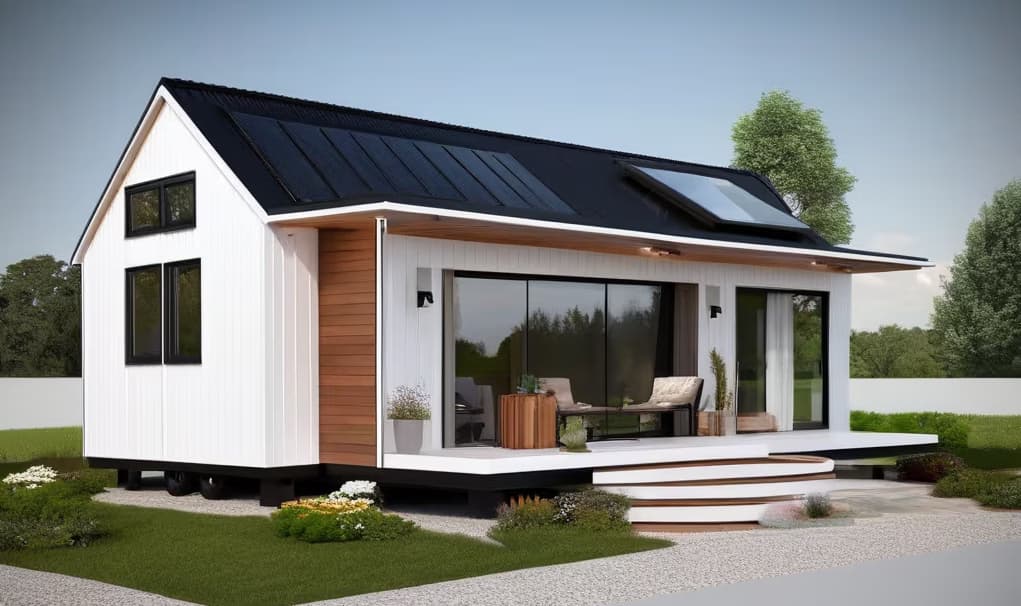
1) Roofline complexity: simple gable is your budget friend
Cost order (typically):
- Simple gable (lowest cost)
- Shed roof (can be simple, but details vary)
- Dormers / multiple intersections (highest cost)
What gets more expensive:
- Framing labor hours
- Flashing details (leak risk goes up)
- Material waste
TinyHouses move: Ask the AI to produce Version A (simple gable) and Version B (dormer + intersecting roof). Compare how many "complexity triggers" show up before formal bids.
2) Window strategy: more glass costs more than you think
Windows increase:
- Unit cost (especially large or custom sizes)
- Trim + flashing labor
- Thermal loads (can increase HVAC needs)
Budget-friendly window rules:
- Favor standard sizes
- Place windows where they provide cross-ventilation + view impact
- Avoid too many different window types in one home
TinyHouses move: Generate two exterior elevations—one "glass-heavy," one "view-framed"—and choose the one that delivers the feeling with fewer custom units.
3) Plumbing runs: the "single wet wall" saves thousands
A wet wall is where kitchen and bathroom plumbing share the same wall/zone.
Cheapest layout pattern:
- Kitchen sink and bathroom fixtures back-to-back or adjacent
Costly layout pattern:
- Fixtures scattered across the home (longer runs, more fittings, harder winterization)
TinyHouses move: Use AI to iterate your plan so kitchen + bath cluster together, with shower/toilet/vanity aligned efficiently.
4) Loft access: ladder vs stairs is a lifestyle and cost choice
| Loft access | Cost | Daily life |
|---|---|---|
| Ladder | Lowest | Fine for occasional use; less kid-friendly |
| Alternating tread stairs | Mid | Steeper but more stable than a ladder |
| Full stairs with storage | Highest | Best for full-time living; adds built-ins |
TinyHouses move: If you're designing for a family, generate a stairs version and a ladder version—then decide if the budget delta is worth the daily ease.
5) Off-grid packages: powerful—but not free
Typical off-grid adders:
- Solar + battery: ~$5,000–$25,000+ (depends on capacity)
- Composting toilet: ~$900–$2,500+ (can reduce septic needs)
- Water storage + filtration: ~$500–$5,000+
When off-grid is worth it:
- Remote land where hookups are expensive
- You want resilience and freedom more than lowest upfront cost
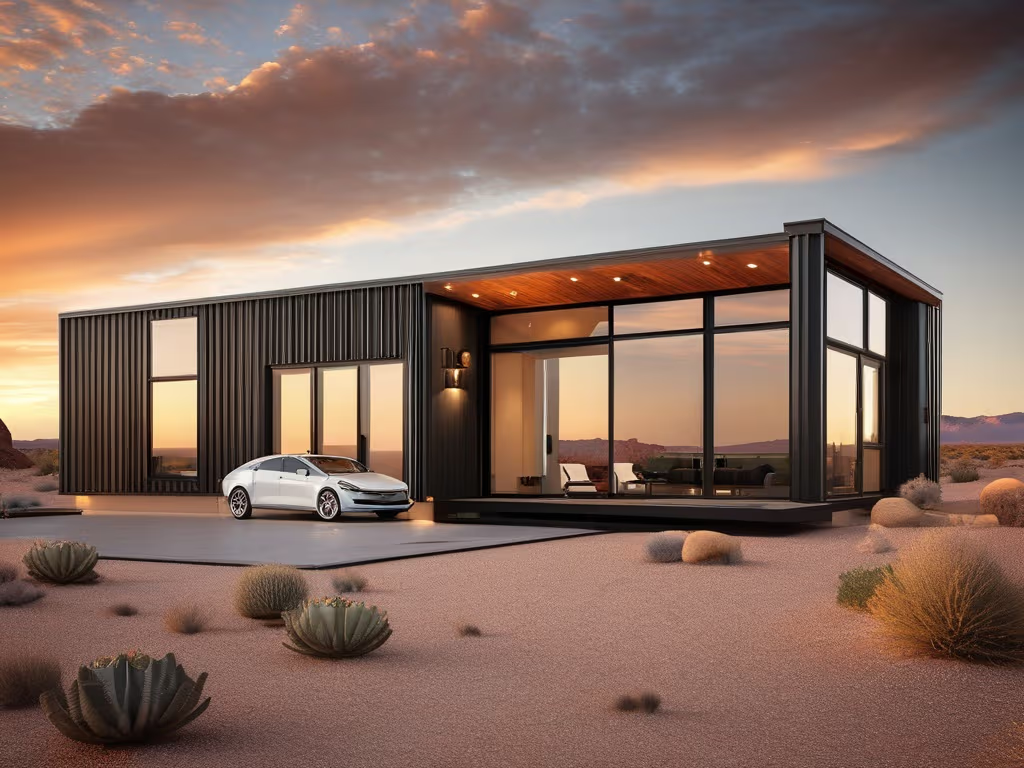
TinyHouses move: Generate two system profiles—grid-tied "simple utilities" version and off-grid "independence" version. Then compare against marketplace options.
Three example cost profiles
These aren't quotes—they're realistic planning profiles you can use to self-check.
1) Minimalist towable build
Best for: solo/couple, weekend escapes, first tiny home
- Simple gable roof
- Standard windows (fewer units)
- Single wet wall (kitchen + bath together)
- Ladder loft
- Grid-tied
Likely all-in range: ~$35,000–$85,000 (DIY to hybrid)
2) Comfortable full-time tiny
Best for: full-time living, higher daily usability
- More built-in storage
- Full stairs with storage
- Mini-split HVAC
- Better kitchen and bathroom finishes
Likely all-in range: ~$90,000–$180,000 (pro build or strong hybrid)
3) Premium/off-grid custom
Best for: remote land, luxury feel, long-term off-grid
- Complex roof / dormers
- Higher-end window package
- Solar + battery + filtration
- Premium kitchen/bath, custom millwork
Likely all-in range: ~$180,000–$300,000+
TinyHouses tip: Before you build custom, search comparable off-grid-capable models in the TinyHouses marketplace. Sometimes buying (or renting to test) is faster than building.
Build vs buy vs rent: how to decide
Cost isn't the only variable—risk and timeline matter too.
Building makes sense when…
- You have a specific site constraint (snow loads, extreme climate, access)
- You want a highly personalized layout
- You can DIY a meaningful portion (and enjoy it)
Buying makes sense when…
- Your "dream design" looks a lot like existing models
- You need predictable delivery and fewer surprises
- The optimized build still exceeds your budget
Renting makes sense when…
- You're not 100% sure about loft living, storage, or off-grid routines
- Your family needs a "trial run" before committing
How TinyHouses helps: Browse a global marketplace of tiny homes to compare your AI concept to real prices. Rent similar designs to test before you commit.
A practical pricing method
If you want accurate numbers without wasting months:
- Generate 2–3 AI design variants (same size, different complexity)
- Classify each variant into a cost tier using the category table above
- Get quotes with fewer surprises because your design is already "cost-aware"
- Compare to marketplace options (buy used/new or rent) to validate value
This avoids the most expensive path in tiny living: designing a beautiful home that's financially unrealistic after you've emotionally committed.
Design your tiny home with cost in mind. TinyHouses' AI design generator lets you explore cost-smart variations—rooflines, windows, layouts, and off-grid setups—in minutes. Try it here: tinyhouses.to/design