Sustainable Minimalism Reality Check: What Actually Works in Tiny Homes vs Pure Marketing
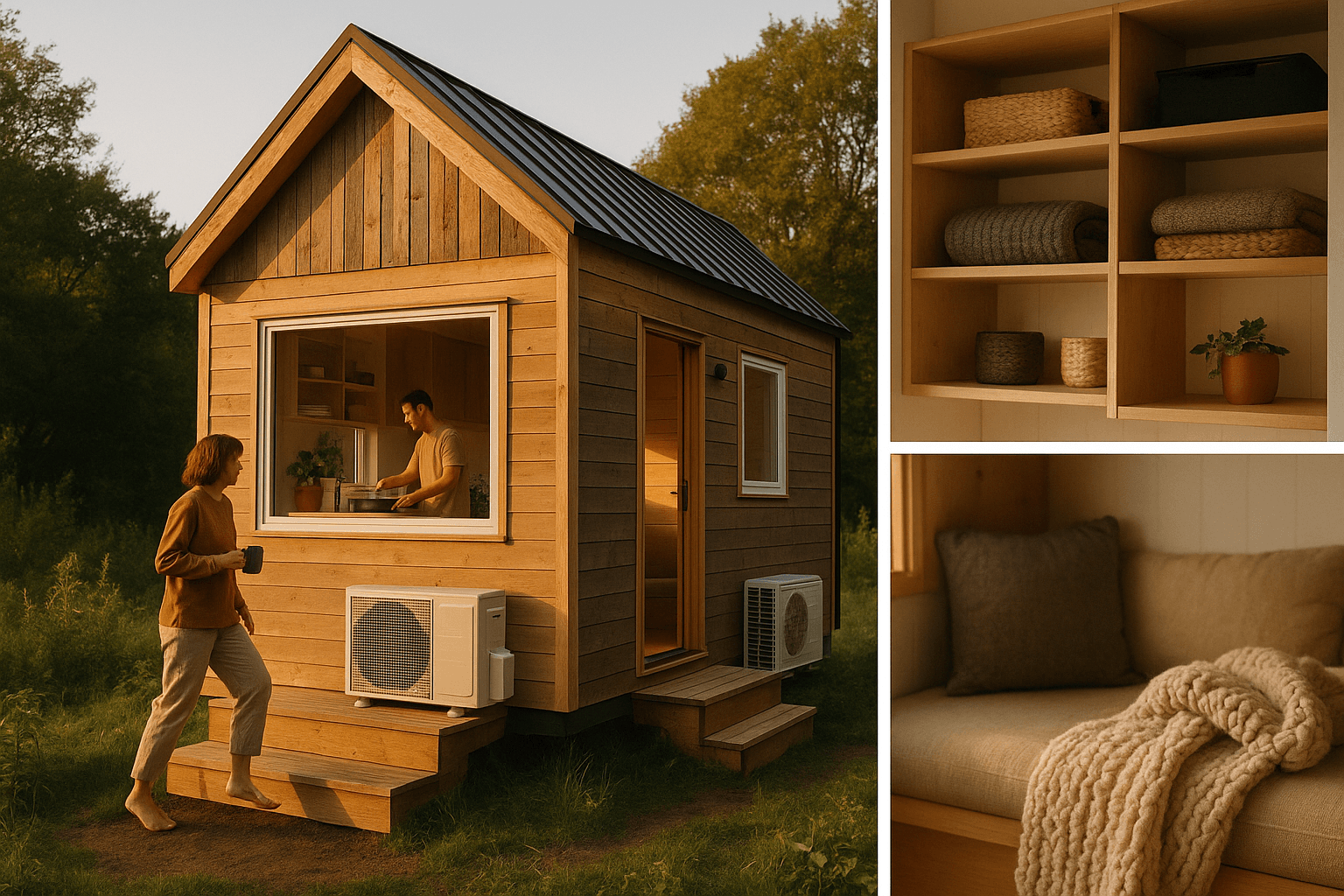
Sustainable minimalism is only "real" if it measurably lowers energy use, reduces replacement cycles, or improves comfort without adding consumption—especially in a tiny home where moisture, ventilation, and wear show up fast.
Below is a reality-check scorecard you can use to judge any trend by impact, cost, maintenance, and tiny-house compatibility—plus our favorite lens: footprint per comfort.
The Tiny-Home Reality Check: How We Score "Sustainable Minimalism"
In a tiny house, sustainability isn't an aesthetic. It's performance + durability + low churn.
Our scorecard (use this on every trend)
- Impact (1–5): Does it reduce operational energy/water/waste in a meaningful way?
- Cost (1–5): Lifecycle value, not just upfront. 5 = strong payoff.
- Maintenance (1–5): 5 = low ongoing attention; 1 = constant tinkering.
- Tiny compatibility (1–5): Space/weight/moisture/code friendly.
- Footprint per comfort (bonus): Does comfort go up without buying more stuff later?
Measurable proxies (simple, tiny-friendly)
You don't need perfect data to stay honest—use these:
- kWh / propane gallons (monthly)
- Indoor humidity % (aim ~30–60%)
- Condensation frequency (windows, corners, behind furniture)
- Maintenance hours/month
- Replacement cycles (years until refinishing/replacing)
- Storage churn (how often you buy "solutions" for clutter)
The Scorecard: Real vs "Beige Marketing" (Tiny-Home Edition)
Use this table to reality-check what you're seeing on social feeds, in showrooms, and in "eco-minimal" product drops.
| Upgrade | Impact | Cost Value | Maintenance | Tiny Compatibility | Why it's real (or not) |
|---|---|---|---|---|---|
| Air sealing (draft reduction) | 5 | 5 | 4 | 5 | Comfort + humidity control + smaller HVAC needs |
| Controlled ventilation (ERV/HRV) | 5 | 4 | 3 | 5 | Tight tiny homes need fresh air; "just open a window" fails in winter |
| Right-sized heat pump | 5 | 4 | 4 | 4 | Evidence-backed efficiency gains vs resistance heat |
| Ceiling fan / air movement | 3 | 5 | 5 | 5 | Cheap comfort—lets you set temps wider without suffering |
| Quality insulation (gap-free) | 5 | 4 | 5 | 4 | Quality beats quantity in tiny envelopes with lots of edges |
| Smart window placement + shading | 4 | 4 | 4 | 5 | Cuts overheating/heat loss; boosts daylight without energy use |
| Low-flow fixtures + leak prevention | 4 | 5 | 5 | 5 | Water savings are immediate; critical for tanks/off-grid setups |
| Secondhand/salvaged materials | 4 | 5 | 3 | 4 | Often highest-impact "material choice"—avoids new manufacturing |
| Durable, repairable finishes | 4 | 5 | 4 | 5 | Longevity beats trendy "natural" finishes that fail fast |
| Solar (right-sized) | 3–5 | 3 | 3 | 4 | Real when it replaces generator/propane and fits your usage |
| Composting toilet | 2–4 | 3 | 1–3 | 3 | Real only with a plan for maintenance, odor control, legal handling |
| "Non-toxic everything" swaps | 2–4 | 2–3 | 3 | 4 | Valuable when prioritized; wasteful when it triggers constant replacement |
| Matching containers / label resets | 1 | 1 | 3 | 2 | Net-new consumption disguised as minimalism |
| Replacing functional items with "eco" versions | 1–2 | 1–2 | 3 | 3 | Churn is the enemy; use-to-end-of-life is often greener |
| Trend-cycle surfaces (fragile matte finishes) | 1–2 | 1–2 | 1–2 | 3 | Looks calm, fails fast—tiny homes are high-touch/high-humidity |
What's Actually Real (High-Score Upgrades)
These are the "unsexy wins" that make tiny living feel modern without more consumption.
Air sealing: the invisible upgrade that changes everything
Why it's real: Drafts are energy loss, but in tiny homes they're also a comfort killer—cold corners, moisture issues, and oversized heating needs.
Tiny-home specifics:
- Small volume means temperature swings faster
- Lots of corners/edges means more opportunities for leaks
How to measure: Track winter kWh/propane before/after. Note fewer "cold streaks" near floor/walls and less condensation.
How TinyHouses helps: When you design with our AI, you can prioritize a tighter envelope and plan details like entry airlocks and smart mechanical placement early—before "cute finishes" lock in problems.
Controlled ventilation (the trend nobody posts)
Why it's real: In a tight tiny home, you can't rely on "cracking a window" as your main air quality strategy—especially with wildfire smoke, humidity, or winter.
What "real" looks like: Balanced ventilation (ERV/HRV) or correctly sized bath/kitchen exhaust with make-up air strategy.
How TinyHouses helps: In our marketplace, you can compare homes by systems (heating/ventilation), not just photos—so you're not buying a "calm beige box" that's secretly a condensation machine.
Heat pumps + right-sizing
Why it's real: Heat pumps are one of the most reliable ways to cut energy use while improving comfort.
Tiny-home specifics: Oversizing causes short-cycling and humidity issues. Placement matters—airflow in a tiny footprint is everything.
How TinyHouses helps: Use the AI designer to test layouts that keep airflow paths clear so you don't "solve" comfort later by buying more gadgets.
Durable + repairable finishes
Why it's real: A finish that lasts 15–25 years often beats a "natural" finish that fails in 2–5 and triggers constant refinishing cycles.
Tiny-home specifics: High-touch surfaces (counters, entry, wet bath) get punished. Choose materials you can patch, not replace.
How TinyHouses helps: When browsing listings, we recommend prioritizing homes that describe assemblies (what's behind the walls, what the wet bath is), not just mood-board language.
Secondhand + salvaged (the highest-impact "style choice")
Why it's real: Reuse avoids new manufacturing emissions—often more than swapping in trendy "eco" products.
How TinyHouses helps: TinyHouses is a global marketplace—so you can often find pre-owned tiny homes (lower embodied carbon than building new) or builders who use reclaimed components.
The "It Depends" Category: When They're Worth It
Solar + batteries: real tool, not lifestyle aesthetic
When it's real: You're offsetting generator use, propane, or high grid costs with good sun access and a clear load plan.
When it's marketing: Oversized systems bought "for vibes" while the envelope leaks energy.
Tiny-house decision rule:
- Reduce loads first (air sealing, efficient heating, shading)
- Then size solar to your actual usage
Composting toilets: sustainable win or constant maintenance?
Real if: You have a process for daily/weekly maintenance, odor control, and local legality.
Not real if: You buy it as a badge and resent the routine.
The Beige Marketing Traps (Low-Score Trends)
These trends look sustainable but often increase consumption.
Trap 1: "Container culture" (matching jars, bins, labels)
Why it fails: It's often just buying plastic to organize other purchases.
Do this instead:
- Use what you have first
- Choose a few modular, durable bins only after you've lived in the space
- Track "storage churn"—if you're buying organizers monthly, the system is wrong
How TinyHouses helps: In the AI designer, you can plan storage around real objects (boots, coats, pantry staples) so you don't end up buying containers to compensate for poor layout.
Trap 2: Constant "eco upgrades" (replacing working items)
Why it fails: The greenest product is usually the one you already own—until it breaks or is truly inefficient.
Do this instead: Run items to end-of-life, then replace with durable, repairable options.
Trap 3: Vague eco claims ("natural," "clean," "carbon neutral")
Greenwashing tells:
- No third-party standard
- No boundary definition (what emissions? shipping? manufacturing?)
- Heavy focus on vibe words, light on specs
Do this instead: Ask for measurable specs (durability rating, warranty length, certifications).
Tiny-Home "Footprint per Comfort" Playbook
If it doesn't lower bills, extend lifespan, or improve comfort measurably—pause.
High comfort / low consumption moves (tiny-proof)
- Airtightness + controlled ventilation (sleep and moisture improve)
- Shading + thermal curtains (comfort without bigger HVAC)
- Ceiling fan (cheap comfort)
- Right-sized appliances (no oversized fridge "because it fits")
- Wet-zone durability (easy-clean, water-resistant surfaces)
- Layout flow (clear paths reduce annoyance purchases)
Quick "real sustainability" checklist for any purchase
- Will it reduce energy/water in a way I can track?
- Will it extend replacement cycles (years, not months)?
- Will it reduce maintenance time?
- Does it work in tiny constraints (humidity, space, weight)?
- Does it increase comfort per footprint without adding clutter?
How to Use This Scorecard on TinyHouses
If you're designing
Bring the scorecard into your first draft:
- Prioritize envelope + ventilation + moisture strategy before finishes
- Design storage to reduce churn
- Plan shading, window placement, and airflow paths
On TinyHouses, you can do this early with AI—so performance is built-in, not patched later.
If you're browsing listings
Use the table like a filter:
- Ask: What's the heating system? Ventilation? Insulation approach?
- Treat "organic modern" as styling—not sustainability
- Consider pre-owned tiny homes to cut embodied carbon versus building new
Ready to design smarter? TinyHouses AI designer helps you test "comfort per footprint" choices—layout, windows, ventilation, and materials—before you build or buy. Start designing at tinyhouses.to/design.