The 7 Smart-Luxury Tiny Home Features That Backfire in 200 Sq Ft
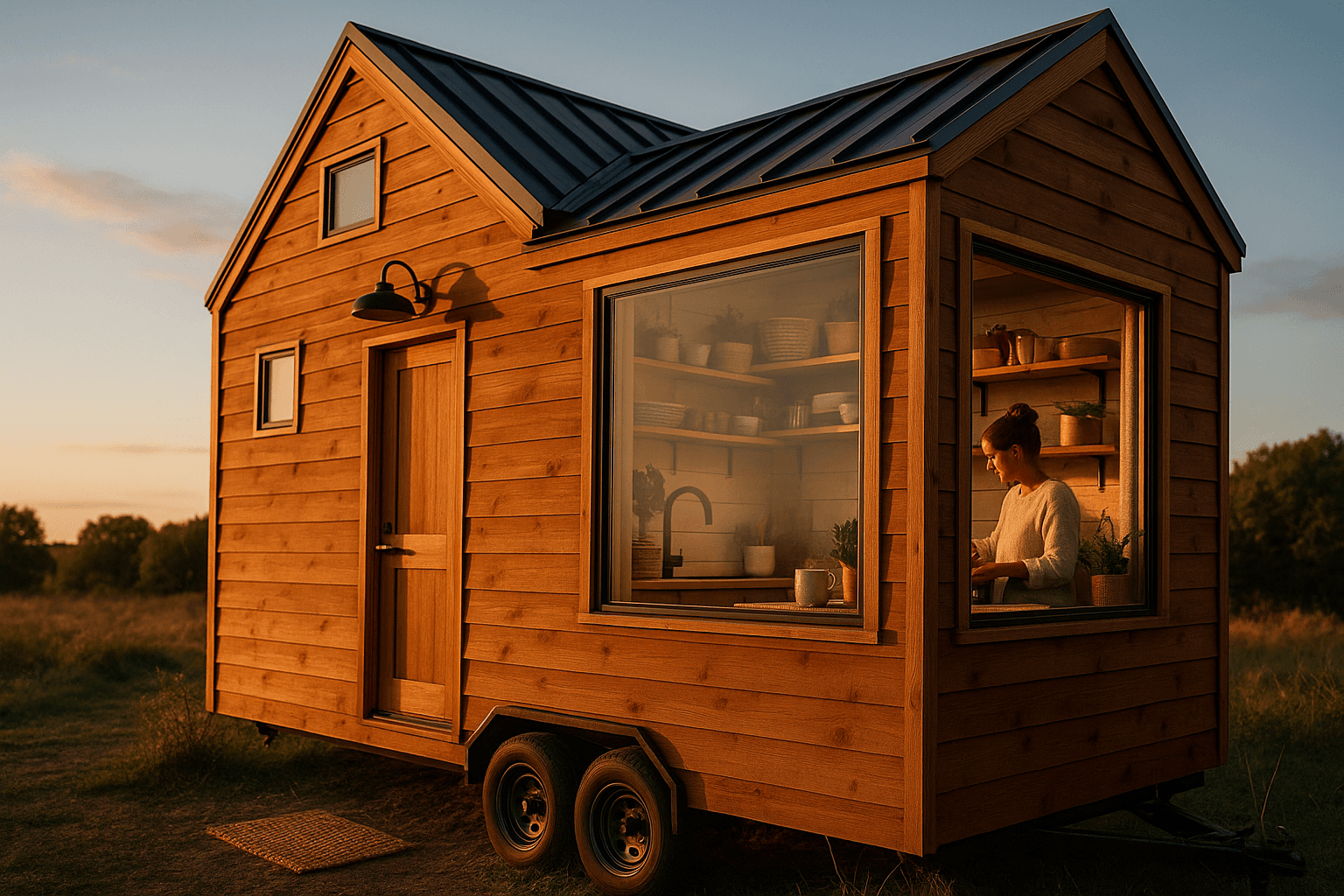
In a 200 sq ft tiny house, "luxury" isn't more features—it's fewer failure points. The 2026 smart-luxury trend brings Instagram-worthy sustainable features that look premium but can backfire fast in tiny square footage: unstable temperatures, moisture problems, constant cleaning, and surprisingly high maintenance costs.
This guide breaks down 7 sustainable-looking features that don't scale down well and the tiny-first alternatives that actually deliver comfort without fragility.
Why "scaled-down luxury" fails faster in tiny houses
Tiny homes aren't just smaller versions of big homes. The building science changes completely.
Surface area matters more
With more exterior wall per interior volume, heat moves in and out faster. A design choice that's "fine" in a 2,000 sq ft home—like extra glass or tall ceilings—can cause big comfort swings in 200 sq ft. Your smaller HVAC system has less ability to "brute force" mistakes.
Moisture hits harder
Two adults cooking, showering, and breathing in 200 sq ft can spike humidity quickly. There's less air volume to buffer mistakes, making tiny homes more sensitive to condensation and odor.
Windows are thermal weak points
Even high-performance windows typically insulate far worse than walls. A good insulated wall might hit R-19 to R-30+, while quality windows often lag around U-factor 0.20–0.30. More glass = harder to stay cozy when your heat source is small.
How TinyHouses.to helps: Our AI designer factors in your climate, occupancy, and lifestyle to recommend designs that stay stable without oversized mechanical systems.
7 "smart luxury" features that backfire (and what works instead)
1. Oversized glazing without exterior shading
Big glass reads "architectural" and "eco." In tiny, it often becomes your biggest comfort problem.
Why it fails
- Overheating: Sun through glass spikes indoor temps fast in small volumes
- Radiant discomfort: Sitting near large glass feels chilly even when the thermostat says you're warm
- Privacy issues: You end up buying blinds and films—more cost, more stuff
- Energy penalty: Trading insulated wall area for weaker thermal performance
The tiny-first fix
- Right-size windows for views and daylight, not status
- Add exterior shading (overhangs, awnings, shutters) so glass behaves
- Use clerestory windows for deep daylight with less glare
- Choose SHGC (solar heat gain coefficient) by climate
Spec checklist:
- Exterior shading planned for south/west exposures
- Clerestory strategy before adding more glass square footage
- NFRC labels reviewed: U-factor + SHGC matched to climate
2. Fully automated everything
In large homes, automation reduces friction. In tiny homes, the "distance saved" is minimal—but failure modes remain.
Why it fails
- App sprawl: Multiple ecosystems, accounts, updates
- Wi-Fi dependence: Basic functions get annoying when connectivity drops
- Maintenance: Devices fail, batteries die, firmware changes
- False sustainability: Churn and replacements eat the "green" story
The tiny-first fix: "dumb-smart" basics
Pick only high-impact automation:
- One scene switch ("Evening" dims, warms, quiets)
- Occupancy sensor for entry/bath lighting
- Smart thermostat only if it controls a simple system well
Everything else gets manual overrides.
Spec checklist:
- One control point near the door
- Manual overrides for lighting and shades
- Avoid cloud-only control systems
3. Ultra-tight "sealed box" builds without ventilation
Tight envelopes can be excellent. Tight without ventilation is where tiny homes get musty and uncomfortable.
Why it fails
- Humidity spikes faster from showers, cooking, breathing in small air volume
- Higher condensation risk on windows and cold corners
- Odors linger longer without continuous fresh air
The tiny-first fix: balanced, right-sized ventilation
- Small ERV/HRV sized for tiny airflow needs
- Dedicated bath and kitchen exhaust
- Continuous low-speed ventilation with boost mode
- Simple humidity sensing or timer controls
Spec checklist:
- ERV/HRV sized for actual occupancy
- Quiet fans (noise kills "luxury")
- Separate kitchen exhaust strategy
4. High-maintenance "luxury" finishes
Tiny living is high-touch living. Finishes requiring constant wiping don't feel premium after week two.
Why it fails
- Matte-black fixtures: Water spots and fingerprints
- Unsealed microcement: Stains and hairline cracks
- High-gloss cabinets: Constant smudges
- Open shelving: Collects grease and dust fast in tiny kitchens
The tiny-first fix: durable calm-lux materials
- Satin or low-sheen surfaces that hide touch marks
- Closed storage with clean fronts
- Integrated pulls or simple hardware
- Fewer grout lines with larger-format panels
- Durable counters: quality laminate, stainless, or engineered options
Spec checklist:
- "Wipe test": cleanable in 30 seconds with one cloth
- Closed pantry and uppers if you cook often
- Wet zone walls with minimal seams
5. Radiant floors & complex hydronic heating
Radiant is comfortable, but in tiny homes it's often the wrong complexity-to-benefit ratio.
Why it fails
- Slow response: Not great for intermittent use
- Repairs harder once installed
- Needs mechanical space you don't have
- You can get similar comfort with simpler systems plus better envelope details
The tiny-first fix: simple heat pump + targeted comfort
- Compact mini-split heat pump for efficient heating/cooling
- Insulated floors and tight air-sealing at drafts
- Targeted warmth: heated towel bar or small radiant panel in bath
Spec checklist:
- Heat pump sized for tiny load (avoid oversizing)
- Draft control at doors, windows, penetrations
- Loft airflow planning to prevent heat stratification
6. "Off-grid impressive" water systems
Some systems are sustainable on paper but maintenance-heavy in real life—especially with freezing, permitting, and filter upkeep.
Why it fails
- Filtration stacks require regular replacement and sanitation
- Freezing risk in small plumbing runs and exposed connections
- More fittings = more leak points (catastrophic in tiny)
- Complex permitting and compliance
The tiny-first fix: simple, winterizable plumbing
- Keep potable simple: solid sediment + carbon where appropriate
- Design for drain-down winterization
- Separate potable and non-potable clearly
- Treat rainwater as a hobby system, not a dependency
Spec checklist:
- Winterization plan documented
- Accessible plumbing with service panels
- Filter replacement without unloading storage
7. Status-sized solar + batteries
Oversized solar and huge batteries can be a flex—but it's often the most expensive way to buy comfort.
Why it fails
- High upfront cost for marginal lifestyle benefit
- Replacement cycles as batteries age
- Weight and space penalties (especially on wheels)
- Complexity: more points of failure
The tiny-first fix: load-first design, then right-size
Do this order:
- Reduce loads (efficient fridge, smart cooking, heat pump)
- Design electrical around real habits
- Add solar sized to actual daily kWh, not fantasy
Spec checklist:
- List your top 5 loads and daily usage
- Decide what must run during outages vs what can pause
- THOW: confirm payload limits before heavy battery banks
What "premium" actually means in a tiny house
If you want a tiny home that feels elite and sustainable, define luxury as comfort stability and low fragility.
Premium in 200 sq ft:
- Quiet (good seals, thoughtful materials, low-noise ventilation)
- Stable temperature (shading + insulation + right-sized HVAC)
- Clean air (balanced ventilation, moisture control)
- Good light (clerestories, diffused light, exterior shading)
- Easy cleaning (durable finishes, closed storage)
- Serviceability (access panels, standard parts, simple systems)
The TinyHouses.to "anti-fragility" approach
When you design a tiny home with our AI, start with inputs that predict whether a feature will feel like luxury—or become a chore.
Set your real-life inputs
- Location and climate specifics
- Foundation vs wheels (weight limits change everything)
- Occupancy and cooking frequency
- Work-from-home needs
- Off-grid percentage and maintenance tolerance
Get tiny-first outputs
- Windows: Prioritize daylighting strategy over "glass walls"
- Shading: Exterior first, interior blinds secondary
- Ventilation: Continuous, quiet, right-sized
- HVAC: Simple heat pump + good envelope beats complexity
- Finishes: "Wipe-fast," low-sheen, closed storage for frequent cooks
- Systems: Serviceable, winterizable, accessible
Test before you commit
The fastest way to know what's truly "premium" for you: rent a tiny with the features you're considering. Does big glass overheat at 4 PM in your climate? Do you notice ERV air quality? Does open shelving stay calm or get messy fast?
Ready to design smart? TinyHouses.to's AI helps you spec a tiny home that feels premium without becoming fragile. Design with intelligence, then explore rentals or purchases that match your comfort-first approach.
FAQ: Features that actually work
Is floor-to-ceiling glass ever worth it?
Yes—with exterior shading, climate-appropriate glazing, and privacy strategy from day one. We usually steer toward framed views plus clerestory daylight.
Simplest ventilation that feels premium?
Quiet, continuous system you don't think about: right-sized exhaust plus ERV/HRV for tight, full-time occupied homes.
What smart features actually help?
One scene switch, occupancy lighting, simple HVAC control. If it needs constant app attention, it's homework—not luxury.
Most maintenance-free eco setup?
Induction cooking, strong exhaust, closed storage, seam-light wet zones, accessible plumbing. Eco you can maintain is the only eco that lasts.
Best comfort upgrades for the money?
Exterior shading, air sealing, right-sized ventilation, efficient heat pump. These make tiny homes feel calm in every season.