The Real Cost of Tiny Houses: Build, Land, Utilities & Delivery
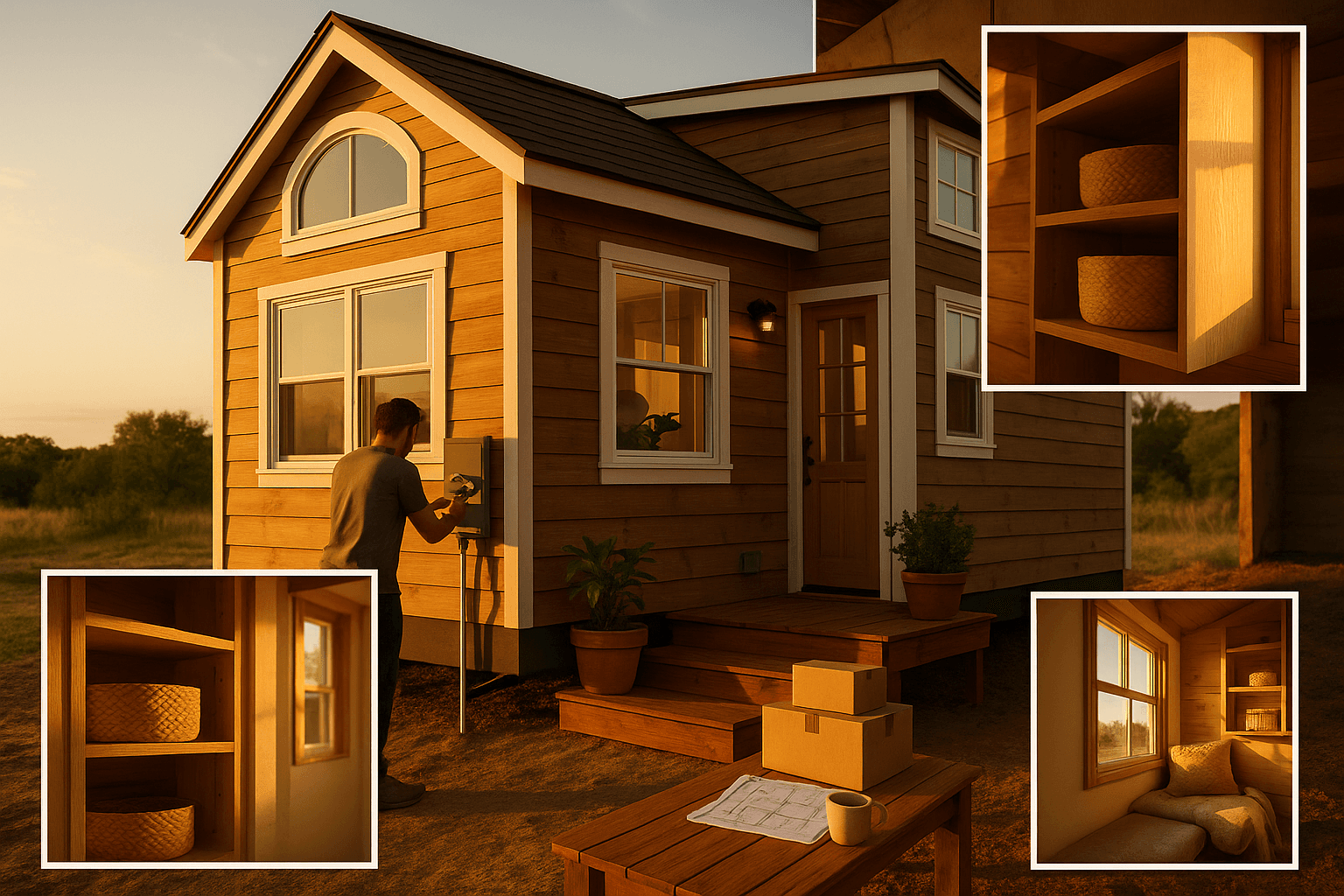
A tiny house isn't just one purchase—it's four costs rolled together: the build, land prep, utilities, and delivery. Miss any bucket, and your dream home becomes a budget nightmare.
Most people compare "tiny house price tags" and wonder why they're off by $50k. The truth? That $80k "turnkey" listing excludes site work, utility hookups, permits, and delivery. Here's how to budget honestly—and how TinyHouses turns your features into a realistic four-bucket estimate.
Your tiny house budget: Four buckets that actually matter
| Cost bucket | What it covers | Hidden surprises | Typical range |
|---|---|---|---|
| Build | Structure, systems, finishes | What "turnkey" actually includes | $25k–$200k+ |
| Land + site | Legal placement + prep work | Permits, septic, grading | $5k–$50k+ |
| Utilities | Power, water, sewer connections | Trenching distance, off-grid systems | $2k–$35k+ |
| Delivery + setup | Transport + make it livable | Permits, cranes, tie-downs, decks | $2k–$15k+ |
The biggest mistake? Focusing only on bucket one. Your $80k tiny house becomes $120k+ when reality hits.
How TinyHouses helps: Design your features first (bathroom type, solar readiness, window package), and our AI estimates costs across all four buckets—so you're comparing real totals, not fantasy prices.
Bucket 1: The build (what you're actually buying)
Price bands that make sense
- DIY shell: $10k–$35k (plus your time, tools, and mistakes)
- Builder shell: $25k–$60k
- Move-in ready: $50k–$120k
- Custom/luxury: $120k–$200k+
What drives build costs up (and down)
Trailer specs (for wheels): Triple axles, higher weight capacity, and custom fabrication add thousands. Standard axle packages keep costs down.
Windows: Wall-to-wall glass looks amazing—and costs a fortune. Smart placement with fewer, standard-sized windows saves serious money.
Insulation strategy: Building for harsh climates? Spray foam and thermal breaks add cost but prevent misery. Simple assemblies work fine in mild zones.
Custom cabinetry: Bespoke millwork and hidden storage eat budgets alive. Mix modular cabinets with a few custom pieces where they matter.
Systems complexity: Mini-splits plus ERV plus smart electrical? Expensive. One well-matched heating approach? Reasonable.
Kitchen and bath: Tile showers and stone counters look incredible—until you see the bill. Simple, durable finishes perform just as well.
The "cost per square foot" trap
Tiny homes pack full-size complexity into small spaces. Your 250 sq ft home still needs a complete kitchen, bathroom, HVAC, and electrical panel. That's why cost-per-foot calculations break down—you're buying systems, not just space.
Bucket 2: Land and site work (the shock factor)
Your perfect tiny house means nothing without a legal place to put it.
Site development costs that rival the build
- Clearing and grading: $2k–$15k+
- Driveway and turnaround: $3k–$20k+
- Foundation pads or tie-downs: $1k–$10k+
- Permits and surveys: $500–$5k+
- Septic system: $6k–$25k+
What kills budgets: Rock excavation, long driveways, steep grades, and soil that won't percolate for septic.
Zoning shapes your costs
Where tiny houses are legal—and how—changes everything:
- RV parks: Predictable setup, but limited locations
- ADU (backyard): Often requires foundation and permits
- Rural property: More freedom, but utilities can be distant
- Tiny house communities: Shared infrastructure, community rules
TinyHouses advantage: Design first, then filter our global marketplace by placement type. No more falling for homes that can't legally live where you want.
Bucket 3: Utilities (grid vs. off-grid reality)
Grid connection costs (location is everything)
- Electric service: $1k–$15k+
- Water line: $1k–$10k+
- Sewer connection: $3k–$20k+
- Septic (when sewer unavailable): $6k–$25k+
Distance kills budgets. Trenching 500 feet costs exponentially more than 50 feet.
Off-grid systems (freedom with a price tag)
- Solar + battery + inverter: $5k–$30k+
- Water storage/filtration: $500–$5k+
- Composting toilet systems: $500–$3k+
- Propane setup: $500–$3k+
Off-grid isn't automatically cheaper. It shifts costs from monthly bills to upfront equipment and future replacements.
TinyHouses helps: Choose induction vs. propane cooking, mini-split vs. resistance heat, or full-size laundry in our AI designer, and see how each choice affects your utility system size and budget.
Bucket 4: Delivery and setup (the final surprise)
Moving a tiny house isn't like hiring movers for your apartment.
Transport costs
- Local/regional delivery: $1k–$10k+
- Oversize permits and escorts: $500–$3k+
- Difficult routes (mountains, bridges): Premium pricing
Setup costs people forget
- Placement and leveling: $500–$5k+
- Tie-downs and supports: $500–$3k+
- Steps, deck, and handrails: $1k–$10k+
- Utility connections: $500–$5k+
Many owners move their tiny house once—then stay put. Delivery is real logistics, not an afterthought.
Finish levels decoded (what you're actually buying)
"Shell" = DIY starting point
Includes: Weathertight structure, basic windows/doors
Excludes: Insulation, electrical, plumbing, interior finishes
"Finished" = Move-in interior
Includes: Insulation, systems, bathroom, kitchen
Excludes: Often appliances, delivery, site work
"Turnkey" = Ready to live (verify scope)
Includes: Complete interior, working systems
Excludes: Usually delivery, setup, permits, utility connections
"Off-grid ready" = Prepared, not equipped
Includes: Solar-ready wiring, battery space, propane provisions
Excludes: Actual solar panels, batteries, water solution
TinyHouses rule: Every listing should include a detailed scope. "Turnkey" without delivery isn't turnkey for your budget.
Budget like a pro: Start with features, not price tags
Step 1: Pick your must-haves
The features that actually drive costs:
- Window package (lots of glass vs. optimized placement)
- Climate strategy (insulation and HVAC approach)
- Bathroom complexity (tile shower vs. simple surround)
- Storage solutions (custom built-ins vs. modular)
- Energy approach (grid-tied vs. off-grid ready)
Step 2: Make site assumptions
Even rough estimates prevent shock:
- Septic needed or sewer available?
- Utility trenching distance?
- Driveway accessible for delivery?
- Zoning allows your intended use?
Step 3: Add the "forgotten" costs
- Delivery and transport permits
- Setup, leveling, tie-downs
- Steps, deck, handrails
- First utility bills and deposits
TinyHouses advantage: Our AI turns these exact decisions into budget ranges across all four cost buckets. Compare builders with confidence, or filter marketplace listings that match your actual plan.
Hidden costs checklist (bring this to every builder meeting)
- What finish level—and what's specifically excluded?
- Which appliances are included?
- Insulation R-values and air sealing targets?
- Trailer specs (GVWR, axles, brakes)?
- Delivery: distance limits, permits, escorts?
- Setup: leveling, tie-downs, stairs, handrails?
- Utility scope: trenching, meter, septic design?
- Site requirements: grade, access width, turnaround?
The TinyHouses difference: Design first, budget smart
Most people think in features—"two lofts, full bath, big windows, solar-ready." That's exactly how we built TinyHouses.
Design your tiny house with AI based on your lifestyle, get feature-based budgets across all four cost buckets, and explore our global marketplace filtered by finish level and price range.
No more surprise costs. No more apples-to-oranges comparisons. Just honest budgets that lead to homes you can actually afford to live in.
Design your dream tiny house and get real budget ranges at TinyHouses. Then explore listings worldwide that match your plan and budget.