Off-Grid, But Make It Normal: The Daily Routines That Keep Tiny Living Comfortable in 2026
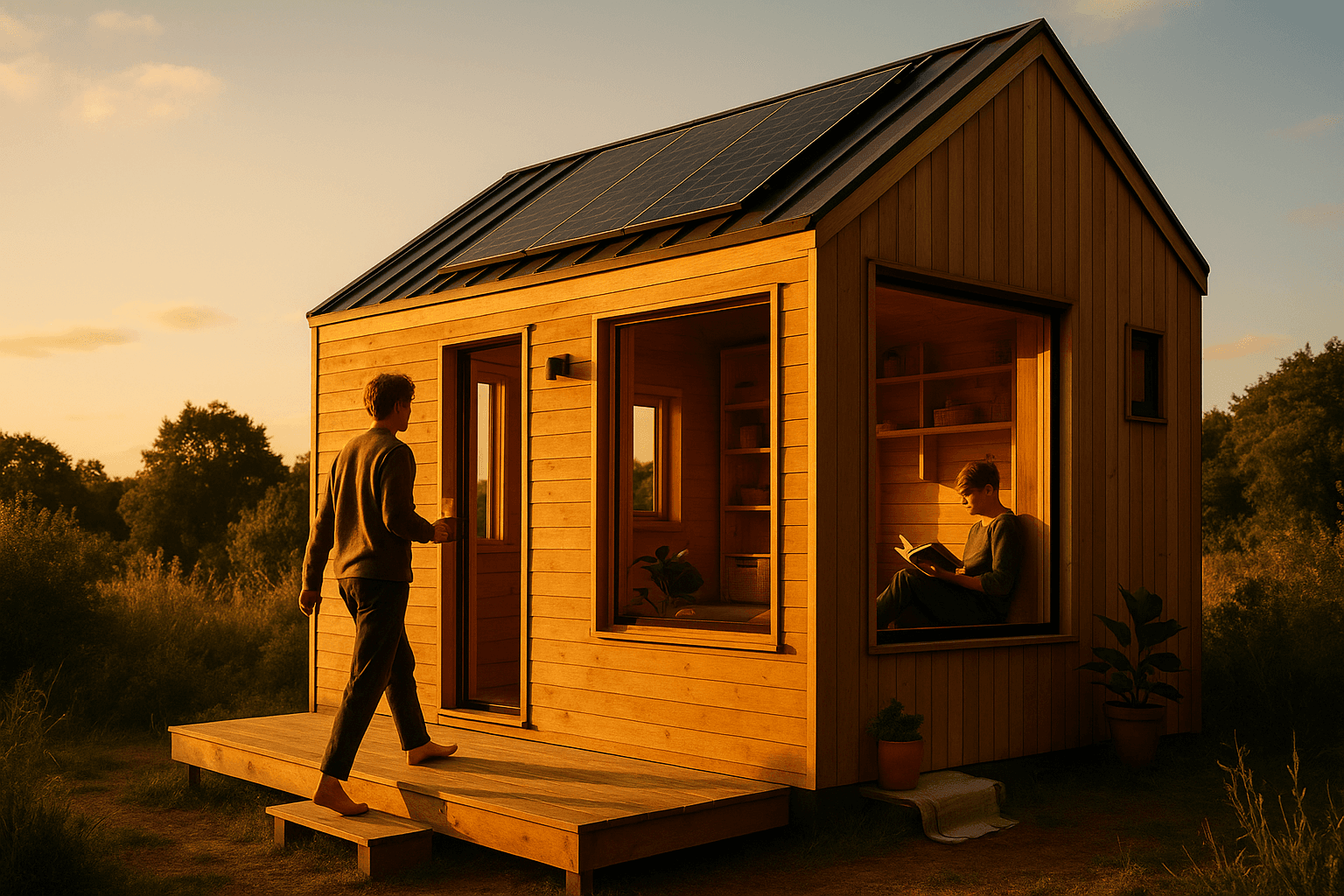
Off-grid tiny living can feel completely normal—hot showers, reliable internet for remote work, clean laundry, and a calm home—if you run it on simple routines instead of "survival mode." At TinyHouses, we see the same pattern: people who love off-grid long-term aren't the ones with the most gear—they're the ones whose daily systems match their lifestyle.
Off-grid comfort = a "routine stack," not a gear stack
If you want modern life off-grid, think in five invisible systems. Each one becomes effortless when you give it a cadence.
1) Power (daily kWh + peak-load timing)
Separate two ideas:
- Daily energy: how much you use over 24 hours
- Peak load: what you run simultaneously
Realistic daily ranges (no electric heat):
| Lifestyle | Range | What's included |
|---|---|---|
| Efficient baseline | 3–8 kWh/day | fridge, lights, devices, water pump |
| Remote work | +0.5–2 kWh/day | laptop, router, Starlink/5G |
| Electric cooking | +1–3 kWh/day | induction, kettle, toaster oven |
| Laundry (heat-pump dryer) | 1–3 kWh/load | the off-grid wildcard |
The make-or-break variable: heating. Most comfortable off-grid setups use propane or wood for heat so electricity stays dedicated to modern life.
When you design with TinyHouses, you plan around how you live—WFH hours, cooking style, laundry frequency—so your power system isn't a guess.
2) Water (storage + refill cadence)
Off-grid water stops feeling stressful when you know your refill rhythm.
Comfortable usage: ~20–50 gallons/person/day
Storage reality: Most setups carry 200–1,000 gallons on-site. "Normal life" is less about a huge tank and more about answering: weekly, biweekly, or monthly refill?
Hot water without wrecking the battery: Propane on-demand is common because it protects your electrical budget.
Our AI design flow lets you set priorities like "long showers" or "guests often" and maps that to water storage targets and layouts that make refilling easy.
3) Air (ventilation + moisture control)
The fastest way for off-grid to feel like survival mode is stale air and condensation.
The routine:
- Vent while you cook (every time)
- Dry wet gear fast
- Use a humidity threshold: if windows fog, ventilate
Our designs include the air plan early—where the kitchen fan vents, where the drying rack lives, where a dehumidifier can sit without becoming clutter.
4) Internet (redundancy + power backup)
Modern off-grid isn't about having internet—it's about having a plan when it glitches.
A normal stack:
- Primary: Starlink or 5G/LTE
- Backup: phone hotspot ready to go
- Power continuity: small UPS for short power events
We help you design around a dedicated "connectivity zone" so your home supports remote work like it's on-grid.
A normal weekday off-grid (that doesn't eat your brain)
Morning: comfort first, then a quick systems glance
- Hot water routine (shower now vs later based on solar forecast)
- Coffee without stacking peak loads
- 2-minute power check: battery %, solar input, set the day's rule ("laundry day" or "no dryer today")
Midday: deep work + connectivity discipline
- Work on primary internet
- Before calls: laptop charged, hotspot standby, router on UPS
Evening: cooking without power spikes
- Cook with an eye on peak loads
- Run vent fan (non-negotiable)
- Quick reset—tiny homes punish clutter fast
Night: quiet-house checklist
- Set battery reserve target before sleep
- Condensation scan—if windows fog, quick ventilation
- Prep tomorrow's high-draw tasks for best solar window
Weekly cadences that prevent chaos
1) Forecast + budget moment (15 minutes)
Pick one day to look ahead: cloudy stretch? Guest visit? Then decide which day is cooking-heavy, laundry-heavy, or "low power."
2) Water day
Top up tanks, check filters, inspect for tiny leaks. If your household uses 20–50 gal/person/day, a 300-gal reserve gives roughly 5 days for two people.
3) Laundry strategy: line-dry default
One load per day during good solar. Make line-drying permanent, not a pop-up mess. Use the dryer for exceptions only.
Energy reality:
- Washer: 0.2–0.6 kWh/load
- Heat-pump dryer: 1–3 kWh/load (convenient but costly)
Our AI designer can build in a laundry wall—hanging rail, hamper zone, fold surface—so laundry doesn't take over your living space.
The spiky-load playbook
Most off-grid frustration comes from running the wrong things at the same time.
Common overload combos to avoid
- Kettle + induction + dryer
- Air fryer + vacuum + hair dryer
- Mini-split + cooking peak + laundry
House rules that feel normal fast
- One high-draw appliance at a time
- Batch hot water tasks into the same part of day
- Cook earlier on low-solar days
- Treat generator as seasonal insurance, not failure
Sizing context: Comfortable modern off-grid often lands around 10–30 kWh usable battery and 2–6 kW solar.
Our "routine-to-systems" approach recommends ranges for daily kWh, battery capacity, and inverter sizing based on peak load, not just energy totals.
Seasonal changeovers
Winter: low solar + condensation + freeze protection
- Raise battery reserve target
- Reduce spiky loads on storm weeks
- Short, intentional ventilation for moisture control
- Plan generator use as quiet top-up during multi-day storms
Summer: cooling loads + water use + smoke season
- Pre-cool/shade strategy during peak sun
- Cook outside occasionally
- Plan filtration if smoke season is real in your area
Shoulder seasons: reset weekends
Service filters, check seals and fans, deep clean utility areas, reorganize storage so daily routines stay frictionless.
TinyHouses "Routine-to-Systems" Planner
Most marketplaces list tiny homes by square footage. We filter by how you live.
Quick lifestyle prompts
- How many people full-time?
- Remote work hours/day?
- Cooking style: quick meals or daily cooking?
- Laundry loads/week—willing to line-dry?
- Shower length preference?
- Climate challenges?
- Comfort priorities?
Example output
Based on your answers:
- Daily use estimate: 5–10 kWh/day
- Battery target: 15–25 kWh usable
- Solar range: 3–5 kW
- Peak-load guidance: inverter sizing + load-stacking rules
- Water storage: tank size for your refill cadence
- Layout suggestions: utility wall, drying zone, networking shelf
Then design around those routines or browse models that match your "normal-life spec."
The goal: predictable off-grid
When your routines are predictable, off-grid stops being a project and starts being a lifestyle—modern workdays, calm nights, nature outside the window.
What if you can live anywhere.
TinyHouses AI design generator turns your daily routines into a tiny home plan you can actually live in. First 3 designs free: https://tinyhouses.to/design