Modern Tiny House Routines That Actually Work: Daily Systems That Keep 400 Sq Ft Calm
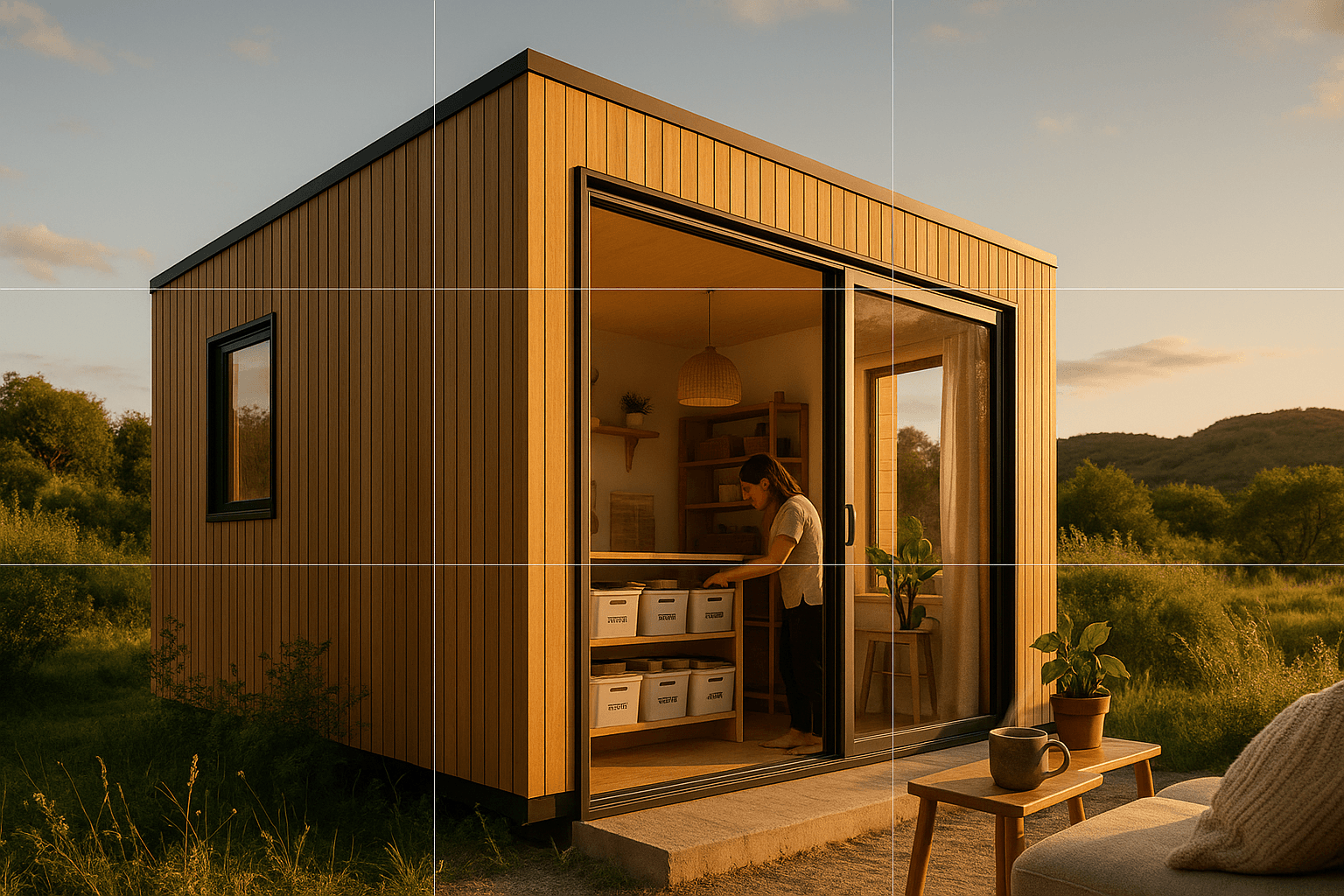
Living modern in 100–400 sq ft isn't about being extreme—it's about reducing friction. The best tiny house routines are simple: store by activity (zones), cap categories (limits), and reset daily (micro-cleaning). When these three systems are designed into your layout, your home stays calm, functional, and ready for real life—work-from-home, fitness, guests, and tech included.
The tiny house reality: friction is the real enemy
In a tiny home, clutter isn't just visual noise. It blocks function.
- One "drop zone" can steal your only prep counter or your only desk
- A single misplaced item forces extra steps between sink → trash → storage, and those seconds add up
- Combined rooms (kitchen/living/work) mean mess spreads fast—unless you build a reset habit
How TinyHouses helps: We don't treat storage like an afterthought. Our AI design flow lets you plan surfaces, traffic flow, and storage volumes around your real routines—then browse the marketplace for homes already built with similar systems.
Define your "daily loops" (your house must support these)
Instead of organizing by "rooms," organize by what you do. Most modern tiny house living comes down to five loops:
1) Morning launch loop
Touches: Water bottle, coffee, meds, dog gear, bags, keys, shoes, outerwear.
2) Work/school loop (WFH-ready)
Touches: Laptop, charger, headphones, notebook, hotspot/router, lighting, video-call background.
3) Meals + snacks loop
Touches: Fridge, pantry, prep surface, trash/compost, dishwashing, food storage containers.
4) Fitness / hobby loop
Touches: Shoes/gear, towel, mat, bike tools, camera gear, art supplies—whatever your "modern life" includes.
5) Night reset loop
Touches: Laundry, dishes, surfaces, charging, trash, tomorrow's outfit.
Quick worksheet:
- Loop name:
- Items it touches:
- Where those items should live (point of use):
- One friction point today:
How TinyHouses helps: Plug these loops into your AI design brief (e.g., "WFH 5 days/week," "coffee ritual," "2-person gym gear"). The generator prioritizes fold-down desks, charging drawers, pantry depth, entry launch pads, and built-ins that match your loops.
Zone-based organization: store by activity, not by room
Zone-based storage means the item lives where you use it, not where it "belongs" in a traditional house.
The 5 highest-leverage zones
1) Entry "launch pad" zone
This replaces the missing mudroom.
Must-haves:
- Hooks at shoulder height (daily jackets)
- One shoe solution (tray, cubby, or under-bench)
- A tiny "pocket dump" (keys/wallet/AirPods)
Rule: Nothing enters the house without a home. If it has no home, it becomes clutter.
2) Kitchen "coffee + breakfast" zone
Keep the morning loop contained.
- Kettle/espresso tools, mugs, sweetener, filters
- One drawer for "morning tools"
Rule: Coffee lives in one footprint. If it spreads, your counter disappears.
3) WFH + tech zone
Modern tiny living fails fastest at cables.
- Device parking (laptop/tablet)
- One bin for adapters/dongles
- Headphones hook
Rule: Every device has a parking spot + a charging plan.
4) Cleaning zone(s): one kit per wet area
Instead of one big cleaning closet:
- Bathroom: Small caddy (spray, cloth, toilet tabs)
- Kitchen: Under-sink basics (wipes, dish pods)
Rule: Cleaning supplies must be reachable in 10 seconds. If they're annoying to access, cleaning won't happen.
5) Laundry handling zone
Even if you don't have a washer, you still need a workflow.
- Hamper solution that fits your habits (bag, slim bin, divided hamper)
- One "dirty-to-clean" staging spot (hook, shelf, or bag)
How TinyHouses helps: When you design with AI, you can explicitly place these zones—entry bench depth, hook wall, drawer allocations, pantry width, and the exact desk surface you'll actually use. Then search listings that match your needs.
Storage rules that prevent backslide
A tiny home stays modern when it's governed by simple rules.
Rule A: One-in-one-out + category caps
One-in-one-out only works when you define "enough." Use caps you can feel.
Example category caps:
| Category | Solo cap | Couple cap | Notes |
|---|---|---|---|
| Mugs | 4–6 | 6–8 | Match guests you actually host |
| Plates/bowls | 4–6 each | 6–8 each | If no dishwasher, go smaller |
| Towels | 4 bath + 4 hand | 6 bath + 6 hand | Quick-dry towels reduce volume |
| Shoes | 6–10 pairs | 10–14 pairs | Seasonal swap bin helps |
| Jackets | 3–5 | 5–8 | Daily, warm, rain, "nice" |
Rule B: "Flat surfaces are not storage"
In 100–400 sq ft, counters, tables, and desks are multi-use infrastructure.
- If it lives on a surface, it's homeless
- If it's homeless, it becomes visual noise and blocks function
Rule C: Seasonal bin protocol
Seasonal items aren't the enemy—uncontrolled seasonal items are.
- One labeled bin per person for clothing swaps
- One labeled bin per hobby (camping, skiing, beach)
Rule: If it doesn't fit the bin, it doesn't stay.
Rule D: Choose open vs closed storage intentionally
- Closed cabinets hide visual clutter (best for most people)
- Open shelves are great for curated items, but punish you if you own too much
Modern-living default: Closed storage for 80%, open for 20%.
How TinyHouses helps: In the AI designer, you can size storage around caps (e.g., "8 mugs, 6 plates, 2 backpacks, 1 vacuum"). That turns decluttering advice into a real cabinet plan you can build—or filter for in our marketplace.
Micro-cleaning routines that actually stick
Tiny homes don't need more cleaning—they need more frequent, smaller resets.
The 10-minute nightly reset
Do this every night—even imperfectly:
- Clear one main surface (table/counter/desk)
- Dishes: run dishwasher or wash + dry rack reset
- Wipe sink (a clean sink makes the whole home feel clean)
- Put away "floats" (items without a home)
- Trash/recycling check (tiny bins fill fast)
The 15-minute morning open
- Make bed (instant visual calm)
- Quick floor pass (hand vac or spot sweep)
- Set up your day surface (fold-down desk/table)
Weekly 45–60 minute "systems check"
This isn't deep cleaning—this is routine maintenance.
- Pantry scan + add-to-list
- Fridge wipe + "small-fridge-first" plan
- Bathroom quick scrub + towel swap
- Laundry plan (what day, what load type)
- Re-home any recurring "float" (if it keeps appearing, it needs a storage fix)
Monthly triggers (tiny home specific)
- Clean vent fans / range hood filter
- Vacuum hidden zones (under bench, under bed)
- Reassess one category cap (clothes, pantry, hobby bin)
How TinyHouses helps: Micro-cleaning works best when tools are accessible. When you design with AI, you can add a bathroom cleaning cubby, toe-kick vacuum slot, broom closet alternative, and easy trash flow.
Small-kitchen meal planning without losing counter space
Modern tiny kitchens fail for two reasons: counter scarcity and food overflow.
The modern tiny kitchen operating system
1) Rotate 3–5 core dinners
Pick meals that share ingredients.
- Example set: Stir-fry, tacos, sheet-pan veg + protein, pasta, big salad bowls
2) One prep block per week (30–60 min)
- Wash/chop one veg batch
- Cook one flexible protein
- Portion 2 grab-and-go lunches
3) "Small-fridge-first" rule
Before shopping or cooking:
- Use the most perishable items first
- Keep one visible "use-next" container
4) Dish strategy that matches your sink
- Small sink: Reduce dish count and clean more often
- Dishwasher drawer/compact unit: Run it nightly (even half-full)
Kitchen container logic:
- Transparent bins for daily items
- Lidded bins for backups
- Label by activity: "Coffee," "Lunch-to-go," "Baking," "Pet feeding"
How TinyHouses helps: Meal habits dictate design. In our AI generator, tell us if you batch-cook or host friends and we'll prioritize more landing space, appliance garage, pantry depth, and a trash/recycling flow that keeps your kitchen sleek.
Laundry workflows for three common setups
Laundry isn't a chore in a tiny house—it's a constraint. Build a routine that matches your actual setup.
Setup A: In-unit combo washer/dryer
Best routine:
- 2–3 smaller loads per week (avoid all-day bottlenecks)
- Fold immediately (your "folding table" is also your dining/work table)
Storage:
- Wall-mounted detergent shelf
- Slim hamper near the unit
Setup B: Portable washer + line dry
Best routine:
- Pick 2 "laundry windows" weekly (e.g., Wed + Sun)
- Dry rack location must be planned (or it will take over the home)
Storage:
- Dedicated drying rack slot (behind door, under bench)
- Clips/hangers in one pouch
Setup C: Shared laundry / laundromat
Best routine:
- Batch day + transport kit
- Keep a "laundry go-bag": quarters/card, stain stick, mesh bags
Storage:
- A ventilated hamper bag (reduces odor)
How TinyHouses helps: When you design with AI, you can choose your laundry reality first—then place the hamper, drying rack storage, and a "clean clothes landing" that doesn't hijack your only table.
Modern tech systems: charging, cables, Wi‑Fi, and device parking
A modern lifestyle needs invisible infrastructure.
The tiny house tech setup that stays tidy
1) Create a central charging station
Best options:
- Charging drawer (with ventilation and cable pass-through)
- Charging shelf near entry (supports "launch pad" loop)
Rules:
- No charging on the kitchen counter
- One cable per device type (extras live in one labeled pouch)
2) Device "parking"
- Laptop stand or slot
- Tablet/book nook
- Headphones hook
3) Router + power placement
- Router lives where signal is best, not where it's ugly
- Mount a power strip (don't let it float on the floor)
4) Backup power mindset (optional)
If you're off-grid or mobile:
- Keep a small battery pack in the charging zone
- Keep critical cables duplicated (phone + laptop)
How TinyHouses helps: In your AI design, you can specify "WFH," "gaming," "content creation," or "off-grid weekends," and plan for cable channels, charging drawer dimensions, router shelf placement, and lighting that reduces the need for extra lamps.
Design your routines into the floor plan
Most advice stops at "buy bins." Tiny living gets easy when your routines create the layout.
Routine-to-layout mapping
- List your five loops
- Assign each loop a home base zone
- Give every loop:
- One surface (landing/prep)
- One closed storage volume (cabinet/bin)
- One "reset step" (what makes it disappear in 60 seconds)
Built-ins that make routines effortless
Use these when your habits justify them:
- Toe-kick drawers (small items, linens)
- Stair storage (bulk, pantry overflow)
- Flip-up/Murphy surfaces (desk/dining)
- Ceiling racks (lightweight only; anchor carefully—especially in tiny homes on wheels)
- Appliance garage (keeps counters clear)
How TinyHouses helps: This is exactly what our platform is built for:
- Design with AI: Generate layouts that reflect your zones, category caps, and modern tech needs
- Compare to real homes: Browse our global marketplace for similar storage + built-in solutions
- Try before you commit: Rent a tiny home with a layout like yours and validate your routines in real life
The goal: a home that "resets fast"
A modern tiny house doesn't stay clean because you try harder. It stays clean because:
- Zones put things where they're used
- Caps prevent silent accumulation
- Resets keep the space functional every day
If your home can return to "calm" in 10 minutes, tiny living stops feeling like maintenance—and starts feeling like freedom.
Ready to design your routines into a real floor plan? Start with TinyHouses' AI design generator and explore homes that match your lifestyle: tinyhouses.to/design