21 Modern Design Tricks That Make Tiny Houses Feel Twice as Big
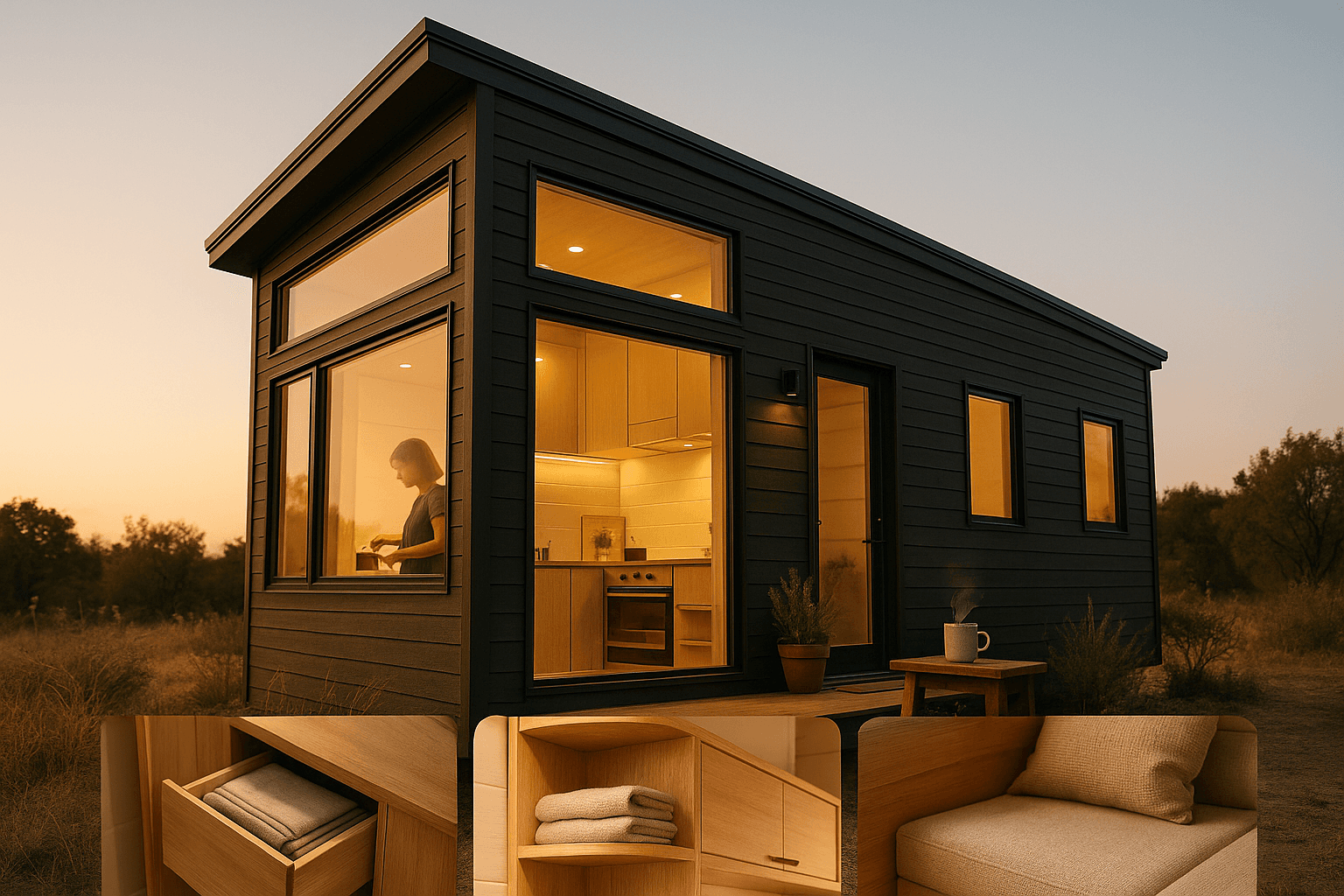
Modern design can transform a 120–400 sq ft tiny house into something that feels open, calm, and genuinely premium—without adding a single inch. The secret isn't "more stuff." It's better sightlines, smarter door choices, layered lighting, and built-ins that eliminate visual noise.
Below are 21 tiny-specific tricks that turn small footprints into spacious-feeling homes. Test them fast with our AI designer to see what works in your exact dimensions.
Layout Tricks That Give Back Space
1. Protect Your Long Sightline
A tiny house feels bigger when your eye can travel farther without hitting obstacles. Stand at your entry and identify the longest possible view—then protect it fiercely.
How to do it:
- Place your largest window at the end of that view
- Keep tall items (fridge, pantry, wardrobes) off the sightline axis
- Align furniture to guide the eye toward that focal point
Test it: In our AI generator, ask for "long view from entry to focal window" and compare 2–3 layouts instantly.
2. Zone Without Walls
Open plans feel bigger, but they can feel messy if every function competes visually. Create organization without shrinking space:
- A single rug to anchor the living zone
- A slat screen that passes light but defines boundaries
- Ceiling beams to outline zones from above
- Strategic furniture placement (sofa back as room divider)
3. Swap Swing Doors for Pocket Doors
In 400 square feet, every door swing steals usable floor area. Reclaim space in your:
- Bathroom
- Closets
- Bedroom access
Pro tip: Pocket doors are cleanest but need wall cavities; sliding barn doors are easier to install but leak more sound.
4. Use Built-In Banquettes
A built-in bench eats less space than chairs you pull out—plus adds hidden storage.
Modern banquette rules:
- Place against a wall or under windows
- Add lift-up seats for storage
- Choose thin table tops for visual lightness
5. Design a "Thin" Kitchen
A tiny kitchen feels spacious when it's visually quiet:
- One clean run instead of broken pieces
- Mix of uppers and open shelving
- Integrated appliances for consistent fronts
Clearance guidelines:
- Main circulation: 30–36 inches
- Kitchen aisle: 36–42 inches (depending on cook count)
6. Turn Stairs Into Storage Architecture
Stairs can be dead space—or your most valuable storage wall:
- Drawer stairs for maximum storage
- Open risers for maximum light flow
- Slim railings for less visual blockage
7. Make Your Loft a Light Zone
Lofts feel cramped when treated as afterthoughts:
- Use glass guards to keep sightlines open
- Keep built-ins low near the bed
- Add loft windows or clerestory above bed level
Light and Window Strategies
8. Layer Your Lighting
Most tiny homes feel small at night because the lighting is flat. Create depth with three layers:
- Ambient: ceiling fixtures or clean track lighting
- Task: under-cabinet kitchen, reading lights
- Accent: wall grazers, toe-kick glow, plant spots
- Dimmers on everything to "expand" the room after dark
9. Use Wall-Wash Lighting
Lighting that evenly grazes a wall reduces shadow edges, making boundaries feel farther away. Perfect for:
- Your longest interior wall
- Behind the sofa or banquette
- Hallway leading to bathroom
10. Add Clerestory Windows
High windows bring light without sacrificing wall space or privacy—tiny house gold:
- Keep storage and furniture placement below
- Get bright, even daylight
- Maintain privacy from neighbors
Rule of thumb: Aim for 10–20% window-to-floor area for bright interiors.
11. Choose One Big Focal Window
A single large window frames the outdoors like art and makes the room feel like it continues past the wall. Put your biggest glazing where you spend the most time—living or dining areas.
12. Hang Curtains High and Wide
Curtains are architecture in tiny homes:
- Mount rods close to the ceiling
- Extend wider than windows so glass stays fully exposed
- Use light, textured fabrics (linen-look) for warm minimalism
13. Keep Ceiling Continuity
A ceiling with frequent soffits or material changes reads lower. Instead:
- Use one ceiling material end-to-end
- Choose slim fixtures with less bulk
- Keep beam or slat rhythm consistent
Test Your Ideas with AI
These tricks work best when you see them in your dimensions. Use these prompts in our AI designer:
Layout + Sightlines: "Design a 24' x 8.5' modern tiny house with one loft. Prioritize a long sightline from entry to a large focal window, with tall storage off the main axis."
Doors + Space: "Create two versions: Version A uses swing doors; Version B uses pocket doors for bathroom and closet. Show circulation improvements."
Lighting Layers: "Add 3-layer lighting with dimmers, including wall-wash on the main living wall and under-cabinet task lighting."
Materials That Expand Space
14. Start with High-LRV Base Colors
Paint reflectivity changes how big a space feels. Aim for LRV 70–90 (soft whites, light neutrals) on main walls for brightness. Use dark colors as controlled accents in single zones.
15. Use Continuous Flooring
Every flooring transition is a visual "stop." One continuous floor reads as one larger volume:
- Light oak or oak-look
- Warm, matte finishes (less glare)
- Minimal thresholds
16. Limit Finish Changes
Modern tiny design is about being edited, not empty. Stick to 2–3 core materials:
- One wood tone (white oak)
- One countertop tone (light quartz-look)
- One metal (matte black or brushed steel)
17. Add Warm Minimalism
Avoid sterile all-white spaces. Add warmth without visual noise:
- Oak slats or single wood feature wall
- Linen textures
- Matte finishes
- One or two plants near focal windows
Smart Furniture and Storage
18. Choose Multifunctional Pieces
Keep daily items out of sight so spaces read calm:
- Storage ottomans
- Lift-top coffee tables
- Bench seating with drawers
- Sofas with under-seat storage
19. Run Built-Ins to the Ceiling
Stopping cabinets short creates dust shelves. Full-height reads architectural:
- Match cabinet fronts across zones
- Use minimal hardware or push-latch
- Align upper cabinet heights for clean horizon lines
20. Audit Dead Spaces
Built-ins outperform freestanding furniture by capturing weird gaps:
- Toe-kick drawers in kitchen
- Over-door shelves in bath/closets
- Stair-riser drawers
- Narrow pull-outs beside appliances
21. Use Mirrors Like Architecture
Mirrors work when they extend light and views—not as random decoration. Best placements:
- Opposite windows (reflect daylight)
- At hallway ends (create depth)
- Mirrored closet doors (double function)
Quick Decision Guide
| If your tiny house feels... | Start with... | AI prompt |
|---|---|---|
| Dark | Clerestory + layered lighting | "Add clerestory windows + 3-layer lighting + dimmers" |
| Tight | Pocket doors + long sightline | "Convert doors to pocket; protect entry sightline" |
| Cluttered | Full-height built-ins | "Built-ins to ceiling; limit to 3 materials" |
| Low | Ceiling continuity + high curtains | "Continuous ceiling + curtains near ceiling" |
| Boxy | Focal window + outdoor flow | "Large end-wall window + deck connection" |
Validate Your Design
Once you've generated concepts with our AI, refine your taste by browsing real modern tiny homes in our marketplace. Look for:
- Clerestory window bands
- Built-in banquettes and storage stairs
- Pocket doors in bathrooms
- Large focal windows with deck connections
- Consistent flooring and minimal material palettes
Our workflow: Design → compare to listings → save favorites → iterate until your plan feels like the modern tiny home you actually want to live in.
Ready to design your space? Our AI generator helps you prototype modern tiny homes in minutes—layout, windows, lighting, and built-ins—then refine by comparing with real homes worldwide. Your first three designs are free.