Minimalism Isn't 'Less' Anymore—It's 'Livable Luxury' (And Tiny Homes Prove It)
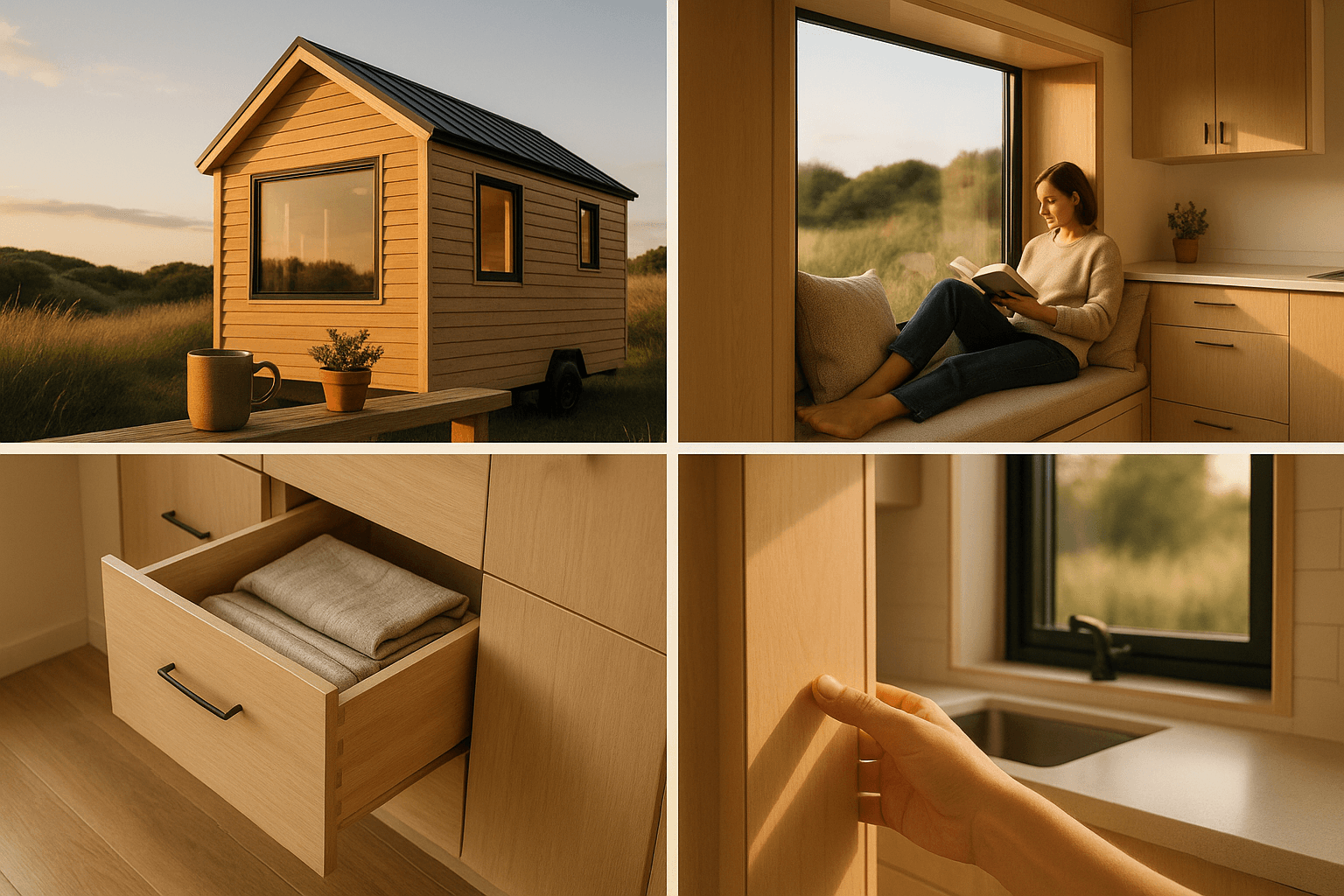
Minimalism in 2026 isn't an empty showroom—it's livable luxury: fewer things, higher comfort-per-square-foot, and systems that make everyday life feel calm. Tiny homes prove this fast because you can't hide bad light, noisy fans, or messy storage in 200 sq ft—so the "sanctuary" feeling has to be designed on purpose.
What livable luxury minimalism actually means
Livable luxury minimalism = low visual noise + high sensory comfort (light, air, acoustics, tactility) + frictionless daily routines—especially in small spaces.
Where old minimalism chased deprivation ("own nothing") or sterility ("white box"), livable luxury is about performance:
- A tiny home can be simple and warm.
- It can be modern and forgiving.
- It can be minimalist and unmistakably lived-in.
This is measurable and testable before you commit—by designing tiny homes with AI, then renting to try the lifestyle or buying from a global marketplace when your preferences are proven.
The 5 pillars of "comfort-per-square-foot"
Each pillar stands on its own—and each is something you can evaluate in tiny home listings or model in AI design before you build.
Light that feels good (day + night)
Light is the fastest way to make a tiny space feel expensive—without adding objects.
Daylight benchmarks:
- 300–500 lux for general tasks (kitchen, main living)
- 100–200 lux for evening ambient (wind-down mode)
- High-CRI LEDs (90+) to avoid the "flat/sterile" look
- 2700–3000K for calm ambient; optionally 3500–4000K for focused work light
Tiny-home design heuristic that works:
- Two-sided light (even one smaller secondary window) reduces "boxiness" more than adding decor.
AI design advantage: In the AI Designer, you can explore layouts that shift windows to create two-sided light, then compare what you lose (wall storage/privacy) and what you gain (brightness/spaciousness). In rentals, you can test if you're a morning-light person (east-facing glazing feels incredible) or if you prefer soft north light for screens and calm.
Tiny-lighting plan that reads "livable luxury" (not sterile):
| Layer | What it does | Tiny-home implementation |
|---|---|---|
| Ambient | Calm background glow | dimmable ceiling + cove/indirect |
| Task | Makes life easy | under-cabinet + reading + desk |
| Accent | Adds depth without clutter | wall washer, toe-kick glow |
Air + thermal comfort (the invisible luxury)
Tiny homes can feel "stuffy" quickly because there's less air volume. That's why ventilation is a comfort feature, not a green add-on.
Livable-luxury tiny home air checklist:
- Quiet bath fan that actually clears moisture (showers/cooking add a lot of moisture per cubic foot)
- Good range hood strategy (or at least controlled kitchen exhaust)
- All-electric / sealed systems where possible (less odor/backdraft complexity)
- Operable windows placed for cross-breeze (comfort you can feel instantly)
AI design advantage: You can request "quiet ventilation and moisture control" and generate versions that prioritize bath placement, window operability, and practical airflow. When browsing our marketplace, you can filter by homes that clearly describe ventilation, bathroom setup, and "stuffy-space" fixes—then rent to verify comfort in real weather.
Acoustic calm (luxury you notice in 10 seconds)
In small spaces, sound doesn't dissipate—it bounces. The result is "hard-surface slap," appliance hum, rain-on-roof intensity, and amplified footsteps.
Livable luxury rule:
- Add soft absorption that doesn't look like clutter.
Tiny-home acoustic upgrades that stay minimalist:
- Acoustic panels that look like art (one statement piece beats many small decor items)
- Wool rug or textured runner (reduces echo and footfall)
- Acoustic curtain liners (privacy + softness + sound control)
- Upholstered banquette fronts (hidden absorption)
- Soft-close hinges/slides (quiet hardware reads as "premium" daily)
AI design advantage: Use the AI Designer prompt: "prioritize acoustic calm; soft-close hardware; sound separation between work/sleep." When renting, pay attention to what annoys you: fridge noise, rain on metal roof, ladder/loft creaks. That becomes your spec before buying.
Tactility + materials (warm minimalism without visual clutter)
In 2026, "luxury" tends to look matte, tactile, natural, and low-glare—not shiny and fragile.
The modern tiny-home material formula:
- 2–3 core materials + 1 accent
Example palettes that feel warm but modern:
- Oak + warm white + charcoal + aged brass
- Light ash + soft greige + blackened steel + linen
- Microcement + warm white + walnut + brushed nickel
Avoid the tiny-home "sterile" traps:
- Too much high-gloss (shows fingerprints, glare, feels cold)
- Too many competing textures (reads as clutter fast)
- "Luxury stone everywhere" (heavy, busy, high maintenance—often backfires in tiny)
AI design advantage: In the AI Designer, you can lock a palette ("rift oak + warm white walls + one warm metal") and generate layouts that keep the visual language consistent. In marketplace listings, you can compare material restraint across builders worldwide—then choose the level of warmth you actually like.
Storage that disappears (but is effortless to use)
Tiny living doesn't succeed because you own less. It succeeds because storage is designed—not added later.
A practical target that keeps spaces calm:
- 70–90% closed storage (visual quiet)
- 10–30% open display (lived-in warmth)
Open display isn't "bad"—it just needs a budget.
Livable luxury storage moves (tiny-specific):
- Toe-kick drawers (steals space you'd otherwise lose)
- Banquette seating with lift-up storage
- Stair storage if you have a loft
- One "drop zone" cabinet for bags, chargers, keys
- Cable management routes (the quickest way to look premium)
AI design advantage: Our AI Designer can generate versions that hit your target: "80% closed storage; one open shelf for ceramics/books; hide router + cables." Rentals let you test your real storage needs—especially for families or remote workers—before you commit to a build.
The tiny-home rules you can actually follow
These are deliberately few. They're meant to be used as a tiny-home spec—when designing, renting, or buying.
- Design for "modes," not rooms. Work mode, host mode, wind-down mode.
- Use lighting scenes to switch modes (dimmers + task lighting) instead of adding objects.
- Keep counters mostly clear—choose one generous prep surface instead of many gadgets.
- One open-shelf zone per room max. Everything else closed.
- Pick one "hero texture" (linen curtain, wool rug, oak wall) so you don't need decor clutter.
- Quiet beats flashy. Prioritize fan noise, hardware, fridge sound over statement finishes.
- Make work reversible. Fold-down desk or compact workstation with a "close it and it's gone" move.
- Protect privacy without blocking daylight (top-down shades, clerestory windows, layered curtains).
- Choose matte finishes you can live with (easy-clean, low-glare, fingerprint-forgiving).
- Create one beautiful landing spot (bench + hooks + closed cabinet) to stop micro-mess.
How AI helps: you can turn these into an AI prompt and generate layouts that actually enforce the rules, then use rentals to confirm which ones matter most to you.
The tradeoffs that define livable luxury
Tiny homes are a series of tradeoffs. Livable luxury is simply choosing them on purpose.
Daylight vs privacy
Problem: Big windows feel amazing—until you're in a campground or dense lot.
Solutions that preserve the minimalist look:
- Clerestory windows (light without exposure)
- Top-down/bottom-up shades
- Sheer + blackout layering (daytime softness, nighttime privacy)
- Strategic window placement for sightlines (not "more glass everywhere")
How AI helps: Generate two variants: "maximize morning light" vs "maximize privacy." Compare window placement and what it does to storage walls.
Storage vs openness
Problem: More cabinets can shrink the space visually; too few creates clutter.
Decision shortcut:
- If you hate daily resets, choose more closed storage.
- If you love visual calm, choose fewer, better cabinets and a strict display budget.
How AI helps: Ask the AI Designer to hit a closed-storage percentage and place "deep storage" where it won't crowd the main sightline.
Warmth vs cleanability
Problem: More textiles = more warmth; more textiles = more dust/lint in tiny.
Balanced approach:
- One rug + one curtain system + wipeable upholstery (instead of many throws/pillows)
Loft space vs sleep quality
Problem: Lofts can be cozy—or hot, loud, and cramped.
Checklist for livable luxury sleep:
- Ventilation/operable window near the loft
- Night lighting that's low-glare
- Safe, quiet access (stairs often feel more "luxury" than ladders)
How rentals help: Rent a loft model for a weekend. You'll know immediately if you sleep well up there. Use AI to generate a ground-bed version and compare what it does to living space.
How to apply livable luxury with AI design
Most people don't need more Pinterest boards. They need a way to test decisions.
Turn your preferences into an AI design brief
Copy/paste prompts like these into the AI Designer:
Remote worker + dog (quiet sanctuary): "Design a 220 sq ft tiny home for a remote worker + medium dog. Prioritize acoustic calm, quiet ventilation, 80% closed storage, morning light with privacy. Include a reversible desk setup."
Modern family minimalism (no toy chaos): "Design a 260 sq ft tiny home for 2 adults + 1 child. Closed storage emphasis, one open display zone, durable matte finishes, easy-clean entry drop zone, layered lighting scenes for homework and evening."
Nature-first minimalist (indoor/outdoor living): "Design a tiny home that feels connected to nature: big view window + privacy strategy, cross-breeze, warm minimal palette (oak + warm white + one accent), and a calm reading nook."
Use rentals to validate your "comfort-per-square-foot" priorities
Before buying, rentals let you answer the real questions:
- Does loft sleeping feel restful or claustrophobic?
- Do you need more closed storage than you thought?
- Does that big window feel peaceful—or exposed?
- Is ventilation quiet enough for sleep and work calls?
Buy (or build) once your spec is real
Once you've tested, you can browse the marketplace with a sharper filter: lighting, storage style, work nook viability, privacy strategy, and overall "sanctuary" feel.
A quick "Livable Luxury Tiny Scorecard"
Use this when browsing listings or evaluating your AI concepts.
| Category | Pass looks like | Why it matters in tiny |
|---|---|---|
| Daylight | at least two light directions | reduces boxiness |
| Night lighting | dimmers + task lights | mood + usability |
| Color quality | high-CRI warm ambient | warmth without decor |
| Ventilation | clear bath/kitchen exhaust plan | moisture + odor control |
| Fan/appliance noise | "quiet" is mentioned or evident | tiny amplifies sound |
| Closed storage | majority closed fronts | visual calm |
| Display budget | one intentional open zone | lived-in warmth without clutter |
| Work mode | desk can disappear / has boundary | prevents takeover |
| Materials | 2–3 core materials + 1 accent | modern, cohesive |
| Cleaning friction | easy surfaces, no clutter traps | calm you can maintain |
AI advantage: this scorecard is exactly the kind of input that improves AI-generated layouts—and helps you shortlist rentals and builds that match your definition of luxury.