Paradise Without Problems: 8 Design Moves for Bug-Free Indoor-Outdoor Tiny Homes
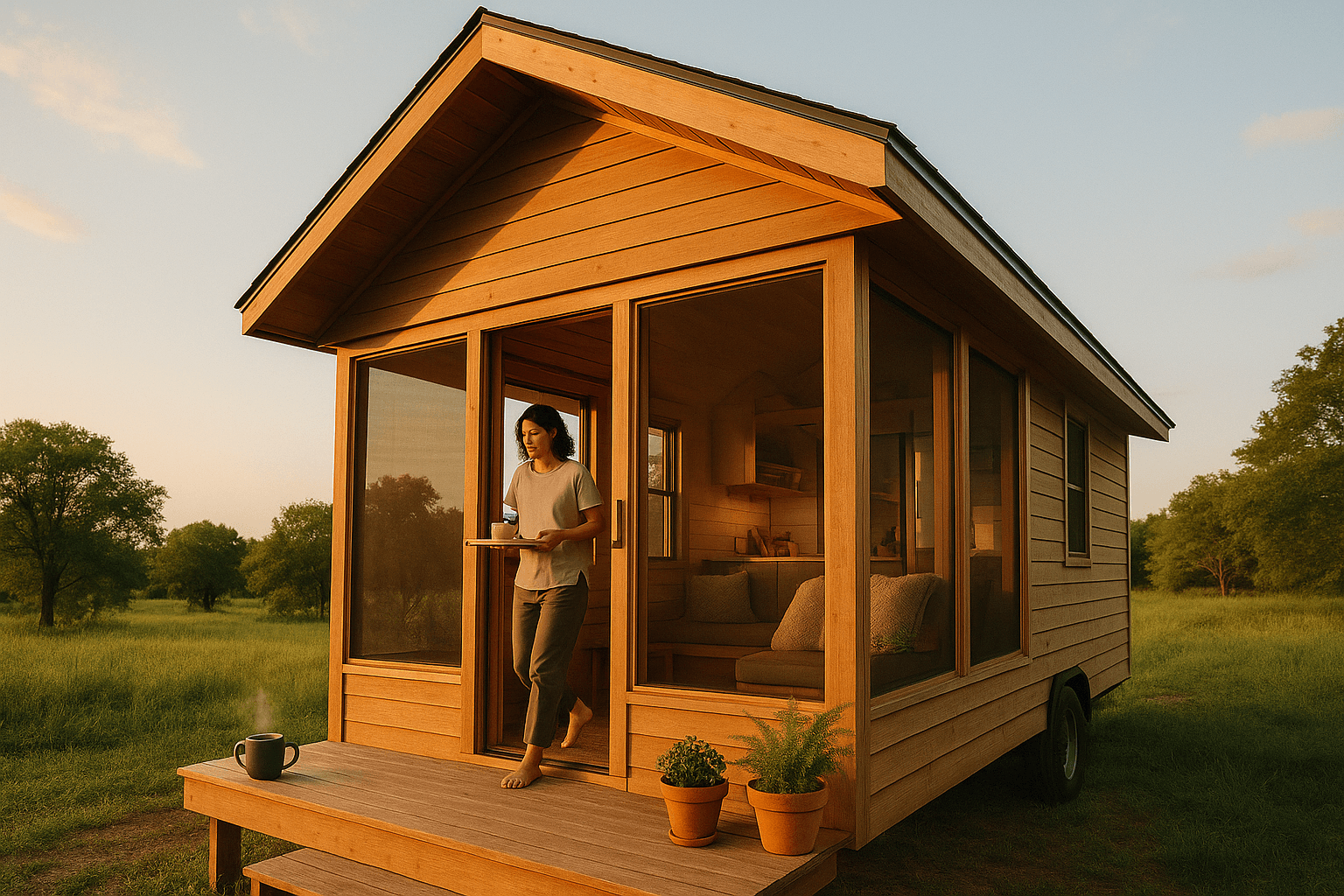
You can get that lush, open-air "lanai tiny home" feeling without turning your house into a bug hotel or a mold experiment—but only if you design indoor-outdoor living as a system (air + water + bugs + wind), not just an aesthetic.
This is the buildable formula that works across climates: a protected "third room" transition, rain-tolerant openings, gasketed thresholds, humidity-smart finishes, privacy layering, and storm detailing that doesn't kill the vibe.
The Reality Check: Comfort Targets You Can Actually Design To
Indoor-outdoor works when you can leave openings usable more days of the year—and still feel clean, dry, and safe.
Your non-negotiable comfort numbers:
- Ideal indoor relative humidity: 30-60%
- Most people feel best around 40-55%
- Above 60% increases mold and dust mite risk
- Sustained >70% is a red flag for materials and air quality
Why tiny homes need controlled fresh air: Small spaces trap humidity and odors fast. Plan for continuous low ventilation plus boost ventilation for cooking, showering, and wet gear.
How TinyHouses.to helps: Generate designs that keep the same "paradise" look but change the performance layer—ventilation approach, transition spaces, opening types—based on your climate and risk tolerance.
Design Move #1: Build a "Third Room" Buffer
If you want the outdoorsy feel without bugs, your best move isn't "more openings"—it's a buffer zone.
A screened porch acts like:
- A second living room
- A bug filter
- A rain filter
- A gear drop zone
Screen details that work:
- Standard mesh for airflow, "no-see-um" mesh for midges
- Spring-hinge doors with magnetic latches
- Door sweeps and raised sills for crawling insects
Quick decision guide:
| Option | Best For | TinyHouses.to Advantage |
|---|---|---|
| Attached screened porch | Daily use, seamless flow | AI designs junction and roof extension together |
| Detached screen cabana | Bug-free lounge without shell modification | Test before you build |
| Pop-out screened bay | Very small footprints | Keeps it road-legal while adding volume |
AI tip: Ask for a "screened lanai sized for table + lounge chair" and get layouts where the lanai anchors the entire plan.
Design Move #2: Roof It Like You Mean It
The secret to indoor-outdoor living isn't the glass—it's the roof.
Covered outdoor space:
- Keeps windows and doors usable during light rain
- Reduces direct sun and indoor heat load
- Protects thresholds from wind-driven rain
Design with the "where does water go?" mindset:
- Slope surfaces for drainage
- Avoid water-trapping details at deck-to-wall junctions
- Protect door thresholds
TinyHouses.to advantage: Generate multiple roofline strategies—micro overhangs, lean-to lanai roofs, wraparound covers—and compare vibe vs storm practicality before you build.
Design Move #3: Choose Openings for Daily Use
Big openings only feel paradise-like if they're easy to use daily and don't punish you during storms.
The underrated hero: awning windows
- Stay open in light rain
- Scoop breezes effectively
- Perfect near kitchens and baths
Cross-ventilation that actually works: Create air paths through living to sleeping areas—not just two windows next to each other. Use opposite-side openings or high/low placement for stack effect.
Door reality check:
- French doors: Often tighter sealing than cheap sliders
- Multi-slide doors: Big wow factor, needs careful detailing
- Lift-and-slide: Premium performance and cost
AI advantage: Generate the same layout with different opening packages to see what hits your budget and storm requirements.
Design Move #4: Treat Every Threshold Like an Airlock
Indoor-outdoor living fails at the threshold—not at the Pinterest board.
Threshold details that stop bugs and rain:
- Compression gaskets around doors and windows
- Door sweeps plus raised sills
- Pan flashing systems for water drainage
- Rigid-framed screens (avoid floppy gaps)
Bug-entry checklist for tiny homes:
- ✓ Sealed plumbing and electrical penetrations
- ✓ Tight window screens with no warped frames
- ✓ Door sweeps at all exterior doors
- ✓ Sealed deck-to-wall junctions
- ✓ Protected utility entries
Design tip: Specify "bug-safe detailing" in our AI and get plans with dedicated transition zones and fewer random penetrations.
Design Move #5: Design Humidity Out of the Finishes
The paradise aesthetic is easy. The paradise materials keep it fresh.
Humidity-smart interior choices:
- Moisture-tolerant wall and ceiling materials in wet zones
- Mold-resistant paints where humidity spikes
- Assemblies that can dry (avoid trapping moisture)
Flooring for real life: Indoor-outdoor means wet footprints, beach sand, garden soil, and pet paws. Choose durable, easy-clean floors over precious finishes that swell or stain.
Ventilation strategy: Continuous low ventilation plus boost when cooking and showering.
TinyHouses.to iteration: Generate one version for "always-open breezy living" and another for "closed up + dehumidification," then compare layout and material zone changes.
Design Move #6: Make Outdoor Bathing Realistic
Outdoor showers are doable—when you solve water, privacy, and wall exposure like a pro.
Outdoor shower reality check:
- Drainage plan: Where does water go without undermining foundations?
- Privacy: Block sightlines from neighbors and paths
- Splashback: Prevent water from soaking siding
- Freeze strategy: Cold climate considerations
- Code compliance: Outdoor plumbing rules vary
The tiny home alternative: A compact indoor wet-room with an exterior door feels "outdoorsy" while staying private, dry, and year-round usable.
AI advantage: Generate both options—outdoor shower court vs indoor wet-room with exterior door—and choose what matches your climate and maintenance tolerance.
Design Move #7: Privacy Layering That Preserves Views
Indoor-outdoor only feels relaxing when you don't feel watched.
The 3-layer privacy system:
- Distance + siting: Aim key glass away from roads and neighbors
- Soft screening: Plants, hedges, garden berms
- Hard control: Shades, curtains, louver panels
Night effect planning: Glass that feels open by day can feel exposed at night when interior light turns windows into mirrors for everyone outside.
AI advantage: Specify "privacy layered lanai + night shading plan" and generate orientations that preserve views while controlling sightlines.
Design Move #8: Storm-Ready Paradise
A paradise tiny home can be storm-ready if your large openings are protected rather than just strong.
Wind-driven rain solutions:
- Covered transitions
- Protected openings with awnings and overhangs
- Robust flashing and drainage continuity
Resilience details that keep the aesthetic clean:
- Deployable storm shutters (used only when needed)
- Corrosion-resistant hardware in coastal air
- Protected corners for outdoor gear
- Elevated critical elements in flood-prone areas
TinyHouses.to tradeoff exploration: Generate a "max glass" version, then a "storm-first" version with the same vibe. Compare opening sizes, shutter strategy, and porch depth before you build.
Climate Remix: Same Formula, Three Versions
You don't need to abandon indoor-outdoor dreams outside the tropics. You just need the right transition space.
Tropics version (hot + humid + bugs):
- Screened living as a true second room
- Aggressive exterior shade
- Humidity-tough finishes plus reliable ventilation
- Gasketed thresholds everywhere
Temperate version (warm summers, cool shoulders):
- Convertible porch (screen plus optional glazing panels)
- Mixed glazing strategy
- Seasonal airflow paths
Cold version (snow, wind, condensation risk):
- "Paradise" becomes a sunroom/vestibule
- Mudroom thinking for wet boots and gear
- Controlled ventilation and view-framing
AI advantage: Keep one aesthetic brief ("subtropical paradise vibe"), then generate climate-specific envelopes so the design stays magical but buildable where you actually live.
Copy/Paste: Climate-Specific AI Prompts
Use these in the TinyHouses.to AI Designer for climate-correct indoor-outdoor layouts:
Tropics Prompt:
Design a tiny house with "subtropical paradise" indoor-outdoor feel for hot-humid climate. Include screened lanai as third-room buffer, rain-tolerant awning windows, cross-ventilation across living and sleeping, gasketed thresholds. Specify humidity-friendly finishes and realistic bathing strategy. Add privacy layering and storm-ready detailing. Size 20-26 ft THOW or 300-450 sq ft foundation.
Temperate Prompt:
Design jungle-lanai retreat for temperate climate. Add covered deck plus screened transition zone that can be seasonally enclosed. Mix large doors with awning windows for rain venting. Include cross-ventilation paths, privacy strategy, storm detailing. Keep modern-minimal, 320-520 sq ft foundation.
Cold Prompt:
Design indoor-outdoor "paradise" for cold climate: replace lanai with bright sunroom/vestibule. Focus on view-framing glazing, controlled ventilation, condensation-aware materials, mudroom entry. Include covered summer area and storm-ready detailing. Size 24-30 ft THOW or 400-600 sq ft foundation.
Ready to design your paradise? TinyHouses.to's AI creates indoor-outdoor tiny homes that match your climate—so the vibe stays lush and buildable. Explore your first concepts free at tinyhouses.to/design.