How to Finance Your Tiny House: A Complete Guide to Loans, Requirements, and Qualifying
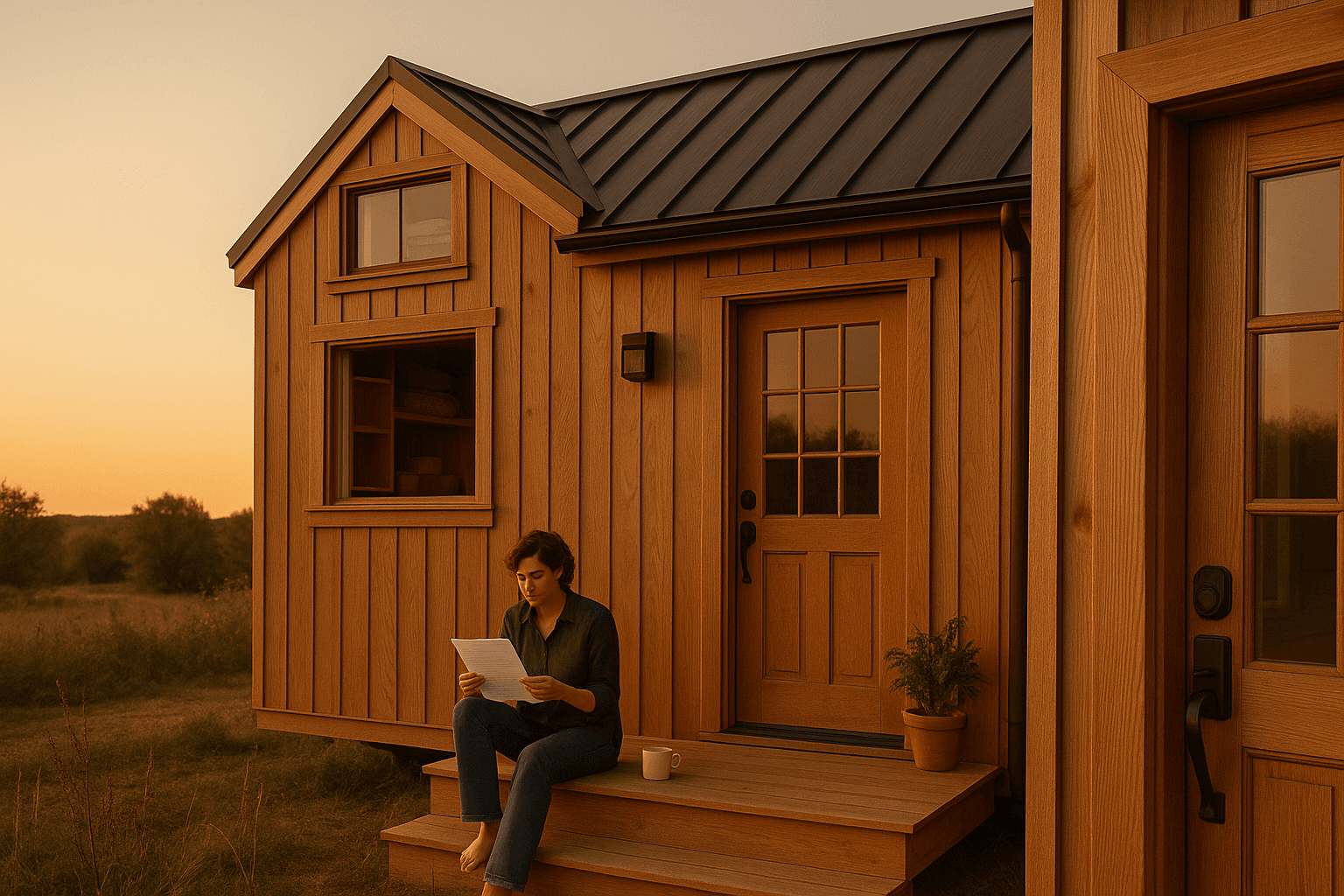
Tiny houses are financeable—when your home's category (on wheels vs. foundation), title type, certifications, and siting plan match what lenders actually understand.
The fastest path? Decide your setup first, then pick the loan that fits it.
At TinyHouses, we help you avoid the common trap: designing something beautiful but impossible to finance, insure, or title. Use our AI to design around financing-friendly specs—then browse listings with clear documentation and lender-ready details.
Know your financing category first
Lenders don't finance "tiny houses." They finance collateral types they recognize.
Tiny house on wheels (THOW)
Usually financed as:
- RV loan (most common when certified and titled correctly)
- Chattel/personal property loan
- Personal loan (unsecured)
Lenders care about:
- Legal RV/trailer status with VIN and title
- Insurance coverage
- RV or build standards (often RVIA certification)
Tiny house on foundation
Usually financed as:
- Construction loan → mortgage
- Traditional mortgage (if built and permitted)
- Home equity loan (if you own property)
Lenders care about:
- Legal real estate status (permitted, code compliant, permanently affixed)
- Certificate of occupancy
- Appraisable with comparable sales
Your land situation matters
- Own land: Opens construction loans and mortgages
- Lease/park: Usually means RV/personal loans only
How TinyHouses helps: Our AI design flow starts with your reality—wheels vs. foundation, owned vs. leased land—and steers your design toward specs that lenders recognize.
The main financing paths
RV loans (best for certified THOWs)
Best when:
- Your tiny house is on wheels with VIN and clear title
- Professionally built with RVIA certification (or equivalent)
- Meets lender size minimums (often 200+ sq ft)
Pros: Collateral-based, longer terms than personal loans Cons: Certification hurdles, possible occupancy restrictions
Personal loans (unsecured)
Best when:
- Financing a DIY build or unconventional design
- Need speed and flexibility
- Your home won't qualify as RV collateral
Pros: No collateral required, faster approvals Cons: Shorter terms, higher rates, smaller amounts
Construction loans
Best when:
- You own land and plan a code-compliant foundation build
- Working with licensed builders
- Can provide detailed plans and budget
Pros: Designed for custom builds, can convert to mortgage Cons: Heavy paperwork, strict builder requirements
Traditional mortgage
Best when:
- Home is permanently affixed and permitted
- Has certificate of occupancy
- Can be appraised (even with limited comps)
Pros: Best long-term rates and terms Cons: Appraisal challenges, minimum size requirements
Home equity (HELOC/cash-out)
Best when:
- You own a home with equity
- Adding an ADU or second dwelling
Pros: Cost-effective, flexible use of funds Cons: Primary home at risk
How TinyHouses helps: Browse listings where key financing details—certification, foundation type, documentation—are clear upfront. Design with our AI to match your chosen financing path.
What lenders actually look for
Your financial strength
- Credit score and history
- Debt-to-income ratio
- Stable income and employment
- Cash reserves
The home as collateral
- Clear title (RV/trailer vs. real property)
- VIN/serial number
- Insurance coverage
- Build specifications and documentation
Where it will live
- Land ownership vs. lease
- Zoning compliance
- Utility hookups
- Permanent foundation details
- Legal occupancy status
Certification and compliance
- RVIA certification for RV loans
- NOAH standards for some lenders
- Local building code compliance for mortgages
Common deal-breakers (and how to avoid them)
DIY build with poor documentation Solution: Create a build book with receipts, photos, specs, and clear floor plans
No clear title/VIN for wheeled units Solution: Confirm title strategy and VIN issuance early
Unpermitted foundation builds Solution: Check zoning and ADU rules before committing to a design
Can't get insurance Solution: Get insurance quotes early, choose standard systems and materials
No comparable sales for appraisal Solution: Consider more "standard" foundation builds in your area
TinyHouses advantage: Design with these constraints in mind from day one. Our platform shows you what works in different regions.
Improve your approval odds
Choose financing-friendly specs first
Decisions about wheels vs. foundation, title path, and certification affect financing more than finishes do.
Prepare your loan file
- Income verification and bank statements
- Debt list for DTI calculation
- For purchases: specs, title info, certification docs, insurance quote
- For builds: plans, budget, builder contract, permits
Match lender to category
Ask upfront what they finance and confirm occupancy rules early.
Budget beyond the home price
Account for fees, delivery, foundation work, utilities, permits, ongoing insurance and taxes.
How TinyHouses helps: Think end-to-end from design through financing reality. Browse homes that fit proven lending lanes instead of trying to convince skeptical lenders.
Financing quick reference
| Setup | Best loan type | Key documents | Common pitfalls |
|---|---|---|---|
| THOW, pro-built, certified | RV loan | VIN/title, RVIA cert, build specs | No certification, unclear title |
| THOW, DIY/unconventional | Personal loan | Income docs, build budget | Loan too small, high payments |
| Foundation on owned land | Construction loan | Plans, permits, builder contract | Unlicensed builder, missing permits |
| Finished foundation home | Mortgage | Certificate of occupancy, permits | No comps, zoning issues |
| Tiny home on leased land | RV/chattel loan | Title, build docs, lease terms | Unstable siting, value uncertainty |
| ADU with existing equity | HELOC | Equity proof, ADU plans, permits | ADU not permitted, site work costs |
Common questions answered
Can I get a mortgage for a tiny house? Yes—when it's on a permanent foundation, legally permitted, and treated as real property.
Do I need RVIA certification? Many RV lenders prefer or require it. For widest access, design with certification in mind.
Can I finance a DIY build? Often through personal loans. Documentation and insurability are crucial.
Do I need to own land? Not for RV or personal loans. Mortgages usually require land ownership.
Can I live in it full-time with RV financing? Sometimes. Confirm occupancy restrictions before committing.
What if there are no comparable sales? This makes mortgages difficult. Appraisers need comps for valuations.
Design to qualify, then shop with confidence
Financing gets simpler when your tiny house fits a clear lending category from day one.
TinyHouses connects design decisions to financing reality. Use our AI to create concepts that match lender constraints, then explore a marketplace of finance-ready options.
Ready to design your financeable tiny house? Start with TinyHouses AI designer and create a concept that lenders understand: tinyhouses.to/design