Going Small? Most People Pick the Wrong Type of Small Home
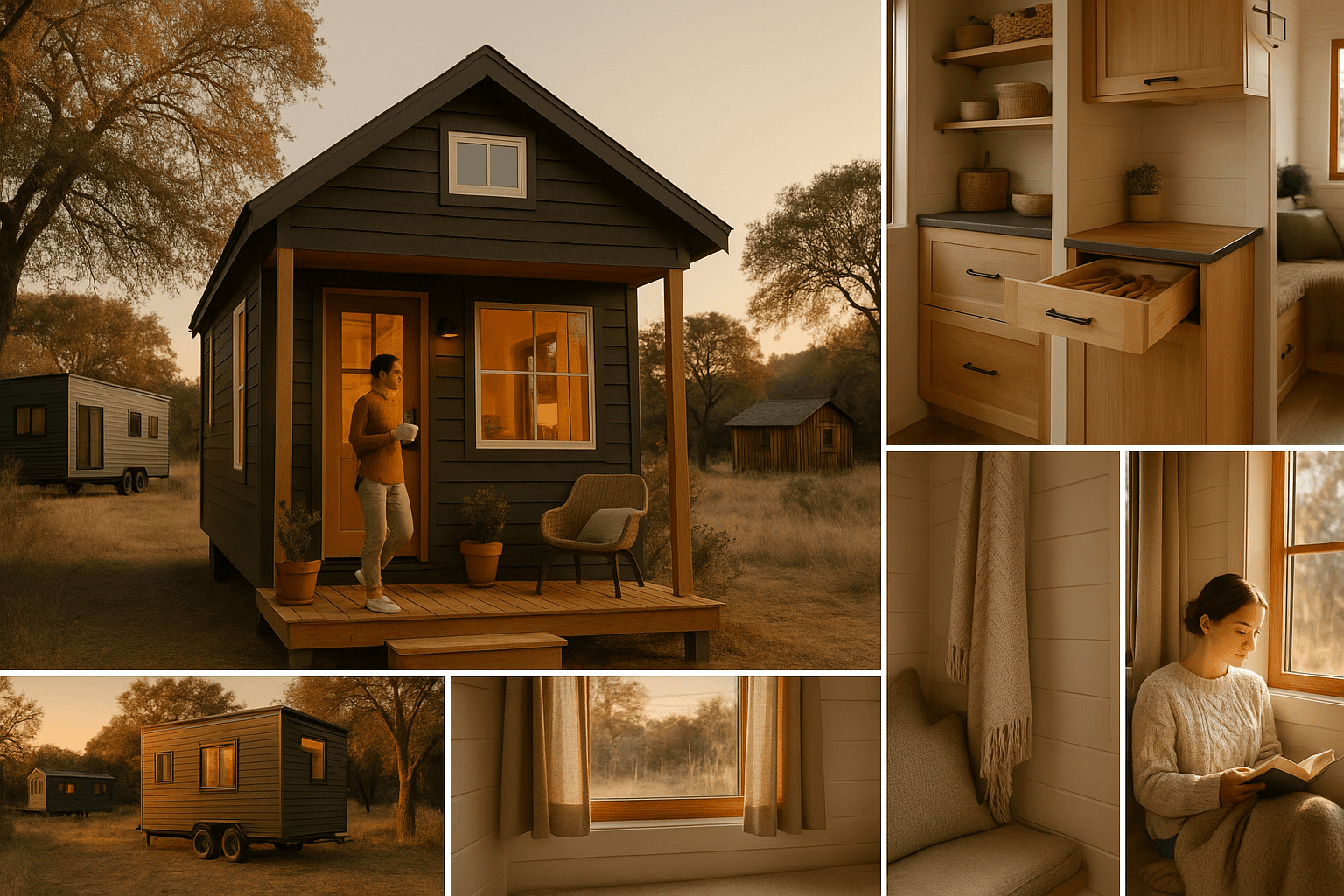
Most people don't regret living small. They regret picking the wrong type of small home—one that doesn't match their real constraints around placement, financing, commute, or how their household will change.
The "small homes" you see online aren't interchangeable. A tiny house on wheels, foundation micro-home, cabin, park model, and micro-apartment might look similar in photos, but they behave completely differently in real life.
Why people go small: three motivations, three different winners
"Going small" happens for three reasons—and each points to a different best choice.
Affordability: think monthly system, not sticker price
A cheap small home can still be expensive to live in if it creates:
- Higher site costs (foundation, hookups, permits, delivery)
- Higher recurring costs (land rent, specialized insurance)
- Higher transport costs (longer commute)
The real question: What's your monthly total—home payment + land + utilities + transport + insurance + maintenance?
Sustainability: location + systems matter more than size alone
Smaller space helps, but the greenest option usually combines:
- Tight building envelope (insulation, air sealing, efficient windows)
- Smart HVAC (heat pump over resistance heating)
- Shorter commute (a longer drive can outweigh home energy savings)
Lifestyle freedom: the #1 driver and #1 source of regret
Most failures aren't financial—they're daily friction:
- Work-from-home noise and privacy
- Storage for gear, tools, hobbies
- Pet space and neighbor rules
- Hosting friends and family
- Stairs, lofts, tight bathrooms
- Household changes (partners, kids, aging)
Your non-negotiables should pick the type first, then the floor plan.
The five types: what they actually are (and when each one wins)
Tiny house on wheels (THOW)
What it is: Towable home, often treated like an RV depending on build and certification.
Best for: Mobility, testing locations, minimalist living.
Common friction: Long-term placement rules, specialized financing and insurance.
Foundation micro-home
What it is: Small house or ADU built to be permitted like a regular home.
Best for: Stability, long-term living, conventional housing systems.
Common friction: Higher upfront complexity (permits, site work), less flexibility if you need to move.
Cabin/pod/modular
What it is: Wide range from simple pods to full modular units—legal status varies wildly.
Best for: Nature-first living, retreat properties, flexible aesthetic.
Common friction: "Habitable" vs "recreational" ambiguity, utility and winterization readiness varies massively.
Park model
What it is: RV-adjacent, designed for semi-permanent placement in parks and resorts.
Best for: Comfort with easier placement in established parks.
Common friction: Year-round residential restrictions, behaves more like a vehicle in resale.
Micro-apartment
What it is: Small apartment in a multi-unit building.
Best for: Legal simplicity, predictable utilities, commute advantages.
Common friction: Less autonomy, lease restrictions, rent inflation.
Reality check: the constraints that actually decide your winner
| Type | Legal classification | Financing | Placement options | Mobility | Best if you... |
|---|---|---|---|---|---|
| THOW | RV/trailer-adjacent | Specialized | Often hardest | High | Want flexibility, can handle complexity |
| Foundation micro | House/ADU | Conventional | Strong where permitted | Low | Want stability + long horizon |
| Cabin/pod | Varies widely | Often limited | Depends on classification | Low-Med | Want nature, can manage ambiguity |
| Park model | RVIA standard | Limited | Easiest in parks | Medium | Want comfort in park setting |
| Micro-apartment | Standard lease | N/A | Very straightforward | None | Want easy legality + amenities |
The hidden factors most people skip
Placement certainty (your #1 gate)
Do you already have a place it can legally live? Is it a park, private land, urban lot, someone's backyard?
If placement is uncertain, start with renting or a micro-apartment while you figure out long-term placement.
Financing comfort ("how normal does this need to be?")
Need conventional lending predictability? Foundation micro-homes usually align better than movable classifications.
Site costs and timeline
Even small homes need big site work: utility hookups, septic/well, driveway access, delivery logistics.
Need fast and predictable? Renting or micro-apartments often win. Can tolerate longer timelines? Foundation-based builds pay off in stability.
Commute reality
A cheap rural setup becomes expensive if it adds driving for work, school, groceries, healthcare.
Household change risk
Will you both work from home? Could kids, partners, or elder care enter the picture in 1–5 years?
High change risk? Choose something that can flex—or rent first, then buy after testing.
Rent vs buy vs build: match your risk tolerance
Rent when you're:
- Testing the lifestyle (privacy, storage, sleep quality)
- Location might change in 6–24 months
- Don't have placement certainty yet
Buy when you've:
- Found something placeable where you need it
- Have a multi-year time horizon
- Realistic resale plan for your chosen type
Build when you have:
- Placement certainty and longer timeline
- Need specific features (accessibility, climate performance, dual workstations)
- Want code-aligned stability
Quick decision framework
Step 1: How long in one place?
- 0–24 months → lean rent; consider THOW or micro-apartment
- 5+ years → lean buy/build; consider foundation micro-home
Step 2: Legal place to live small?
- Yes → consider buy/build in your target category
- No → prioritize rent or micro-apartment while solving placement
Step 3: Need conventional financing?
- Yes → favor foundation micro-home
- Flexible → THOW/park model/cabin options open
Step 4: Mobility important?
- High → THOW
- Low → foundation micro-home or micro-apartment
Step 5: Biggest non-negotiable?
- Commute/amenities → micro-apartment often wins
- Privacy + work-from-home → avoid layouts without real desk zones
- Accessibility → avoid steep loft stairs
- Storage/gear → prioritize mudroom and storage walls
- Climate extremes → prioritize envelope and mechanical space
Test your choice before you spend
Design 2–3 layout variants that match your chosen type:
- Loft vs no loft
- Two workstations vs one
- Storage wall vs open concept
Run a day-in-the-life simulation:
- Morning routine (bathroom, dressing, coffee)
- Work block (calls, focus, ergonomics)
- Dinner prep and cleanup
- Laundry and gear storage
- Guest scenario
Identify deal-breakers and redesign around them now—not after purchase.
With TinyHouses, you can prototype layouts with our AI designer and test them against your real routine. Then browse rentals or listings that match your validated design priorities. Design first, shop second—it's the smartest way to avoid expensive mistakes.
The bottom line
"Small" isn't a single product. Pick the right category based on your time horizon, placement certainty, financing comfort, commute reality, and household change risk. Validate the layout through design and testing. Only then decide whether renting, buying, or building makes sense.
Start by designing your ideal small home layout at TinyHouses—then find the right path to make it real.