The Family Layout Mistake That Kills Tiny House Dreams (And How to Fix It)
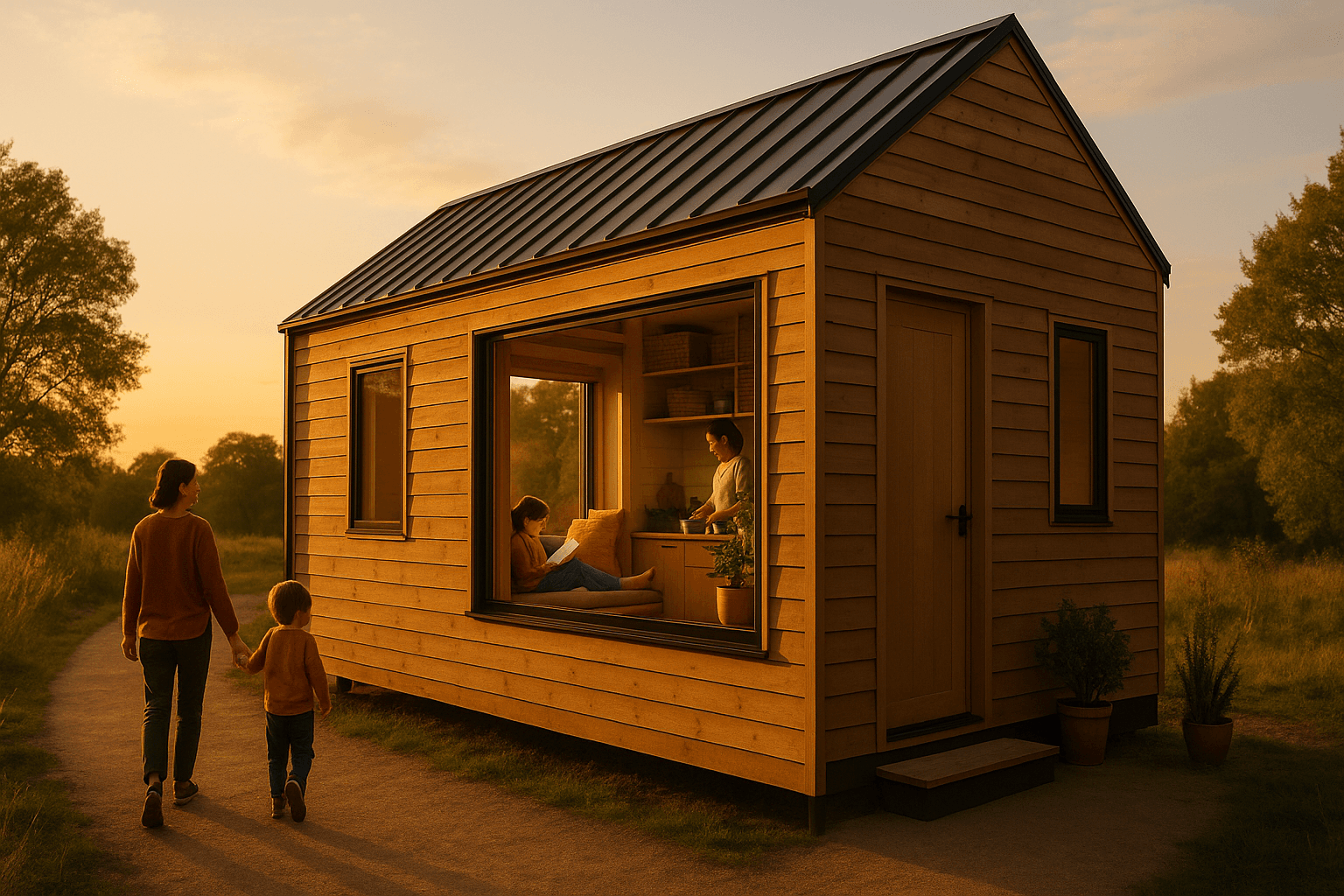
Most family tiny homes fail for one reason: they're designed to look clever on a tour, not to operate smoothly at 7:30am. The fix isn't more "space-saving hacks"—it's a layout framework that reduces traffic conflicts, protects sleep and work with real privacy buffers, and keeps daily "reset time" under control.
The "family layout" mistake TikTok gets half right
TikTok is right about one thing: multi-use spaces matter in 200–400 sq ft.
Where it goes wrong is assuming convertible everything is the answer. In real family life, conversions become a tax you pay multiple times per day.
The real enemy: "reset time"
Reset time = the minutes it takes to switch the home from Mode A → Mode B:
- Sleep → breakfast
- Breakfast → school/work
- Work → dinner
- Dinner → bedtime
Family-friendly target: ≤ 3 minutes per transition
If your plan requires moving cushions, folding tables, rolling bins, ladder swaps, or clearing a "project table" multiple times daily, you're not living in a tiny house—you're running one.
The Family Tiny-Home Layout Framework
This framework prevents "pretty-but-fragile" plans that crumble under real family life.
1) Predictable traffic paths (design for peak-hour flow)
In tiny homes (often 8.5 ft wide on wheels), you're always one pinch point away from friction.
Minimum workable circulation:
- Aim for ~30–36 in for the main passage
- If your "hall" is 24–28 in, two people passing becomes a daily conflict
The "no-cross" morning rule: If two people must pass each other in a narrow corridor during peak routines (bathroom runs, lunch packing, shoes on/off), bottlenecks are guaranteed.
Layout moves that actually work:
- Place high-frequency destinations (bathroom, fridge, kids' beds) so they don't force through-traffic across sleep/work zones
- Keep a clear route from beds → bath → kitchen → exit that doesn't cut through a desk or sleeping child
- Avoid putting the fridge door swing into the only passing zone
2) Door strategy (doors aren't for rooms—they're for zones)
In a family tiny home, a door controls moments: naps, calls, bedtime, early risers.
Space-efficient door options:
| Door type | Space impact | Visual privacy | Sound privacy | Best family use |
|---|---|---|---|---|
| Pocket door | Excellent | High | Medium | One "real boundary" zone (kids or WFH) |
| Sliding barn-style | Good | High | Low–Medium | Quick separation without tight framing |
| Curtain + track | Excellent | Medium | Very low | Visual separation only |
Rule: Choose one zone that gets a real door—ideally between WFH ↔ kids sleep or parents ↔ kids.
3) Acoustic buffers (sound is the real square footage killer)
Tiny homes are "all adjacency." Without acoustic planning, the house functions like one room—even with partitions.
You need at least one acoustic buffer between:
- Kids sleep ↔ adult WFH
- Early riser ↔ light sleeper
- Nap zone ↔ kitchen + living
Buffer-zone design trick: Put a "thick" zone between loud and quiet spaces:
- Closet wall
- Pantry + storage wall
- Bathroom (as a sound buffer, not a pathway)
4) Reset-time design (set-and-forget beats transformable)
You don't need zero multi-use furniture. You need multi-use that doesn't punish you.
A family tiny home stays calm when:
- Beds stay ready (no nightly sofa-bed teardown)
- Work/school supplies live near the work surface
- The dining surface doesn't become a desk multiple times daily
Quick reset-time test: Count steps for each transition. If you're doing more than ~3 minutes per transition, it won't hold up long-term.
Storage math that prevents constant reset-cleaning
Families don't run out of space first—they run out of accessible storage where mess happens.
The rule that keeps surfaces clear
Plan for ~15–25 cu ft of accessible daily storage per person (not counting seasonal/deep storage). Without this, tables and counters become storage.
Distributed storage (where it's created, not where it's pretty)
A workable family plan includes:
- Entry drop zone: shoes, coats, backpacks (so they don't land on the table)
- School zone storage: pencils, chargers, paper—within arm's reach of homework spot
- Sleep zone storage: each kid has a bin/drawer at their bed (not across the house)
Loft reality check (age matters more than aesthetics)
Lofts are common in 8.5 ft wide tiny homes, but family usability depends on age.
- Under ~6 years old: lofts can be challenging. Prioritize low bunks/ground beds and safe stairs over ladders
- Teens: need privacy + control. A "teen zone" should include a boundary (door/curtain), charging, and a place to be alone
3 family-proven layout archetypes
These archetypes are designed around operations: traffic, privacy, acoustics, and low reset-time.
Archetype A: "Two-Kid Bunkroom + Parent Zone" (best for 2 kids)
Best for: 2 kids (roughly 4–10), one parent WFH part-time, you want "beds always ready."
Core zoning:
- Kids get a compact bunkroom/nook with a pocket/sliding door
- Parents get separate sleep loft that doesn't require crossing the kids zone
Traffic design:
- Bathroom access without walking through the bunk nook
- Kitchen and exit route stays clear even when bunk door is open
Door/acoustic strategy:
- One real door on kids bunk zone to protect early bedtime
- Storage wall or bathroom as buffer between bunk zone and living/kitchen
Reset-time score: Low (dining stays dining; beds stay beds; minimal conversion)
Archetype B: "Nap-Proof Split Zones" (best for baby + toddler)
Best for: baby + toddler, one parent WFH/calls, naps are sacred.
Core zoning:
- Ground-level nap zone with actual separation (not just curtain)
- Toddler bed low and accessible; baby zone protected from kitchen noise
Traffic design:
- Bathroom reachable at night without passing directly beside baby's sleep wall
- Kitchen workflow doesn't run along the nap boundary
Door/acoustic strategy:
- Solid-core door for nap zone, or sliding door + soft acoustic panel
- Mechanical noise positioned away from nap wall
Reset-time score: Low–Medium (depends on whether play space converts for sleep)
Archetype C: "Teen Privacy Plan" (best for teen + parents)
Best for: teen who needs alone time, schoolwork, calls, and personal control.
Core zoning:
- Teen gets defined zone with boundary and "micro-room" functions
- Parents keep separate sleep space that doesn't require walking through teen territory
Teen essentials (non-negotiables):
- Charging shelf
- Small desk surface (even fold-down, if it stays clear)
- Storage for clothes and personal items inside their zone
Door/acoustic strategy:
- Actual door for teen zone preferred; if not possible, use slider + buffer wall
- Add soft surfaces to reduce "everyone hears everything" effect
Reset-time score: Medium (often includes flexible seating/work, but no daily bed conversions)
What to ask builders so your plan survives real mornings
Bring this checklist to any builder conversation. The goal is protecting your layout from "looks great on paper" compromises.
A) Traffic & pinch points
- Can two people pass in the main corridor while someone opens the fridge?
- Does the bathroom require walking through a sleep or work zone?
- Where do kids line up for shoes/coats—and does that block the kitchen?
B) Doors & privacy (zone control)
- Where is the one real privacy boundary in this plan?
- Is it meant for sound privacy or only visual privacy?
C) Acoustics (nap/WFH reality)
- What is the acoustic barrier between WFH and kid sleep?
- Where are the water pump, heater, and HVAC located relative to beds?
D) Storage (the anti-mess system)
- Where do backpacks, shoes, coats live—without touching the dining table?
- Where do school supplies live—within reach of the homework spot?
- Does each person have storage at their bed?
E) Reset time (conversion tax)
- What gets converted daily?
- How many steps does each conversion take?
- Can beds stay beds and work stay work?
Design your family layout that actually works
Use our AI design tool to test family-specific layouts before you build or buy. Generate multiple versions of these archetypes, adjust for your family's routines, and find what survives real mornings—not just tours.
Start designing at tinyhouses.to