Eco Tiny House Listings: 12 Marketing Claims vs Real Performance (Buyer's Defense Guide)
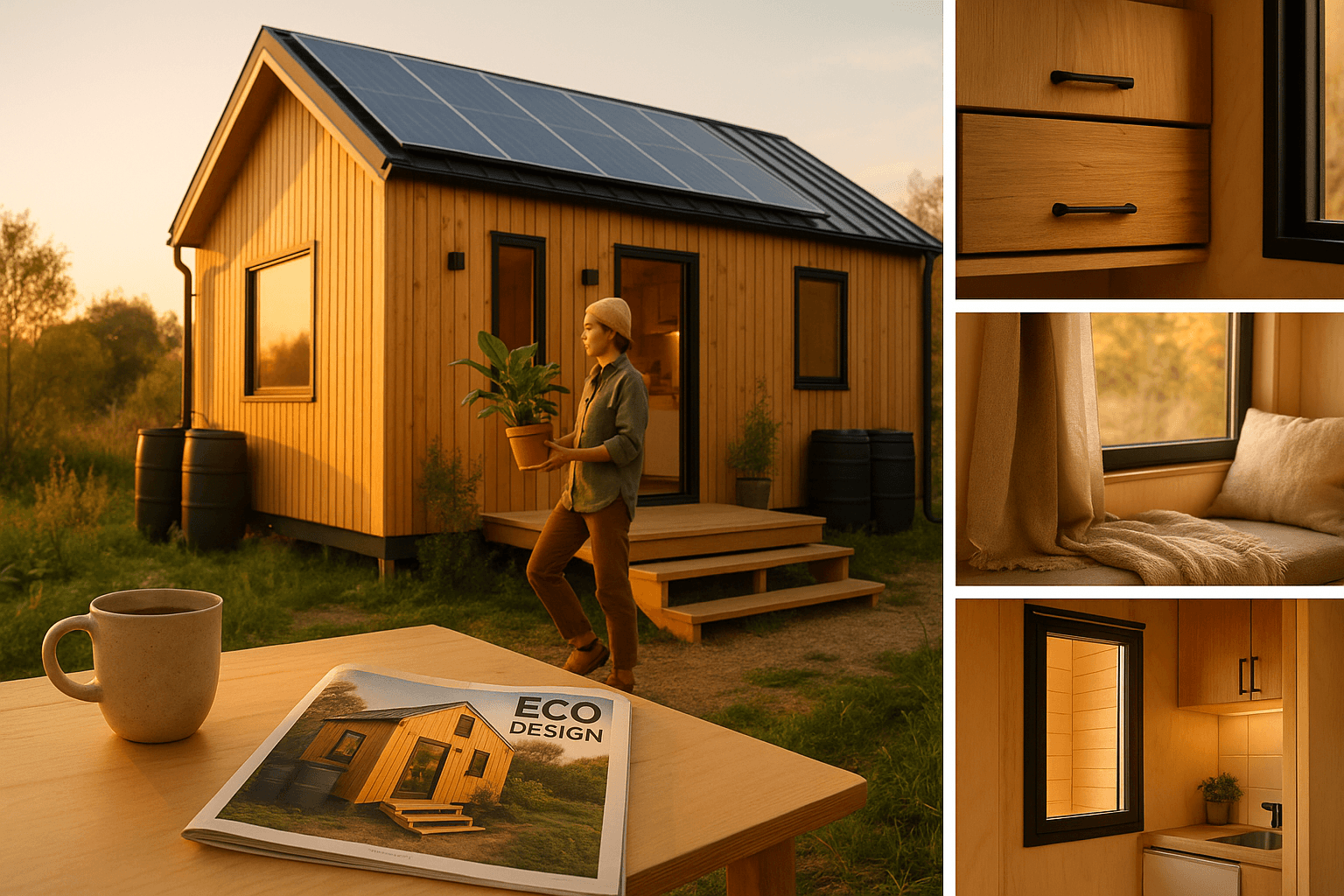
"Sustainable." "Eco-minimalist." "Off-grid-ready." These words show up in nearly every tiny house listing—but they rarely come with proof. If you're shopping for a tiny house to rent or buy, the fastest way to separate real performance from marketing fluff is simple: ask for numbers, not adjectives.
At TinyHouses, we believe eco claims should be filterable specs, not vibes. Every "green" tiny house should come with envelope data (R-values, window U-factors), airtightness results (ACH50), and system details (ERV/HRV, heat pump specs, PV capacity).
Use this guide to cut through the buzzwords and find homes that actually perform.
Why tiny doesn't automatically mean eco-friendly
A poorly insulated tiny house with air leaks and propane heat can use more energy per square foot than a well-built apartment. Real eco performance in tiny homes comes down to six priorities—in this order:
- Envelope performance — insulation, windows, thermal bridging
- Measured airtightness — blower door tested, not guessed
- Mechanical ventilation — ERV/HRV for controlled fresh air
- Efficient systems — heat pumps over resistance heat
- Right-sized renewables — solar matched to real loads
- Documented materials — FSC wood, low-VOC finishes
Everything else is nice-to-have. But these six determine whether you'll be comfortable, healthy, and actually living lightly.
The eco translation guide: buzzwords → specs that matter
"Sustainable" should mean:
- Roof R-30+, walls R-20+, floor R-20+
- Window U-factor ≤ 0.30 (≤ 0.20 in cold climates)
- Documented material sourcing
"Airtight" should mean:
- Blower door test results: ≤ 3 ACH50 (good), ≤ 1.5 ACH50 (excellent)
- If no test, it's marketing
"Solar-powered" should mean:
- PV size in kW, battery capacity in kWh
- Realistic winter production estimates
- Clear load coverage (lights only vs heat/hot water)
"Off-grid-ready" should mean:
- Complete autonomy plan: power + water + waste
- Tank capacities, pump specs, freeze protection
- Legal waste disposal method
12 marketing claims that hide weak performance
1. "Eco-minimalist"
Usually means: Small + wood accents + neutral colors Should mean: Low operational energy through smart envelope and systems
Ask: "What's the heating system and typical winter energy use? Any mechanical ventilation?"
2. "Super-insulated"
Usually means: Spray foam was used Should mean: Known R-values with thermal bridging addressed
Ask: "What are the R-values for roof, walls, and floor? Any continuous exterior insulation?"
3. "Passive design"
Usually means: Lots of windows Should mean: High insulation + measured airtightness + ERV/HRV + strategic glazing
Ask: "What's the blower door ACH50 result? What ventilation system?"
4. "Net-zero energy"
Usually means: Has solar panels Should mean: Annual energy use roughly matches PV production
Ask: "What's your estimated annual consumption versus PV output? Which loads does solar actually cover?"
5. "Reclaimed materials"
Usually means: One accent wall Should mean: Specific documented sourcing with safety considerations
Ask: "Which components are reclaimed and what percentage? Any treatment for pests or contaminants?"
6. "Chemical-free" / "Non-toxic"
Usually means: Vague health claim Should mean: Low-VOC documentation and emissions compliance
Ask: "Are finishes certified low-VOC? Are composite woods CARB2 compliant?"
7. "High-efficiency heating"
Usually means: Small space heater Should mean: Heat pump or high-efficiency combustion with clear fuel use
Ask: "Is it a mini-split heat pump? What model? Any backup heat?"
8. "Composting toilet system"
Usually means: Unit is installed Should mean: Legal disposal plan with maintenance reality
Ask: "Which toilet model? How are solids legally disposed of? Any freeze protection?"
9. "Advanced framing"
Usually means: 24" on-center studs Should mean: Optimized framing with reduced thermal bridging
Ask: "What's the framing strategy for thermal performance? Any continuous insulation?"
10. "Smart home technology"
Usually means: WiFi thermostat Should mean: Integrated monitoring and control systems
Ask: "What systems are actually automated? Any energy monitoring?"
11. "Rainwater collection"
Usually means: Roof feeds a tank Should mean: Complete potable water system with filtration
Ask: "What's the collection area, tank size, and filtration method? Any UV sterilization?"
12. "Low-carbon footprint"
Usually means: General size claim Should mean: Documented materials assessment and operational efficiency
Ask: "Do you have material sourcing documentation? What's the measured energy performance?"
TinyHouses Eco-Truth Scorecard (use on any listing)
Rate any listing 0-100 points. Minimum credible eco claim: 70+ points.
| Category | Points | Full Credit Looks Like |
|---|---|---|
| Envelope specs | 30 | R-values stated + window U-factors + thermal bridge details |
| Airtightness | 15 | Blower door test ≤ 3 ACH50 |
| Ventilation | 15 | ERV/HRV with airflow specs and controls |
| HVAC efficiency | 15 | Heat pump primary + efficient water heating |
| Renewables | 10 | PV kW + battery kWh + realistic autonomy |
| Materials docs | 10 | FSC/reclaimed proof + low-VOC compliance |
| Water/waste | 5 | Legal off-grid plan or hookup details |
Non-negotiables: If a listing can't provide envelope specs, heating system details, or ventilation strategy, treat eco claims as unverified.
Five questions that expose greenwashing instantly
- "What are the R-values for roof, walls, and floor?"
- "Do you have a blower door ACH50 number?"
- "What ventilation system—ERV, HRV, or something else?"
- "Is the primary heat a mini-split heat pump or something else?"
- "For solar: what are the PV kW and battery kWh, and what loads do they cover?"
If they can't answer these basics, the eco claims are marketing.
Copy-paste message for sellers and hosts
Save time with this template:
Hi! I'm interested in your listing. To understand the performance specs, could you share:
- Envelope: R-values for roof/walls/floor + window U-factors
- Airtightness: Any blower door test (ACH50 result)?
- Ventilation: ERV/HRV make/model or other fresh air strategy
- Heating/cooling: Primary system (mini-split/other) + backup
- Solar (if applicable): PV kW, battery kWh, and load coverage
- Water/waste: Source, capacity, and disposal method
- Materials: Any FSC/low-VOC documentation
Thanks! Happy to discuss timeline once I understand the specs.
Renting vs buying: what matters most
For rentals: Focus on comfort and health
- Ventilation system (especially for overnight stays)
- Heating/cooling adequacy for your visit season
- Water/waste usability and guest expectations
For purchases: Focus on envelope and durability
- Insulation and airtightness (expensive to fix later)
- Moisture management strategy
- System serviceability and warranties
What you can verify remotely vs in-person
From photos (request specific shots):
- Window labels showing U-factor/SHGC
- Mechanical equipment (ERV/HRV, heat pump, water heater)
- Solar inverter and battery setup
- Insulation installation before drywall
From documents:
- Blower door report
- Equipment spec sheets
- Solar installation invoices
- Material receipts and certifications
In-person inspection:
- Condensation, odors, or moisture signs
- Comfort near windows (reveals weak glazing)
- HVAC noise levels
- Overall build quality and finishes
How TinyHouses makes eco shopping easier
When you design with our AI tool, you get a complete spec sheet—insulation, windows, ventilation, HVAC—that becomes your benchmark for evaluating any listing. No more guessing whether "eco-minimalist" means anything real.
Our marketplace pushes for structured performance data, so you can filter by actual specs instead of marketing adjectives. Because when you're choosing where to live, proof beats poetry every time.
Design your benchmark. Shop with confidence.
Create your ideal tiny house with performance specs that matter. Generate your first design concept free at TinyHouses.to/design—then use it to evaluate every listing with clarity.