Live Green Without Going Without: The Comfort-First Guide to Eco Tiny Houses
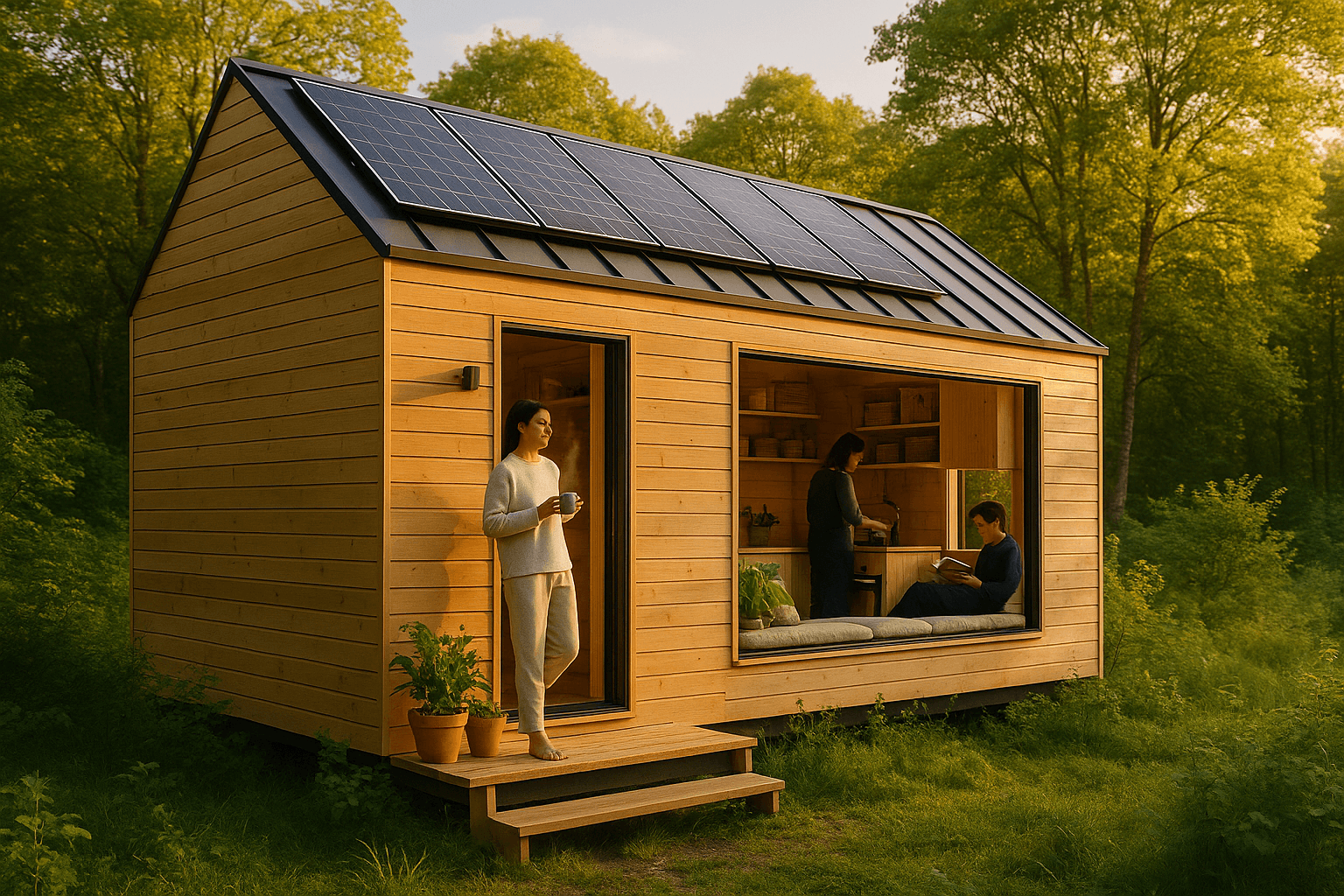
Eco-friendly tiny house living doesn't have to feel like "camping." The smart approach? Start with comfort metrics, then make them sustainable. That means reducing heating and cooling loads with the right envelope, keeping air fresh and dry with planned ventilation, and choosing efficient appliances that preserve daily convenience.
At Tinyhouses.to, our AI design tool helps you optimize these specs for your climate and lifestyle—then match them to real homes and rentals worldwide.
The Four Comfort Metrics That Matter
In a tiny space, everything changes faster—temperature swings, humidity spikes, cooking smells. So "eco" needs to be measured in comfort terms, not ideology.
Target these four metrics:
- Temperature: maintain 68–75°F (20–24°C) year-round
- Humidity: aim for 30–50% relative humidity with consistent fresh air
- Sound: prioritize quiet appliances and better wall assemblies
- Convenience: the most sustainable setup is one you'll actually maintain
How our AI helps: Design around these metrics from day one. Plan mechanical zones (mini-split, ventilation, water heater) so you get modern comfort without sacrificing storage or clean layout.
Start With Your Shell: The Biggest Comfort Upgrade
A high-performance envelope is tiny house luxury—fewer drafts, stable temperatures, quieter interiors, lower bills.
Smart Insulation Targets
| Assembly | Target Range | Why It Matters |
|---|---|---|
| Roof/Ceiling | R-30 to R-49 | Biggest heat loss surface; critical for stability |
| Walls | R-13 to R-30 | Controls drafts and temperature swings |
| Floor | R-19 to R-30 | Prevents cold-floor discomfort |
Tiny house reality check: Air sealing often matters more than R-value. A slightly lower-R build that's tight can outperform a high-R assembly that leaks.
Air Sealing: Tight + Ventilated
Target ≤3 ACH50—but only with mechanical ventilation to keep indoor air fresh.
Window Strategy: Placement Over Price
Design for daylight without overheating, cross-ventilation for shoulder seasons, and thermal comfort in sleeping areas.
How our AI helps: Set your climate and lifestyle priorities (quiet sleeping loft, serious cooking, humid weather). The system proposes envelope strategies and mechanical placement so you're not guessing.
Ventilation: The Hidden Comfort Factor
Tiny homes get humid fast—showers, cooking, breathing. Moisture and pollutants concentrate quickly, so ventilation is comfort.
ERV vs HRV: Do You Need One?
If you're building tight, balanced ventilation delivers consistent air quality.
Simple guidance:
- HRV: cold climates (brings fresh air while keeping heat)
- ERV: hot-humid or mixed climates (manages moisture transfer)
Kitchen and Bath Exhaust
Even with balanced ventilation, you need targeted exhaust for normal life—range hood vented outside, properly sized bathroom fan.
How our AI helps: Reserve conflict-free zones early—where ducts can run, where the ERV can live, avoiding the classic mistake of routing vents where you wanted solar panels.
Heating and Cooling That Feels Normal
Design around steady, efficient climate control—not heroic workarounds.
Mini-Split Heat Pumps: Best Bang for Buck
Why they work:
- Efficient heating and cooling in one system
- Excellent temperature control (no wild swings)
- Solar-friendly (more efficient than resistance heat)
Tiny house placement tips:
- Avoid blasting the sleeping loft directly
- Keep head unit compatible with loft height
- Plan accessible outdoor unit location
Wood Stoves: Romantic But Risky
Wood can overheat tiny interiors fast and hurt indoor air quality. Mini-split plus climate-appropriate backup often delivers better "set it and forget it" living.
Water Efficiency Without the Camping Vibe
The easiest eco wins feel good every day—great showers, reliable hot water, less tank stress.
Low-Flow Fixtures That Still Satisfy
- Showerheads: ≤2.0 gpm (1.5–1.8 gpm often feels great)
- Faucets: ≤1.2 gpm
- Toilets: 1.28 gpf or dual-flush 0.8/1.28 gpf
Hot Water Comfort
"Endless hot water" can still be efficient:
- Keep plumbing runs short (wet bath near kitchen wins twice)
- Right-size your system (on-demand or heat pump if space allows)
How our AI helps: Cluster wet zones to reduce pipe length, improve hot-water response, and simplify future greywater readiness—without losing that open, modern feel.
Composting vs Flush: A Practical Decision
Choose based on routine tolerance, hookup access, and local rules—not ideology.
Quick Comparison
| Option | Convenience | Eco Impact | Must Plan For |
|---|---|---|---|
| Composting | No hookups needed | Very low water use | Venting, maintenance routine, disposal rules |
| Flush | Feels "normal" | Still efficient with low-flow | Water + waste connections |
Composting reality: A well-vented unit shouldn't smell indoors. Success depends on dedicated ventilation, correct bulking medium, and a maintenance routine you can stick to.
How our AI helps: Design the bathroom as a system—vent placement, fan routing, maintenance access—so you don't get a beautiful bathroom that's annoying to live with.
Materials That Matter in Small Spaces
With limited air volume, VOCs and formaldehyde concentrate faster. Low-tox materials aren't just "green"—they're health and comfort.
Smart Material Choices
- Low-/no-VOC paints and sealants
- Formaldehyde-free cabinetry (CARB2/TSCA Title VI compliant)
- Avoid mystery foams—spec products with emissions data
- Durable, cleanable surfaces in wet areas
Moisture Control = Mold Prevention
Continuous water control, climate-appropriate vapor strategy, proper flashing—the basics that protect your investment.
Solar-Ready Design: Comfort Now, Flexibility Later
Tiny houses can reach net-zero easier because loads are smaller—but plan smart.
Typical System Ranges
- Solar: 2–6 kW (depends on roof, shading, loads)
- Battery: 5–20 kWh (based on autonomy goals)
Design "Solar-Ready"
- Reserve roof zones for panels
- Plan conduit runs
- Locate inverter/battery space with ventilation access
- Size electrical panels appropriately
Energy reality check: Electric resistance heating, tank water heaters, and induction cooking can break off-grid budgets. Reduce loads first, then size systems.
How our AI helps: Flag conflicts early—roof vents in solar zones, battery placement stealing storage, clearance issues. Get a realistic plan, not a dream diagram.
Your No-Compromise Spec Checklist
Envelope + Comfort
- Roof insulation: R-30 to R-49
- Wall insulation: R-13 to R-30
- Floor insulation: R-19 to R-30
- Air sealing: ≤3 ACH50 with mechanical ventilation
- Windows: daylight + shading + privacy strategy
Air Quality
- Balanced ventilation (ERV or HRV)
- Vented range hood and bathroom exhaust
- Target humidity: 30–50% RH
Climate Control
- Primary: mini-split heat pump
- Backup: climate-appropriate (avoid overheating)
Water Systems
- Showerhead: ≤2.0 gpm
- Faucet: ≤1.2 gpm
- Toilet: 1.28 gpf or dual-flush
- Short plumbing runs for hot water
Materials
- Low-/no-VOC finishes
- Low-emitting wood products
- Moisture-durable assemblies
Solar Ready
- Clear roof zones
- Planned conduit runs
- Dedicated equipment space
Design Your Dream, Find Your Home
Once you know the specs, the challenge is integration—fitting systems into small footprints without ruining flow or storage.
With Tinyhouses.to, you can:
- Design with AI around your climate and routine
- Optimize layouts for mechanical systems without losing livability
- Create personal specs to share with builders
- Explore our global marketplace for rentals and homes matching your checklist
Common Questions, Straight Answers
How do I heat a tiny house efficiently in winter? Start with envelope (air sealing + insulation), then mini-split heat pump. Wood often overheats tiny spaces and can hurt air quality.
Is a mini-split worth it? Usually yes for "normal" comfort. It's efficient, handles heating and cooling, and works with solar. Key is correct sizing and placement.
Will a tight tiny house get moldy? Only if tight without ventilation. "Tight + ventilated" with good exhaust prevents mold while maintaining comfort.
Can I run fully on solar? Often yes, depending on loads and climate. Typical ranges: 2–6 kW solar, 5–20 kWh batteries. Fix the envelope first, then size systems.
Easiest water savings without roughing it? Comfortable low-flow fixtures plus short plumbing runs for instant hot water.
Do composting toilets smell? Proper venting means no indoor odor, but they require routine maintenance and legal disposal planning.
Best materials for small-space air quality? Low-/no-VOC finishes and low-emitting cabinetry. In tiny volumes, avoiding high-emitting products matters more.
Ready to design your perfect eco-friendly tiny house? Our AI tool helps you balance comfort and sustainability from day one. Start designing →