The Daily Systems Luxury Tiny House Tours Never Show
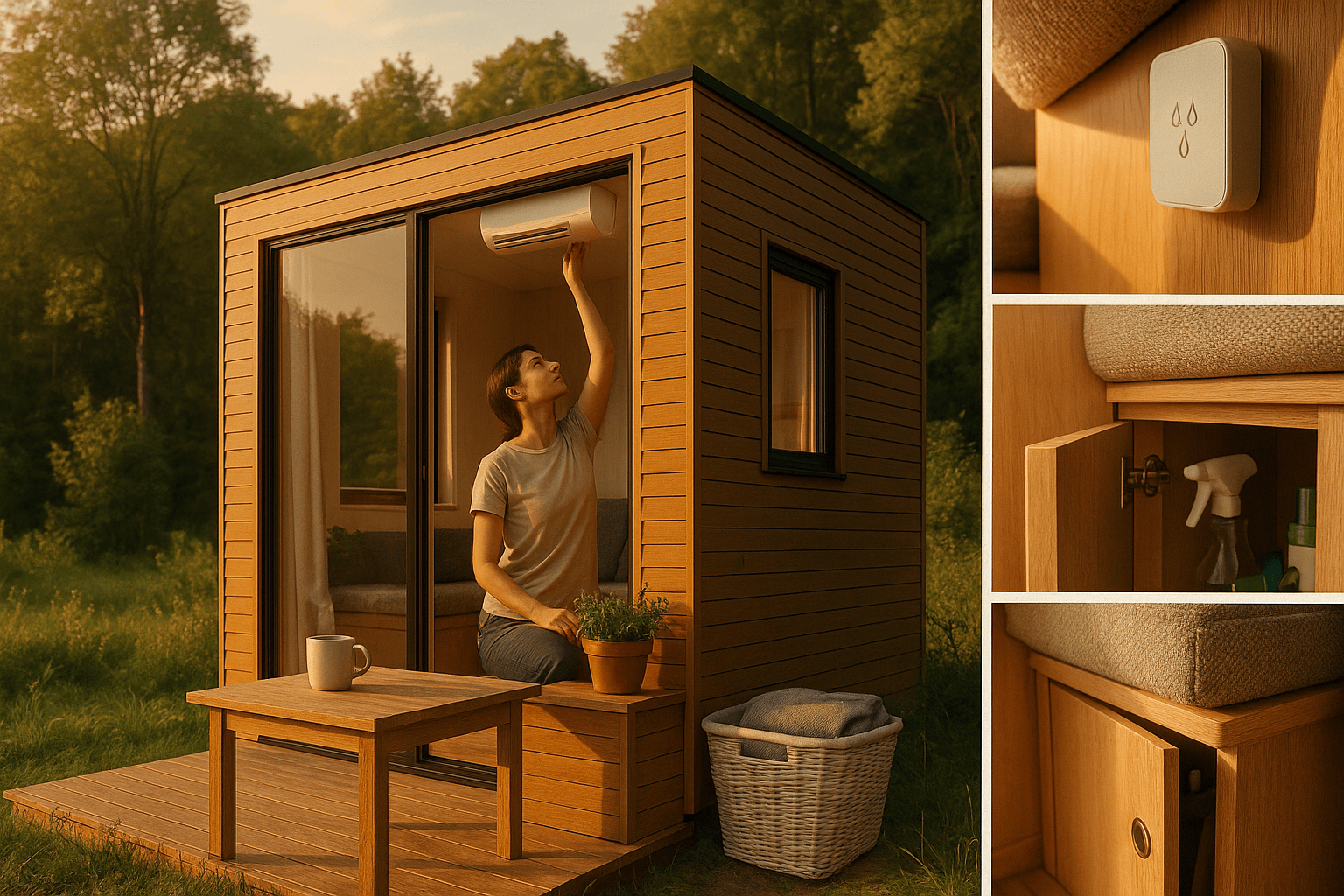
Luxury tiny house tours are designed to look perfect for 12 minutes—not to survive a rainy Tuesday with cooking, laundry, work calls, wet boots, and two people with different schedules. The tiny homes that actually feel luxurious day-to-day all have the same thing in common: invisible systems for moisture, smell, waste, clutter flow, and quiet.
Why tours feel like fantasy (and reality feels like chaos)
In a small volume of air and space, tiny problems become loud problems fast. The chaos usually comes from five forces:
- Moisture (showers + cooking + drying)
- Smells + grease (open-plan kitchens near beds)
- Stuff flow (laundry and daily clutter with nowhere to "buffer")
- Waste flow (trash/compost has to leave the house cleanly)
- Noise + light spill (sleep vs WFH vs early riser routines)
When you're browsing tiny homes, evaluate them the same way: systems first, finishes second—because marble counters don't stop mildew, and a designer faucet doesn't make pump noise disappear.
System #1: Moisture + air quality (the gap tours don't show)
A tiny home can look spotless and still be quietly damp. Humidity spikes quickly from showers, boiling water, drying towels, and even two adults breathing overnight.
What "good" looks like in daily life
- Target indoor humidity: 40–55% for comfort and mold prevention
- Bathroom fan that vents outside (not recirculating), ideally with timer or humidity sensor
- Kitchen range hood vented to exterior, especially with propane/gas cooking
- Fresh air plan: ERV/HRV in cold climates or deliberate airing routine
- Dehumidifier with continuous drain (to sink/drain line—tank-emptying is a daily chore)
Tour-to-truth: what to look for in videos
- Do you ever see the host use fans, crack windows, or mention humidity?
- Any condensation on windows or skylights?
- Is the range hood shown working (sound + airflow) or just as decor?
- Do they avoid filming the bathroom ceiling?
What to ask sellers (copy/paste)
- "Is the bath fan vented outside? What's the CFM rating?"
- "Is the range hood vented outside, and where does it exit?"
- "Do you use a dehumidifier? How many pints/day and where does it drain?"
- "Any window condensation issues in winter or after showers?"
System #2: Laundry workflow (where clutter is born)
Tours love to show a stacked washer/dryer. Real life depends on the workflow around it.
The laundry system that feels effortless
A calm tiny home has a dirty → wash → dry → fold → put away loop that never blocks walkways.
Key components:
- Dirty laundry in sealed hamper (odor control matters in small air volume)
- Intentional drying method:
- Vented dryer to exterior (fast, less indoor moisture)
- Condenser/heat pump dryer (no exterior vent needed)
- Line-dry setup with strong ventilation
- Accessible lint management and cleaning schedule
- Fold surface that doesn't take over the bed
Tour-to-truth: what to look for
- Is the "laundry nook" always closed in the tour?
- Towels drying on railings/ladder rungs? (humidity clue)
- Obvious hamper spot that doesn't block walkways?
What to ask on listings
- "Washer capacity and dryer type (vented vs condenser)?"
- "If vented: where does it exit, and is the vent cleanable?"
- "Where do you air-dry items in winter?"
System #3: Cooking smells + grease (open-plan challenge)
In many tiny homes, the kitchen sits three steps from the sofa—and six steps from the bed. Without real ventilation, smells linger and grease films everything.
Systems that keep tiny kitchens feeling premium
- Externally vented range hood + routine filter cleaning
- Easy-wipe surfaces near cooktop (backsplash height matters)
- Induction cooktop (easier smell/grease control than gas indoors)
- Sealed food storage (pest-resistant containers vs open shelves that collect cooking aerosol)
Tour-to-truth clues
- Do they cook anything beyond boiling water?
- Hood shown running with real sound/airflow?
- Sleeping loft directly above kitchen with no separation?
What to ask
- "Is the range hood ducted outside? What's the duct path?"
- "Routine for odor control after cooking fish, curry, or frying?"
- "Dedicated spice + pantry zone that closes?"
System #4: Trash, recycling, compost (zero buffer zone)
In a normal house, you can ignore trash for a day. In a tiny home, that becomes smell—fast.
A daily-proof waste system
- Sealed bins sized for your removal cadence
- Clear separation: trash vs recycling vs compost
- Exit path avoiding clean zones (bins near door but contained)
- Composting setup: sealed countertop bin + pest-proof outdoor container
Tour-to-truth: what to look for
- Do they show where trash actually lives?
- Hidden bin drawer (good) or loose can in the aisle (bad)?
- Any pest prevention discussion?
What to ask
- "Where are trash/recycling/compost stored? (photo please)"
- "Summer compost removal frequency?"
- "Any pest issues and prevention methods?"
System #5: Entry "mud control" (the chaos gate)
The entry determines whether tiny living feels serene or stressful—especially with rain, snow, dogs, or packages.
What a real tiny "mudroom" looks like
- Hooks at right height (enough for real use)
- Shoe tray for water/grit containment
- Bench/perch for boot removal
- Wet zone plan (where damp gear drips safely)
- Durable threshold flooring + washable runner
Tour-to-truth red flags
- Entry filmed as quick pan (often the mess zone)
- Stunning glass door—nowhere for wet gear
Photo requests
- Wide entry shot from inside
- Door open shot (real clearance)
- Where shoes, coats, dog gear, packages land
System #6: Quiet zones for sleep + work (true luxury is privacy)
Tiny homes amplify sound: dehumidifiers, mini-splits, water pumps, fridge compressors, rain on metal. Add two schedules and the home either has "quiet systems"… or it doesn't.
The calm-making setup
- Separation: door, partition, sliding wall, or planned curtain
- Soft acoustics: rugs, curtains, upholstered surfaces, fabric panels
- Lighting control: blackout shades + layered lighting
- Real WFH ergonomics: chair clearance, monitor height, outlet placement
Tour-to-truth: listen/look for
- Loud mini-split cycling in background?
- Water pump noise mentioned?
- "Desk" that's a tiny shelf with no chair space?
What to ask
- "Quietest place for calls?"
- "Night noise from pump/fridge/HVAC?"
- "Wi-Fi setup and typical speeds?"
Your "Tour-to-Truth" checklist
Use this to evaluate any tiny home video and compare listings apples-to-apples.
Ask for specs + routines
Moisture/Air:
- Bath fan vented outside? CFM + model?
- Range hood vented outside? Exit location?
- Typical indoor humidity? Any condensation?
- Dehumidifier: pints/day and drain method?
Laundry:
- Washer size + dryer type (vented vs condenser)?
- Where do towels/athletic gear dry?
Cooking:
- Fan used when cooking real meals?
- Induction vs gas (and ventilation plan)?
Waste:
- Where stored, removal frequency?
Quiet/Work:
- Desk location, chair clearance, outlets?
- Wi-Fi details + noise sources?
Look for in video
- Visible exterior vents for bath/kitchen
- Hood shown actually running
- Windows without persistent condensation
- Entry shown honestly (not skipped)
- Moments of "real life" (towels, bins, hampers)
Request specific photos
- Bathroom ceiling + fan, plus exterior vent
- Cabinet where trash lives (door open)
- Laundry nook open AND closed
- Entry wide shot with hooks/shoe tray/bench
- Desk from sitting position (ergonomics check)
Climate-specific non-negotiables
| Climate | System Priority | What to Verify |
|---|---|---|
| Hot-humid | Dehumidifier + strong exhaust | RH control, drain method, exterior venting |
| Cold/wet | HRV/ERV + condensation control | Window quality, fan timers, condensation history |
| Snow/mud | Real entry zone + durable threshold | Hooks, shoe tray, wet gear plan |
| Dusty/windy | Sealed storage + easy-clean surfaces | Closed pantry, fewer open shelves |
Choose systems first, finishes second
The tiny homes that feel like luxury aren't the ones with the fanciest fixtures. They're the ones where moisture has a path out, laundry has a loop, cooking has real ventilation, waste exits cleanly, the entry contains chaos, and noise is managed so sleep and work can coexist.
A tour can inspire you. A system keeps you happy.
Design the systems tours skip
TinyHouses.to's AI design tool lets you plan the infrastructure that tours ignore—venting paths, laundry zones, entry containment, and quiet work/sleep separation—before you commit. Start your first design free at tinyhouses.to/design.