The 'Calm Luxury' Tiny House: 7 Design Choices That Actually Work
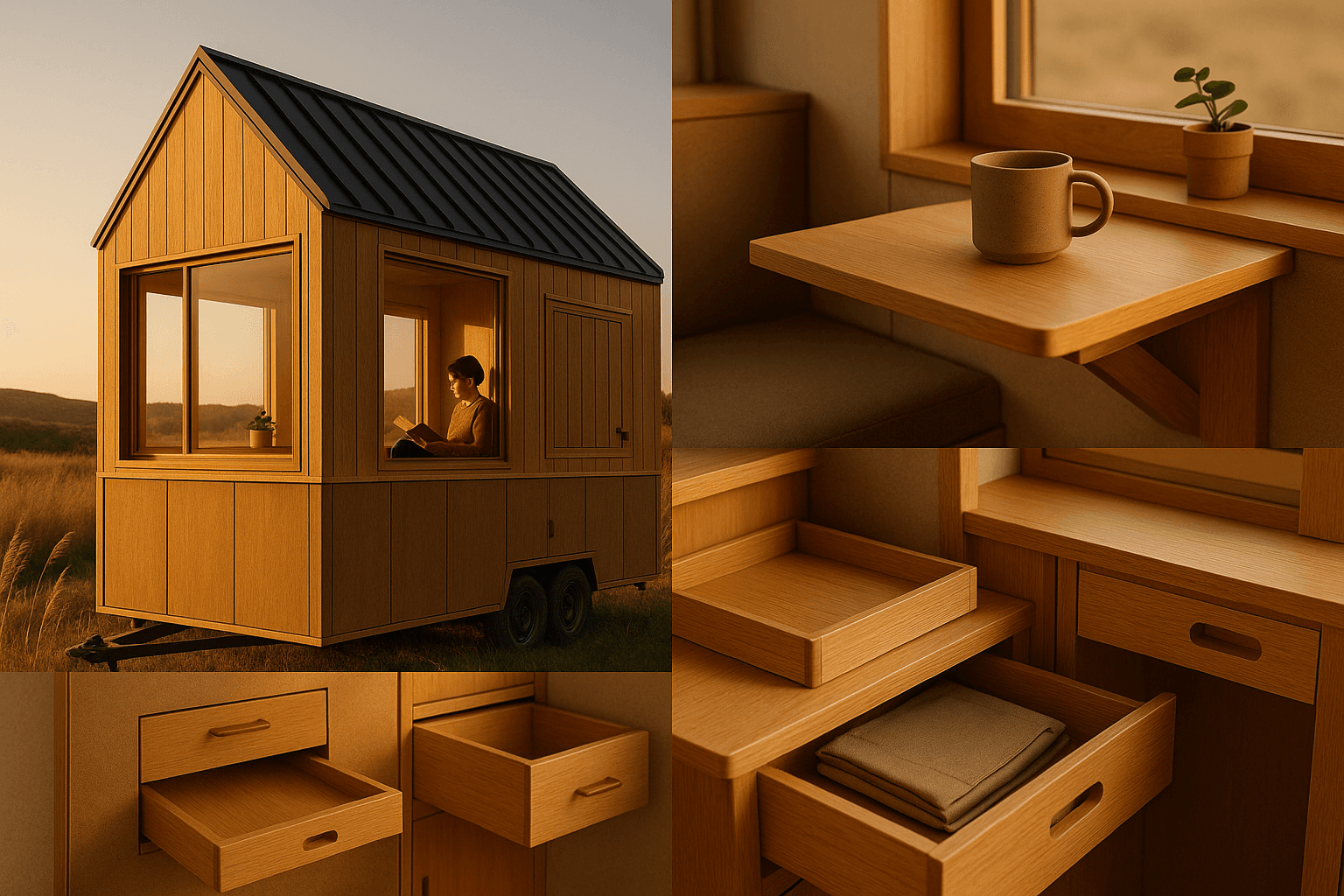
Calm luxury in a tiny house isn't an "empty room" aesthetic—it's a home that stays visually quiet because your routines are frictionless: there's closed storage that's easy to use, finishes that don't look tired after week two, lighting that flatters everything, and a built-in place for daily mess to land so it doesn't take over the counters.
What "calm luxury" means in tiny-house terms
In a tiny home, "calm luxury" is a design system with four traits:
- Visual quiet: fewer objects in sight (not fewer objects in life)
- Low-friction routines: storage is closed and fast to access
- Acoustic softness: the space feels quiet, not echoey
- Durability that still looks clean: materials handle humidity, fingerprints, and scuffs without constant upkeep
What it's not:
- A sterile, showroom minimalism
- A home where every surface smudges
- An all-hard, all-echo interior
- A "Pinterest clever" storage scheme you stop using because it's annoying
The 7 calm-luxury design choices that survive real life
1) Closed storage that's still one-step accessible
Prioritize closed storage (visual calm) that you can access in one step (real-life usability):
- Full-height pantry (even a slim one) for food + small appliances
- Toe-kick drawers for flat items (baking trays, pet bowls, linens)
- Lift-up bench storage that doesn't require clearing the bench first
- Bed drawers or platform compartments for bulky items
- Tall utility cabinet for vacuum/broom/cleaning (the calm-luxury "invisible" hero)
Why it works in a tiny home: Tiny houses don't have an attic, garage, or "junk room." When storage is weak, every horizontal surface becomes storage, and the calm look collapses fast.
What not to copy:
- All-open shelving as primary storage (it photographs styled, it lives messy)
- "Secret storage" that requires moving a basket, clearing a counter, and opening two things (you'll stop using it)
2) Textured neutrals that hide wear (not flat white everywhere)
Use neutrals that feel warm and expensive because they have texture:
- Warm whites, soft greige, sand, mushroom tones
- Rift/quarter-sawn oak or ash look (subtle grain hides dings)
- Limewash-look paint or lightly textured wall finishes
- Stone-look laminates or durable composite counters with soft pattern (hides crumbs and water spots better than pure solid tones)
Why it works in a tiny home: Tiny homes see more touch per square foot. Also, humidity swings (shower + cooking in one volume) can make delicate finishes look tired.
What not to copy:
- Stark white + glossy black contrast everywhere (shows dust, smudges, micro-scratches)
- Ultra-flat matte on high-touch areas (can "burnish" into shiny spots)
3) A real entry drop zone (the calm-luxury secret weapon)
Build a landing pad that absorbs daily chaos:
- Bench (even narrow)
- Shoe storage (drawer, cubby, or tilt-out)
- Hooks at two heights (adults + kids)
- Small tray/shelf for keys + mail
- Charging shelf for phones (so cords don't sprawl)
- Optional: "wet stuff" spot for rain jackets, dog leash, muddy boots
Why it works in a tiny home: Without a drop zone, clutter migrates to the kitchen counter—and once the counter is the drop zone, the whole home feels messy.
What not to copy:
- "No visible items anywhere" entry styling with nowhere for real items to go
- Coat storage that's too far from the door (you'll default to a chair/back of sofa)
4) Layered lighting with warm dimming (luxury's fastest shortcut)
Replace "one bright ceiling light" with layers:
- Ambient: soft, indirect ceiling/wall light
- Task: under-cabinet kitchen lighting, bathroom mirror light
- Accent: shelf lighting, wall washers, a warm reading sconce
- Night: toe-kick or low-level pathway light (tiny homes feel premium when nighttime is gentle)
Why it works in a tiny home: Lighting controls mood and function. Mansion minimalism is often shot in perfect daylight; you live in evenings, mornings, and winter.
What not to copy:
- "Hotel-only" lighting (beautiful at night, terrible for cooking/cleaning)
- Bare recessed cans creating glare on light walls
Tiny-specific spec:
- 2700K–3000K
- CRI 90+ (makes neutrals look rich, not gray)
- Multiple circuits + dimmers (at least: ambient vs kitchen task)
- Diffusers/sconces for glare control
5) Soft acoustics (luxury = quiet)
Tiny homes amplify sound. Calm luxury reads as quiet.
Add 3–5 small acoustic wins:
- Soft-close hinges and drawer slides
- Runner or rug in the main walkway
- Upholstered headboard or fabric wall panel near sleeping area
- Acoustic felt panel as a design feature (ceiling strip or wall section)
- Insulated plumbing chase (reduces water noise)
- Rubber isolation under washer/mini appliances (if included)
Why it works in a tiny home: Hard minimal interiors turn dishes, footsteps, rain-on-roof, and HVAC into constant "presence." In a small volume, you can't escape it.
What not to copy:
- All-hard surfaces with a metal roof and no mitigation
- Loud, rattly hardware (instantly de-luxes the space)
6) Durable, cleanable textiles that still look expensive
Choose fabrics that look elevated because they're structured and textural—and also washable:
- Performance fabric upholstery (tight weave)
- Washable slipcovers (planned, not apologetic)
- Wool-look rugs that are easy to vacuum
- Curtains with a bit of weight/texture (they soften sound and light)
Why it works in a tiny home: You're sitting, sleeping, eating, and working in one compact area. Textiles get used hard—and they're a big part of the calm palette.
What not to copy:
- White bouclé or delicate linen everywhere with no wash plan
- Shaggy textures that trap debris (especially with pets)
7) Integrated tech that reduces visual clutter (not more gadgets)
Use tech to remove visual noise:
- Charging drawer or hidden charging shelf
- Dedicated router/modem cabinet with ventilation
- Cord channels where devices actually live
- "Appliance garage" (coffee gear disappears when not in use)
- Switch placement that matches routines (bedside, entry, kitchen)
Why it works in a tiny home: Cables, chargers, and countertop devices are "micro-clutter" that breaks the calm-luxury spell—fast.
What not to copy:
- Minimalist photos with hidden cords… but no actual charging plan
- Overly complex mechanisms that fail or annoy (simple wins)
The mansion-minimalism traps (and the tiny-friendly swaps)
These are the calm-luxury moves that backfire in tiny homes—and what to do instead.
| Mansion minimalism move | Why it fails in tiny homes | Tiny-friendly swap (still calm luxury) |
|---|---|---|
| No upper cabinets | You lose vertical storage; counters become storage | Add uppers with calm fronts + simple pulls; include a slim pantry |
| All open shelving | Dust + visual noise; constant styling | One styled shelf max; everything else closed |
| Hidden-everything "clever" hardware | Breaks, sticks, adds friction | Straightforward doors/drawers + organizers |
| All-white soft textiles | Looks tired fast (kids/pets/mud) | Warm neutrals + washable covers + darker high-contact zones |
Quick calm-luxury audit (10 checks you can run on any plan)
Use this checklist on any tiny house design or listing:
- Where do shoes + coats go within 3 steps of the door?
- Is there a dedicated key/mail/charging drop zone?
- Do daily items live behind closed doors (without being annoying to access)?
- Is there a full-height pantry or equivalent food/appliance storage?
- Do high-touch finishes avoid ultra-flat matte and high-gloss smudge traps?
- Is there at least one soft acoustic element in each zone (sleep, work, lounge)?
- Are there 3 lighting layers (ambient/task/accent) with dimming?
- Is the bathroom designed for humidity reality (venting + cleanable surfaces)?
- Is there a place for the vacuum/broom/laundry basics?
- Is tech integrated (hidden charging, cord control), not added as clutter?
Design your calm luxury tiny house with AI
Ready to create your own calm-luxury concept? Use AI to generate buildable designs that prioritize both beauty and livability—then compare against real listings to find your perfect match.