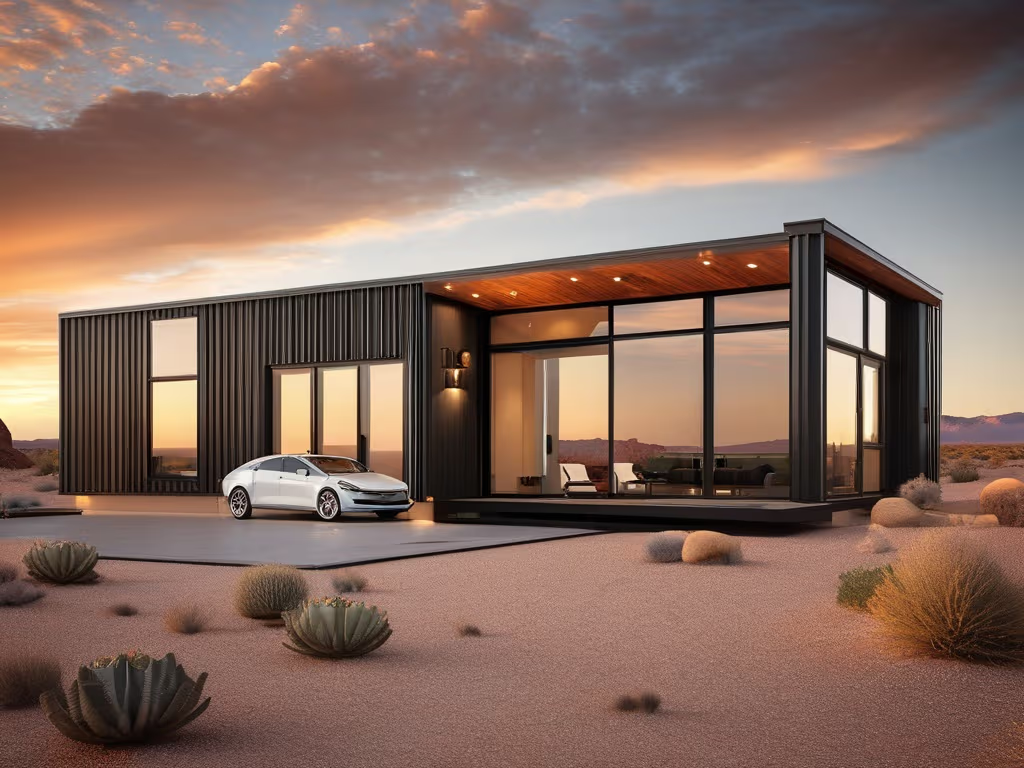
Which 2026 Minimalist Trends Actually Work in Tiny Homes (And Which Ones Quietly Fail)

Minimalist design in a tiny house isn't a vibe—it's survival. Those 2026 trends flooding your feed? They're staged for photos: empty counters, perfect light, no coats by the door, no coffee setup cluttering the workspace.
In real tiny living, those same trends quietly sabotage you through storage loss, condensation buildup, and clutter rebound—when removed storage forces daily essentials back onto every surface.
This is your trend audit: we're scoring the most viral 2026 modern-minimalist ideas against tiny-home reality, then showing tiny-first alternatives that keep the clean aesthetic while actually working for daily life.
How We Score Each Trend
A trend "works" in a tiny home when it stays functional after the honeymoon phase—when you're cooking daily, dealing with humidity, and navigating tight spaces with wet jackets and grocery bags.
Our scorecard (1-5 scale):
- Storage efficiency: usable volume + accessibility
- Moisture risk: condensation on glass/metal surfaces
- Cleaning effort: daily maintenance + deep-clean frequency
- Durability: scratch/impact resistance in high-traffic zones
- Build complexity: custom tolerances and hardware risks
Why tiny homes break trends faster:
- Higher surface-area-to-volume ratio = faster condensation
- Every linear foot of storage is precious—lose an upper cabinet, lose your pantry
- Small messes read as "the whole home is messy"
- Narrow circulation means constant bumps and touch points
The Trend Audit: What Breaks, What Holds
| 2026 Minimalist Trend | Storage | Moisture Risk | Cleaning | Durability | Build Complexity |
|---|---|---|---|---|---|
| Slab + handleless cabinets | 4 | 4 | 2 | 3 | 2 |
| Open shelving everywhere | 1 | 3 | 1 | 2 | 4 |
| Hidden kitchens / appliance walls | 3 | 3 | 3 | 3 | 2 |
| Floor-to-ceiling windows | 2 | 2 | 3 | 3 | 2 |
| Micro-courtyards | 2 | 2 | 3 | 3 | 2 |
| Seamless finishes | 4 | 3 | 2 | 2 | 2 |
Reading the scores: Anything with 1-2 in storage or cleaning needs a tiny-first redesign to avoid daily frustration.
Trend #1: Slab + Handleless Cabinets
The appeal: Clean planes, fewer visual breaks, "calm luxury" minimalism.
Where it fails:
- Fingerprint magnet: In tiny kitchens you touch everything constantly—every smudge amplifies
- Misalignment shows instantly: Small reveals look architectural in photos, but like defects when doors shift
- Hardware failures disrupt workflow: Sticky push-latches are tolerable in big kitchens, maddening in tiny galleys
Tiny-first fixes:
- Choose textured laminates over ultra-flat surfaces (hides fingerprints)
- Use integrated pulls on high-touch doors, save push-to-open for low-use zones
- Reduce door lines: fewer, larger fronts = fewer reveals to maintain
- Create one "workhorse" section with standard pulls near cooktop/sink
Works for: Adult-only homes, light cooking, foundation builds
Avoid if: Heavy cooking, kids who love touching everything, THOW without vibration-proof latches
Trend #2: Open Shelving Everywhere
The appeal: Visual lightness, styled objects, "intentional living."
Where it fails:
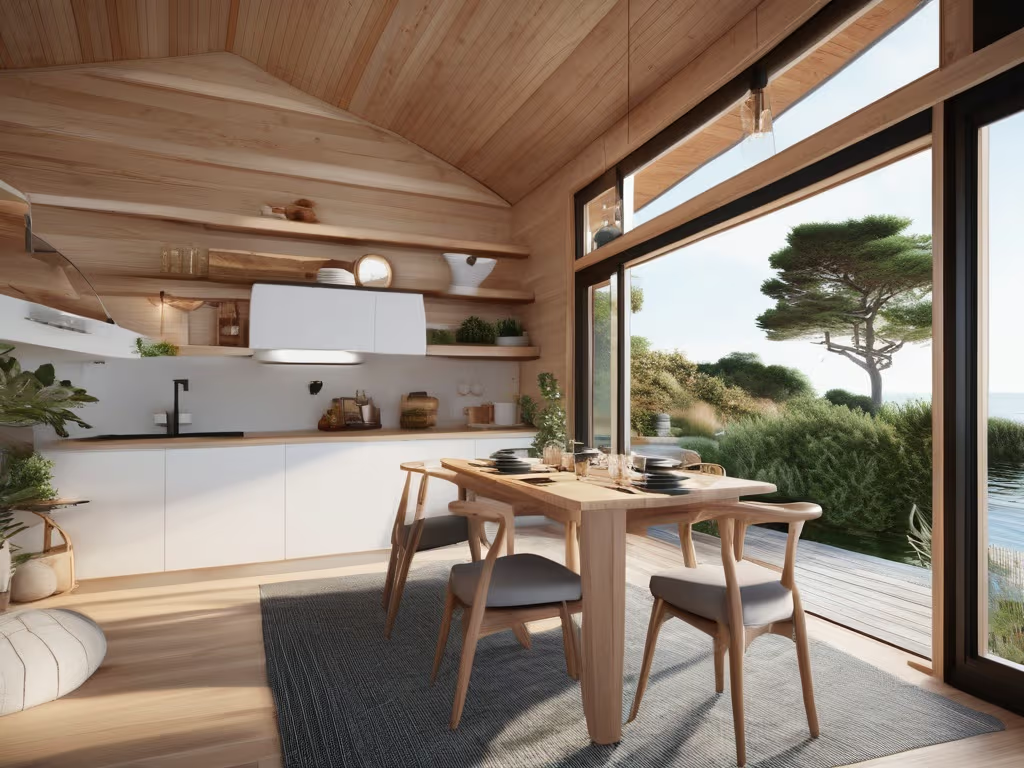
- Clutter rebound: Removing uppers converts pantry volume into countertop mess
- Grease accumulation: Open shelves become sticky fast in compact cooking zones
- Visual noise: In tiny spaces you see everything from everywhere—multiplying mess perception
The storage math: A typical upper cabinet run equals a full pantry's worth of volume. Remove it, and you're asking "where does the toaster live?"
Tiny-first fixes:
- One styled shelf only—commit to what lives there permanently
- Glass-front uppers for minimal look with dust protection
- Appliance garage for coffee gear, toaster, blender clutter
- If you must go open: add lips/rails, use lightweight items only, place away from cooktop
Works for: Single display zone, non-cooking walls
Avoid if: Daily cooking, kids, THOW without secure rails
Trend #3: Hidden Kitchens + Appliance Walls
The appeal: Living space stays lounge-like; kitchen "disappears."
Where it fails:
- Lost depth + clearance: Pocket doors steal precious millimeters in tight aisles
- Workflow friction: If you must "unveil" the kitchen for morning coffee, you'll stop closing it
- Heat buildup: Enclosing appliances without airflow planning traps humidity
Tiny-first fix: Hide only the mess zones
- Always accessible: sink, cooktop, primary prep surface
- Concealed: coffee bar, microwave, small appliances
- Use tambour doors or bifold panels (less clearance conflict)
Works for: Light cooking, hosting-focused homes
Avoid if: Multiple daily meals requiring constant panel opening
Trend #4: Floor-to-Ceiling Windows
The appeal: Nature connection, gallery interiors, Scandinavian calm.
Where it fails:
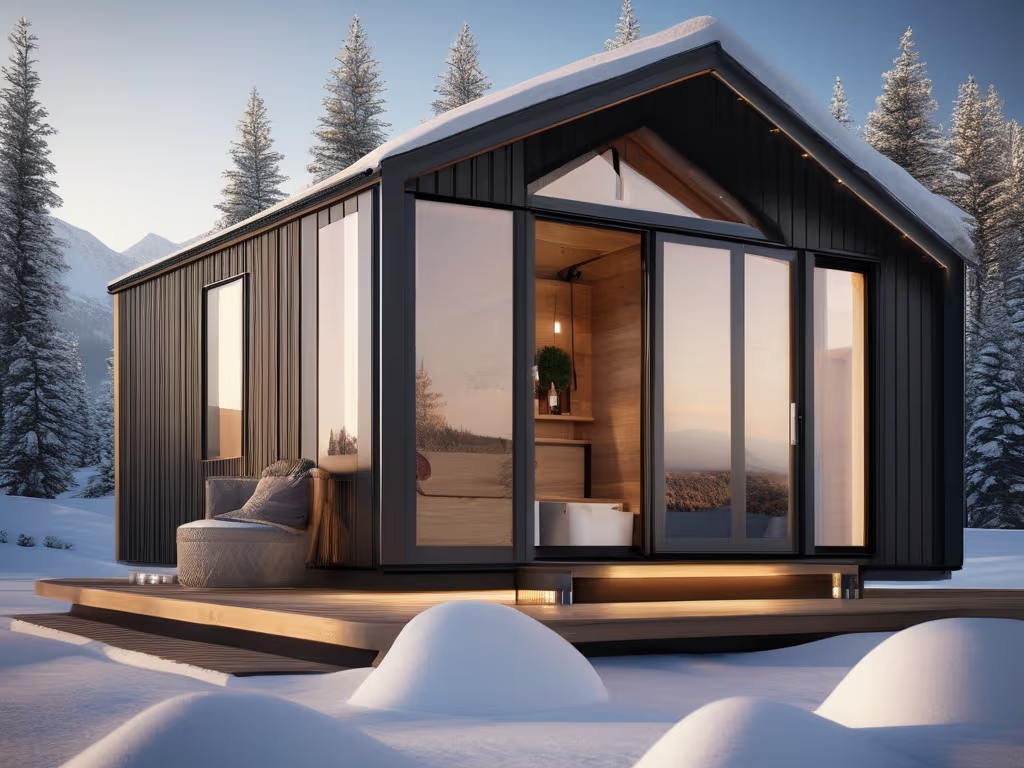
- Condensation risk: Big cold surfaces + small air volume = moisture shows up fast
- You lose a storage wall: Every big window deletes pantry cabinet potential
- Overheating + glare: Tiny spaces heat quickly; big glass creates greenhouse effect
Tiny-first fixes:
- High windows/clerestories keep walls usable while pulling in daylight
- Two smaller openings vs one huge pane for better wall utility
- Place larger glazing where you don't need cabinetry: dining nook, above benches
- Spec Low-E glazing and plan active ventilation (range hood + bath fan minimum)
Works for: Scenic sites where view replaces wall decor, mild climates
Avoid if: Giving up your only pantry wall or can't commit to ventilation planning
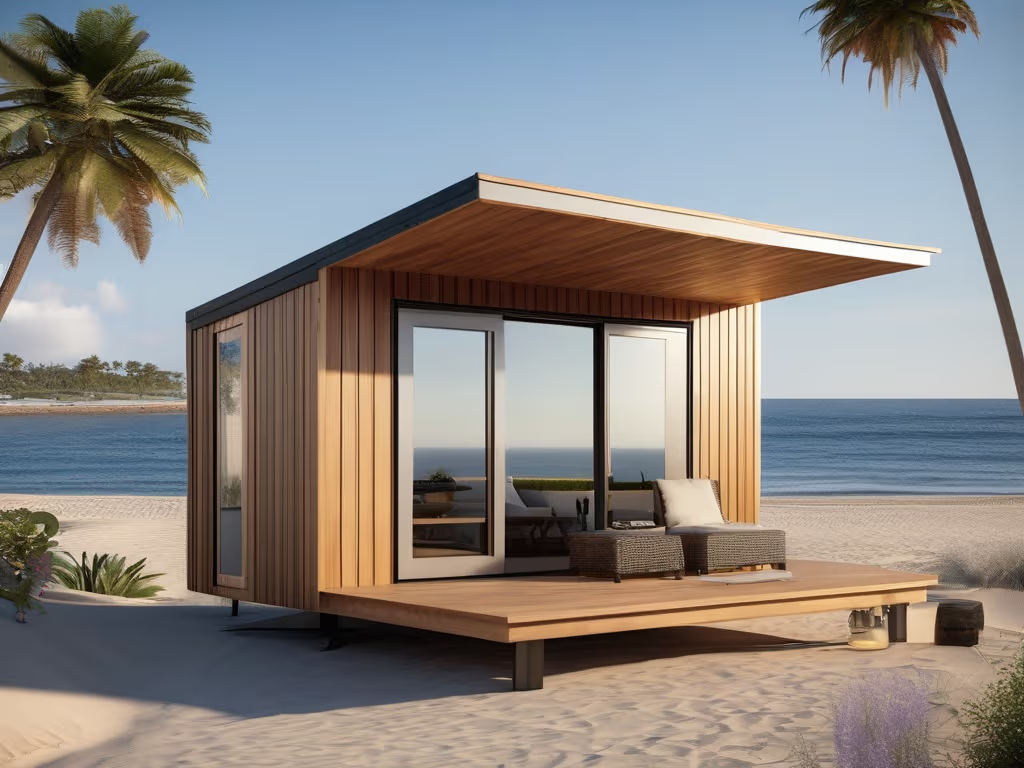
Trend #5: Micro-Courtyards + Indoor/Outdoor Living
The appeal: Architectural moments, private outdoor rooms, biophilic connection.
Where it fails:
- Moisture tracking: Wet shoes + tiny floors = constant cleanup
- Lost interior wall: Courtyards consume the exact wall needed for coats/pantry
- Bug + security issues: Multiple openings require careful detailing
Tiny-first alternative: The screened porch + airlock entry
A tiny home needs a transition zone more than an "architectural courtyard."
What works better:
- Screened porch (indoor/outdoor feeling, blocks bugs)
- Mud zone essentials: drainable flooring, multi-height hooks, shoe storage, closed pet supply bin
Works for: Nature-first sites, outdoor-heavy lifestyles
Avoid if: Concept eliminates your only entry storage wall
Trend #6: Seamless Finishes
The appeal: Monolithic calm, spa-like simplicity, fewer visual interruptions.
Where it fails:
- Movement cracking: THOW flex cracks microcement and continuous surfaces
- Hard-to-repair: Seamless looks are unforgiving; patches show
- Smudge visibility: Perfect surfaces make fingerprints and scuffs amplify
Tiny-first fixes:
- Use intentional shadow gaps rather than "no trim anywhere"
- Add break lines at logical transitions: corners, wet zones, material changes
- Choose repairable finishes in high-wear zones
- Reserve seamless looks for low-movement areas
Works for: Foundation builds, low-impact households
Avoid if: THOW + kids/pets + high traffic (without planned break lines)
Two Reality Checks That Reveal Livability
The Coffee Setup (Every Morning)
If you use grinder + kettle + mugs + beans daily, but your minimalist design requires opening panels and clearing counters each time, you'll abandon the system. Solution: Coffee appliance garage with outlets and a door you can close after the routine.
The Entry Pile (Real Minimalist Test)
Coats, shoes, dog leash, wet hats. If your design removed the storage wall near the door for aesthetic reasons, you'll get floor clutter and damp smells. Solution: An "ugly-life zone" that's designed, closed, and easy to reset.
Minimalist Moves That Actually Work in Tiny Homes
Consistently successful upgrades:
- Closed storage walls (one continuous run beats scattered cabinets)
- Warm minimal palettes (wood + soft whites hide wear better than pure white)
- Integrated lighting (under-cabinet, toe-kick lighting improves space without removing storage)
- Multifunction benches (dining + storage + bag drop zone)
- Vertical utility zones (tall cabinet for broom, vacuum, laundry prevents tool clutter)
- High windows + clerestories (light without sacrificing wall function)
Design It Right From Day One
Want to test these fixes before committing? Tinyhouses.to's AI designer lets you generate multiple variants of the same space—comparing open shelves vs glass-front storage, hidden kitchen vs appliance garage, giant windows vs clerestory lighting—all while enforcing storage targets and ventilation requirements.
You can prototype trend-compliant layouts that actually function, then browse real tiny homes in our marketplace that implement these same livable solutions.
Try your first 3 designs free at tinyhouses.to/design