2026 Design Trends That Actually Work in 250 Square Feet
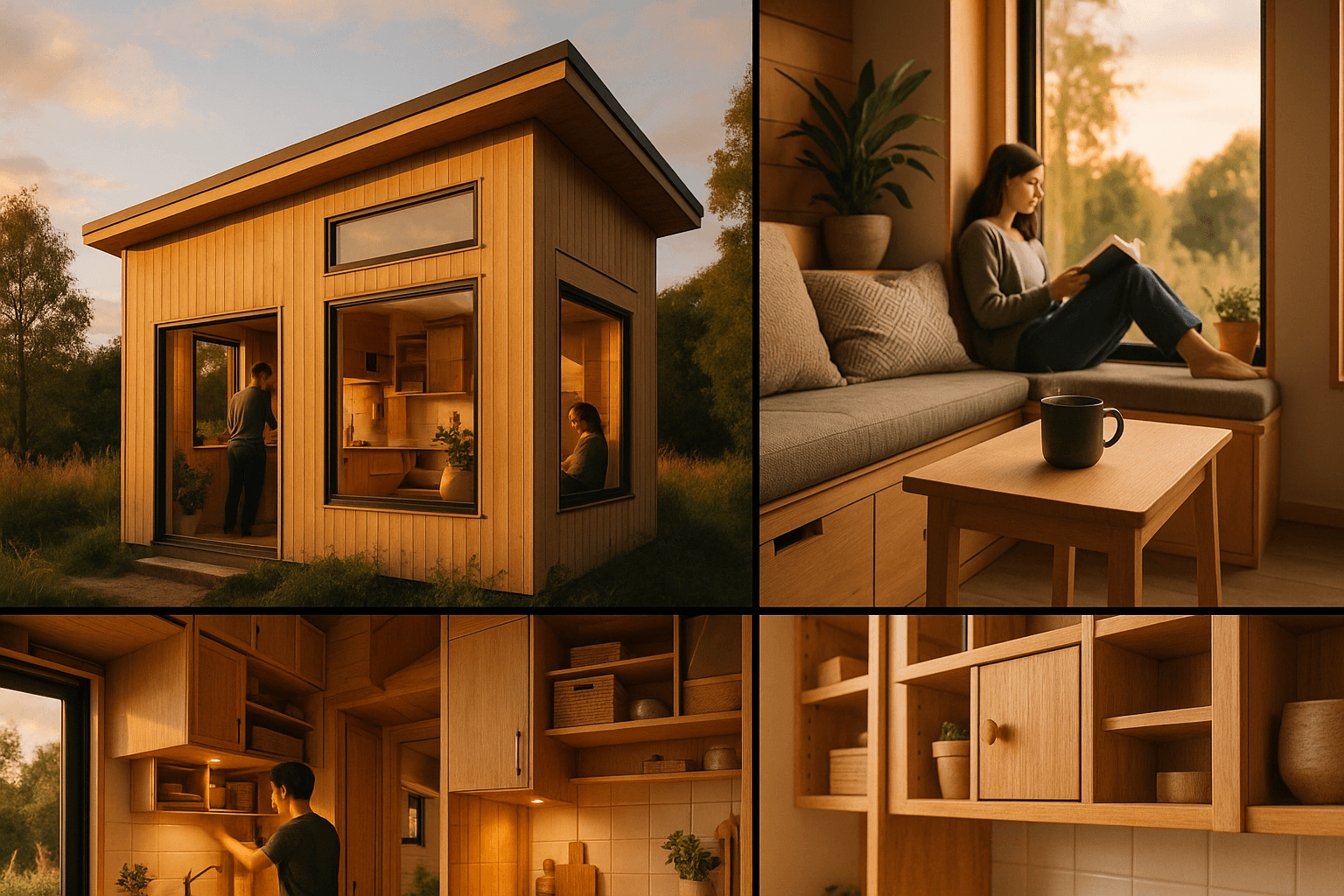
In 250 square feet, every design choice is a daily decision. The trends that look stunning in 2,000-square-foot homes can turn tiny spaces into maintenance nightmares or storage disasters.
We put 2026's biggest interior trends through a tiny-house stress test—scoring each on storage impact, cleaning demands, moisture safety, durability, and visual spaciousness. The winners keep the luxury vibe while respecting small-space physics.
The Tiny-House Reality Check
In a 12' x 20' footprint, design mistakes compound fast:
- Space tax: Every surface that steals 6 inches of storage or circulation hurts daily
- Moisture load: Cooking, showering, and breathing in tight quarters means humidity-sensitive materials fail faster
- Touch frequency: Surfaces get bumped more—edge durability matters
- Visual noise: Clutter and contrast make small spaces feel smaller
Our Scoring System (1-5 scale)
- Storage impact — Does it create or consume usable storage?
- Maintenance — Daily cleaning and long-term care requirements
- Moisture safety — Performance in humid conditions
- Durability — How it handles kids, pets, and constant use
- Visual spaciousness — Does it make 250 sq ft feel bigger?
The Winners: Trends That Pass the Test
Color-Drenching (5/5 tiny-house rating)
The trend: Same tone on walls, trim, and ceiling for quiet luxury
Why it works: Eliminates visual edges that make spaces feel chopped up. A warm neutral envelope makes 250 square feet read as one flowing space instead of cramped rooms.
Tiny-house specs:
- Use satin finish in high-touch areas (wipeable)
- Matte in low-traffic zones for softness
- Stick to 3 main finishes plus 2 accents maximum
Avoid: Ultra-dark matte in tight circulation—shows every fingerprint
Built-in Banquettes (4.5/5 rating)
The trend: Café-style seating with hotel-boutique styling
Why it works: Doubles as dining and storage. In tiny homes, furniture must earn its footprint through multiple functions.
Tiny-house specs:
- Build real storage underneath—lift-up seats or drawer fronts
- Choose wipeable upholstery and rounded table edges
- Size for actual circulation, not just photos
TinyHouses.to advantage: Our AI can test banquette dimensions against your actual circulation needs before you commit.
Large-Format Tile (4/5 rating)
The trend: Slab-look porcelain with minimal grout lines
Why it works: Fewer seams mean less maintenance and cleaner visual lines. In tiny bathrooms, large format makes the space feel more expensive and easier to clean.
Tiny-house specs:
- Use porcelain over natural stone (lighter, more consistent)
- Match grout color to tile for seamless look
- Plan for movement if you're on wheels
The Conditionals: Good If Done Right
Warm Minimalism 2.0 (4/5 rating)
The trend: Soft textures and fewer objects, but warmer than stark minimalism
Passes if: You enforce 80-90% closed storage rules. The aesthetic only works when life's chaos stays hidden.
Textured Wall Finishes (3/5 rating)
The trend: Limewash, plaster, microcement for depth without décor
Passes if: Used on one feature wall only. Keep kitchens and high-humidity areas smooth and wipeable.
Fluted Cabinetry (3/5 rating)
The trend: Ribbed wood details for boutique hotel texture
Passes if: Limited to one focal element. Grooves near cooktops and pet areas become grease and crumb traps.
The Failures: Skip These in Tiny Spaces
Open Shelving Everywhere (1/5 rating)
Looks editorial, lives terribly. In tiny kitchens, open shelves become dust collectors and visual chaos generators. Everything needs to look styled constantly.
Better swap: Glass-front uppers with hidden appliance garage
Matte Black Everything (2/5 rating)
Shows every water spot and fingerprint. In tiny bathrooms where everything is within arm's reach, you'll spend your life wiping surfaces.
Better swap: Black accents only, with water-spot-hiding finishes in wet areas
Unlacquered Brass Everywhere (2/5 rating)
Patina can look perpetually dirty up close. Save living finishes for one or two special pieces.
Smart Swaps That Keep the 2026 Vibe
- Open shelves → Glass-front uppers — Styled look, protected contents
- Heavy stone → Porcelain slab-look — Same luxury, better performance
- Texture everywhere → One feature wall — Impact without maintenance overload
- Matte black wet areas → Selective black accents — Graphic look, practical function
Design for Your Real Life
With Kids or Pets
- Mid-tone floors that hide scuffs
- Rounded edges in tight circulation
- Wipeable surfaces at kid/pet height
- Closed storage for toys and supplies
In Humid Climates
- Moisture-safe bathroom materials
- Proper ventilation planning
- Sealed finishes in wet zones
On Wheels
- Lightweight materials
- Flexible installations that won't crack
- Secure hardware that won't rattle loose
Get the Look with TinyHouses.to AI
Our design generator lets you test trends before committing. Try these prompts:
"Color-drenched tiny house with warm neutrals, maximize storage, wipeable surfaces where needed"
"2026 calm luxury aesthetic but tiny-house practical — closed storage priority, moisture-safe bathroom"
"Same trend, two versions: Instagram-worthy vs daily livable"
The AI enforces small-space constraints while keeping the aesthetic you want. Then explore rentals and listings that match your vision.
The Bottom Line
2026's best trends work in tiny homes when they respect small-space physics. Color-drenching expands space. Built-ins multiply function. Quality materials in the right places create luxury without daily hassle.
Skip trends that steal storage or demand constant maintenance. Your 250 square feet should feel calm and spacious—not like a styling project you never finish.
Ready to design? Use TinyHouses.to to generate layouts that look like 2026 but live like forever.