The 14-Day Tiny Living Reality Test That Prevents TikTok Regret
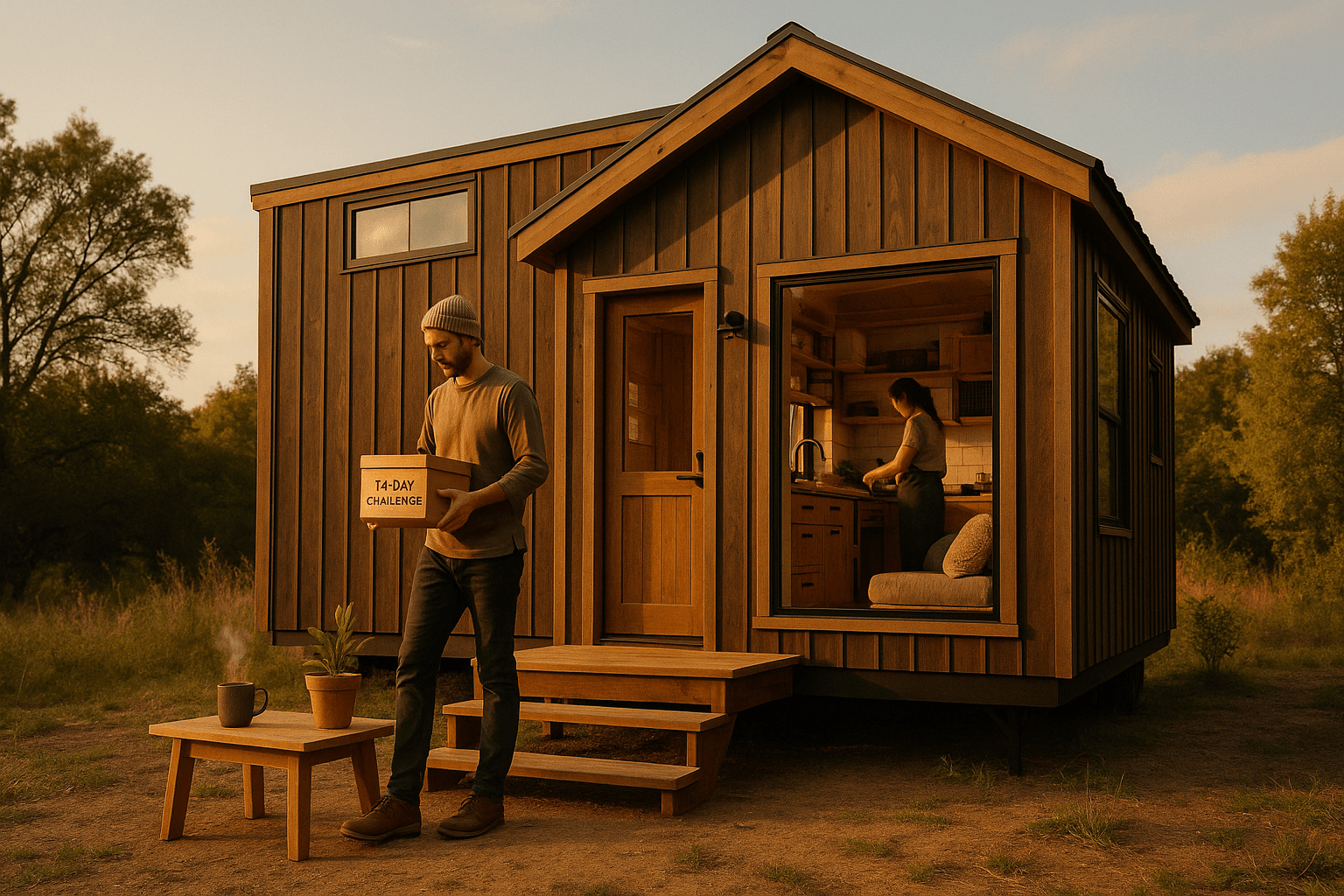
TikTok makes tiny living look dreamy. Reality? It's a constraint system that either fits your life or slowly destroys it.
Before you downsize your world based on a 60-second video, run this 14-day simulation. You'll discover the real friction points—privacy battles, storage wars, routine overload—that cause regret. Then use those results to design a tiny home that actually works.
Tiny living isn't aesthetic. It's behavioral math.
Most tiny homes land between 100–400 square feet. The magic isn't the number—it's how your daily life changes when:
- Storage volume becomes your ceiling: every hobby item competes with walking space
- Functions overlap: kitchen, office, and bedroom often share one zone
- Privacy requires negotiation: "separate rooms" might be a curtain
- Routines intensify: you reset spaces constantly because there's no buffer
This test reveals whether those changes energize you or drain you. Because regret isn't a failure—it's a mismatch you could have predicted.
What the test actually measures (the real deal-breakers)
You're not decluttering for Instagram. You're simulating the behavioral shifts that make or break tiny living:
- Privacy + noise sensitivity (especially if you work from home)
- Routine tolerance (daily dishes, counter resets, laundry planning)
- Work viability (calls, focus time, ergonomics in tight spaces)
- Cooking reality (prep space, cleanup burden, pantry needs)
- Gear volume (tools, sports equipment, hobby supplies)
- Household flow (different schedules, clutter styles)
Your outcome isn't "tiny yes or no." It's data for designing the right tiny layout—quiet-first, cook-first, or gear-first.
The 14-Day Protocol
Day 0: Capture your baseline (30 minutes)
1) List your weekly-access items
Anything you touch at least once per week: laptop, gym gear, cooking tools, hobby supplies.
2) Identify your top 5 clutter sources
Usually: mail, laundry piles, shoes, kitchen overflow, project materials.
3) Choose your test mode
- Solo: you live alone
- Shared: partner, roommate, or kids (where friction shows up fastest)
Keep this list—it becomes input for your tiny home design later.
The 7 Non-Negotiable Constraints
Do these for all 14 days. No cheating.
1) Storage Cap (the core simulation)
Pick your limit:
- Option A: 8 bins/boxes + one closet section (2 feet wide)
- Option B: 6 bins + one drawer stack + one hanging rail
Everything you use must fit inside this cap. Anything else goes to an "out-of-house" zone (garage, car, locked closet)—accessible only once per week.
2) Counter Rule (no buffer surfaces)
Every night: counters must return to move-in ready. You get one cutting board-sized area for active tasks.
3) Laundry Cadence
Choose one:
- One laundry day per week only
- No in-home laundry (treat as off-site errand)
4) Tiny Kitchen Mode
For at least 5 meals: cook with 1 cutting board, 1 pan, 1 pot. No spreading ingredients. Wash dishes immediately.
5) Quiet Hours (shared households)
Set 2 daily quiet blocks. Define shared zone priority. Add one conflict scenario on purpose: overlapping calls and cooking, bedtime and gaming.
6) Utility Budget Tokens
Daily tokens (10 each):
- Water: Shower (4), dishwasher cycle (4), hand-wash dishes (2), laundry (6)
- Power: Laptop block (2), cooking session (2), climate boost (4)
When you run out, wait until tomorrow.
7) Hosting Reality
Once in 14 days: invite 1-2 people for a meal. Track stress points, flow, cleanup burden.
Daily Check-in (5 minutes)
Each night, log:
- Top friction event (what made life harder?)
- One "surprisingly fine" moment
- What you avoided because the setup felt annoying
- Minutes spent resetting space
- Conflict flag (if shared space)
These notes become design requirements.
The Regret Predictor Scorecard
After 14 days, rate each category 1-5:
- 1 = constant stress
- 3 = workable with changes
- 5 = effortless
Privacy & Noise Tolerance
Red flag: Score ≤2 and you work from home 3+ days/week
Routine Load Tolerance
Red flag: Score ≤2 and resets take 20+ minutes daily
Work/Study Viability
Red flag: Score ≤2 and you work from home regularly
Cooking Compatibility
Red flag: Score ≤2 but you cook 5+ meals weekly
Hobbies/Gear Volume
Red flag: Score ≤2 and hobby is identity-level important
Sleep Quality
Red flag: Score ≤2 and partner schedules differ
Household Sync
Red flag: Score ≤2 means avoid open-plan layouts
Interpret Your Results
Tiny-Ready: Most scores 4-5, no red flags
→ Use TinyHouses AI to generate your ideal spec
Tiny-Ready (with constraints): Few 2s/3s but you know why
→ Generate 2-3 targeted layouts, then rent to test
Tiny-Seasonal: Love the simplicity, but only sometimes
→ Perfect for weekend retreats, travel living, nature stays
Not Tiny (yet): Multiple low scores
→ Consider small homes, ADUs, or downsized apartments instead
Turn Scores Into Layouts
Most tiny home regret comes from choosing aesthetics over requirements.
Translate your friction points:
- Low Privacy score → doorable office nook, separated bedroom, acoustic strategy
- Low Routine tolerance → fewer conversions, more closed storage, bigger sink
- Low Cooking score → pantry wall, prep extension, full-size fridge priority
- Low Gear score → exterior locker, mudroom bench, "dirty gear" zone
- Low Sleep score → main-floor bed option, blackout strategy, noise buffer
With TinyHouses AI, convert your test data into layouts you can actually live in—quiet-first, cook-first, or gear-first designs based on your real needs, not Instagram dreams.
Validate With a Real Stay
Your 14-day simulation gives strong signals, but nothing beats a real tiny home experience.
Smart trial plan:
- Rent a tiny home that matches your generated layout
- Stay a weekend plus a workweek (or full 2 weeks)
- Re-run the scorecard
- Confirm your biggest risk items
With TinyHouses, design your layout profile, rent a similar unit from our global marketplace to validate, then buy when the data supports the decision.
FAQ
How small is "tiny" really?
Most sit around 100-400 sq ft, but definitions vary. Focus on storage and separation needs rather than square footage.
What if I feel claustrophobic during the test?
Valuable data. Prioritize higher ceilings, more windows, clearer zones, and closed storage to reduce visual clutter.
I work from home. Can tiny living work?
Often, but it's layout-dependent. Low privacy/work scores mean you need a doorable office nook or separated work zone.
Should my partner/kids also do the test?
Absolutely. Compare scores to identify friction points. TinyHouses AI can generate layouts that reduce predictable conflicts.
What if the test says "tiny-seasonal"?
Perfect outcome—you avoided an expensive mistake. Use TinyHouses to find rentals that match your ideal use case.
How do I turn results into an actual floor plan?
Use your storage count, friction notes, and lowest scores as inputs. TinyHouses AI generates multiple layout options so you're choosing from viable designs, not guessing.
Ready to design smarter? Use your 14-day test results with TinyHouses AI to generate layouts that match your real life—then rent similar homes to validate before you buy.