10 Land Dealbreakers That Kill Tiny House Homesteads (Check These Before You Buy)
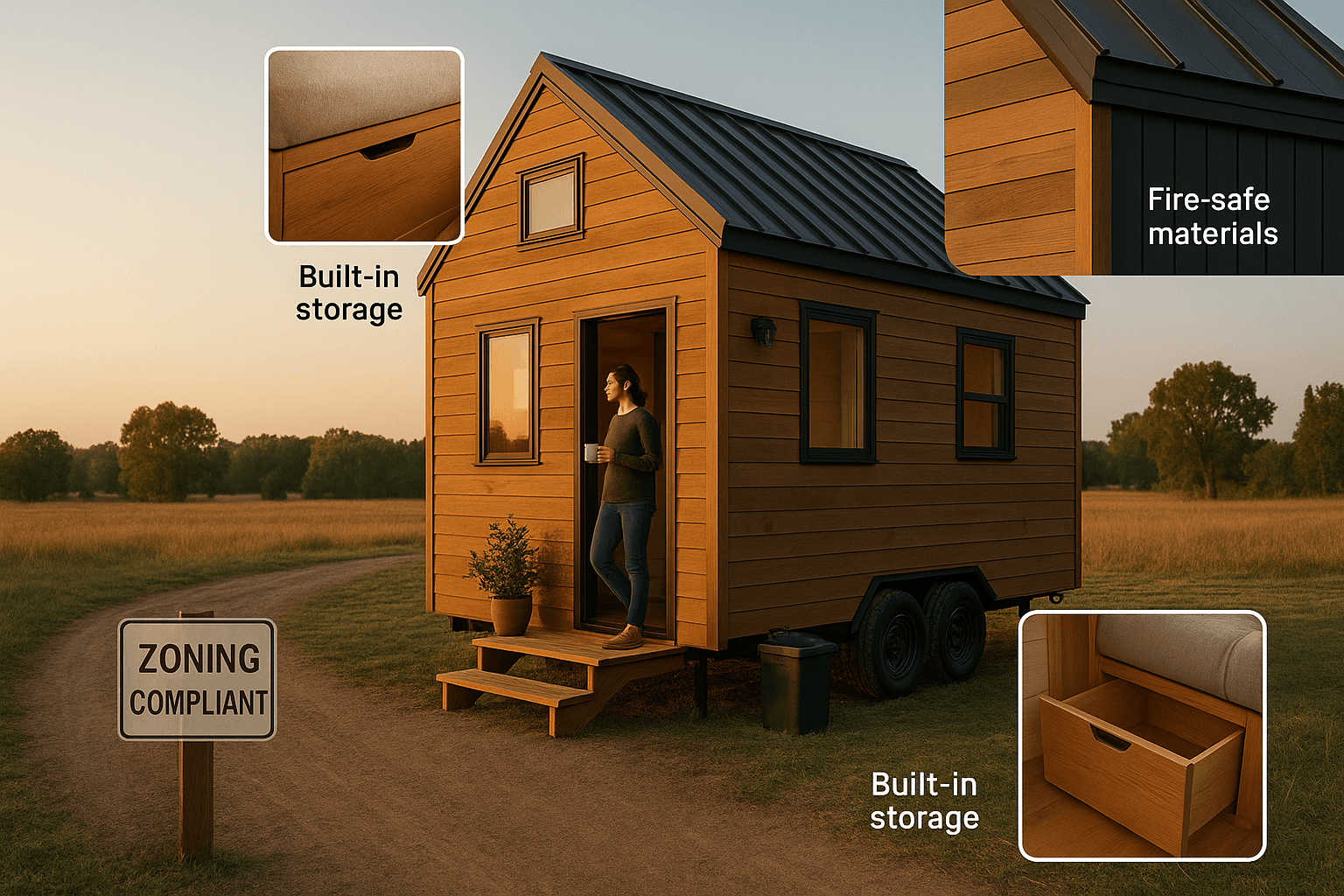
Most tiny house homestead dreams don't crash because the house is too small. They crash because the land can't legally support full-time living—no legal access, no approved wastewater, no address, or zoning that treats your tiny house as a temporary RV.
Below are the 10 land dealbreakers to verify before you buy—plus the exact questions to ask your county so you don't get red-tagged after you've invested.
Screen fast before you fall in love
Before you tour that perfect meadow, spend 30 minutes on these hard checks:
- Zoning district for the parcel (zoning map + text)
- Parcel access (public road frontage or recorded easement?)
- Overlay constraints (floodplain, wetlands, wildfire zones)
- Utilities reality (power line distance, cell coverage, water sources)
Red flag phrases in listings
- "No restrictions" (usually means "no HOA," not "no zoning rules")
- "Recreational lot" (may not be buildable for dwellings)
- "Off-grid ready" (may still require permitted power, septic, driveway)
- "Seasonal access" (mud/snow can block emergency access)
TinyHouses insight: Whether you're planning a tiny house on wheels (THOW) or foundation tiny home changes everything. These trigger completely different rules. Our AI design platform helps you test both scenarios before committing to land constraints.
The 10 dealbreakers that derail homestead plans
1. Legal access + buildable lot status
Why it kills projects: A visible driveway doesn't guarantee legal, recorded access—which can block permits, septic approval, and 911 addressing.
Verify this:
- Deed + title report (look for easements)
- Recorded easement documents (not handshake agreements)
- Whether the lot is legal/buildable under current rules
Ask the county:
- "Does this parcel have recorded legal access to a public road?"
- "Is the lot considered buildable for a dwelling?"
Good vs. walk away:
- ✅ Good: Public road frontage or recorded easement with clear terms
- ❌ Walk away: Access "by permission," unrecorded, or disputed
2. Zoning: dwelling allowed + tiny house classification
Why it kills projects: The most common failure is definition mismatch—your THOW gets classified as an RV (temporary use) when you need dwelling status for full-time living.
Verify this:
- Zoning definitions: "dwelling," "manufactured home," "RV," "temporary occupancy"
- Allowed uses in that zone
- ADU rules (if planning ADU-first)
Ask planning:
- "Is a single-family dwelling allowed on this parcel?"
- "Would a tiny house on wheels be treated as an RV or dwelling?"
- "Can RVs be occupied long-term on private land?"
Good vs. walk away:
- ✅ Good: Clear permission for dwelling + clear path for your tiny house type
- ❌ Walk away: "Maybe" answers or temporary/camping-only use
3. Minimum size + design standards
Why it kills projects: Even where dwellings are allowed, minimum heated square footage or foundation requirements can force you into a conventional house size.
Ask building department:
- "Is there a minimum heated square footage for dwellings?"
- "Are there minimum width/foundation requirements?"
- "Do tiny homes get reviewed under special standards?"
TinyHouses solution: If minimums push you from 240 sq ft to 400 sq ft, our AI designer re-balances your layout without losing the minimalist feel.
4. Septic feasibility
Why it kills projects: You can pass zoning and still be blocked if the site won't support approved wastewater. Composting toilets rarely eliminate the need for permitted wastewater if you'll have greywater.
Ask environmental health:
- "What's the process for soil evaluation/perc test here?"
- "Are there groundwater constraints that commonly block septic?"
- "With composting toilets, what are greywater requirements?"
Good vs. walk away:
- ✅ Good: Prior approval exists or professionals believe site is viable
- ❌ Walk away: Known high water table, steep slopes, repeated local failures
5. Water rights + well viability
Why it kills projects: "Water on land" isn't always "water you can legally use." Some areas restrict new wells or treat surface water rights separately.
Ask water/environmental department:
- "Are new wells allowed, and are there groundwater restrictions?"
- "Are there well spacing or setback requirements?"
- "Do I need separate rights for surface water use?"
Good vs. walk away:
- ✅ Good: Documented well or clear, legal path to drill
- ❌ Walk away: Moratoriums, known low-yield area, unclear water rights
6. 911 addressing + addressability
Why it kills projects: No address means no mail, slow emergency response, insurance problems, and utilities that won't connect.
Ask 911 addressing:
- "What's required to assign a 911 address to this parcel?"
- "Will you address a tiny home on wheels?"
Good vs. walk away:
- ✅ Good: Address tied to permit path you can meet
- ❌ Walk away: "We don't address RVs" when that's your plan
7. Fire access standards
Why it kills projects: Fire districts can deny permits if emergency apparatus can't reach your home—especially strict in wildfire areas.
Ask fire district:
- "What are driveway and turnaround requirements for residences?"
- "Is this in a wildland-urban interface (WUI) area?"
Get written standards for:
- Driveway width, grade, surface, clearance
- Turnarounds/hammerheads
- Water supply requirements
8. Utility interconnection rules
Why it kills projects: Even for off-grid plans, many areas require permitted electrical work. Utilities may refuse service without a permitted dwelling.
Ask utility + building:
- "Cost estimate to extend power to this parcel?"
- "Do you require a permitted dwelling before setting a meter?"
- "For off-grid, what electrical permits are required?"
TinyHouses insight: Utility constraints affect mechanical layout—battery walls, inverter space, ventilation. Our designs accommodate modern systems without sacrificing clean aesthetics.
9. Deed restrictions + covenants
Why it kills projects: Zoning says "yes" while private covenants say "no." Common restrictions ban "trailers," RVs, or set minimum home sizes.
Check title report for:
- CC&Rs (covenants, conditions & restrictions)
- HOA architectural review processes
- Anti-trailer or minimum size language
10. Environmental overlays
Why it kills projects: Floodplains, wetlands, steep slopes, and habitat areas can make parts of parcels unbuildable—or add expensive engineering.
Ask planning:
- "Is this parcel in floodplain, wetlands, or critical areas?"
- "What setbacks apply, and what's the realistic building envelope?"
Good vs. walk away:
- ✅ Good: Clear building envelope fits your home, septic, and access
- ❌ Walk away: "Buildable" area disappears after setbacks
The 4 offices that control your fate
Don't get trapped when one office says "sounds fine" but another has veto power:
- Planning/Zoning: Use permissions, dwelling definitions, RV rules
- Building Department: Code pathway, inspections, occupancy permits
- Environmental Health: Septic approval, greywater, perc tests
- Fire District: Driveway standards, turnarounds, water requirements
Your pre-purchase checklist
Land legality
- Recorded legal access confirmed
- Parcel is buildable for dwellings
- No covenant/HOA restrictions blocking tiny houses
Tiny house classification
- Zoning allows dwellings
- Your unit type is compatible (THOW or foundation)
- Minimum size/design standards confirmed
Water + waste
- Septic feasibility confirmed
- Water source legal and realistic
- Greywater rules understood
Access + safety
- Fire driveway standards achievable
- 911 address requirements clear
- Utility service estimate obtained
County call script
Use this exact script for specific, actionable answers:
"I'm looking at parcel [APN/ID] in zoning district [name]. I want to live on-site in a tiny home. Can you tell me:
- Is a single-family dwelling allowed on this parcel?
- How would you classify a tiny house on wheels—RV or dwelling?
- Is there a minimum dwelling size requirement?
- What's required for septic approval?
- What's required for a 911 address?
- Where can I find fire driveway standards?"
Then ask: "Can you email me links to relevant codes or confirm in writing?"
The 3 most common heartbreakers
If you only verify three things:
- Legal access + fire compliance (emergency services must reach you)
- Septic feasibility (often the real gatekeeper)
- Dwelling vs. RV classification (determines everything else)
At TinyHouses, we recommend matching the house to the land's rules—not fighting the system. Design around constraints for a peaceful homestead, not constant code battles.
Ready to design around real constraints? Our AI platform helps you create tiny house plans that work with your land's access, septic, and utility realities. Start designing at tinyhouses.to/design—your first concepts are free.