Beyond White Walls: Why 'Calm Luxury' Is the New Minimalism for Tiny Houses
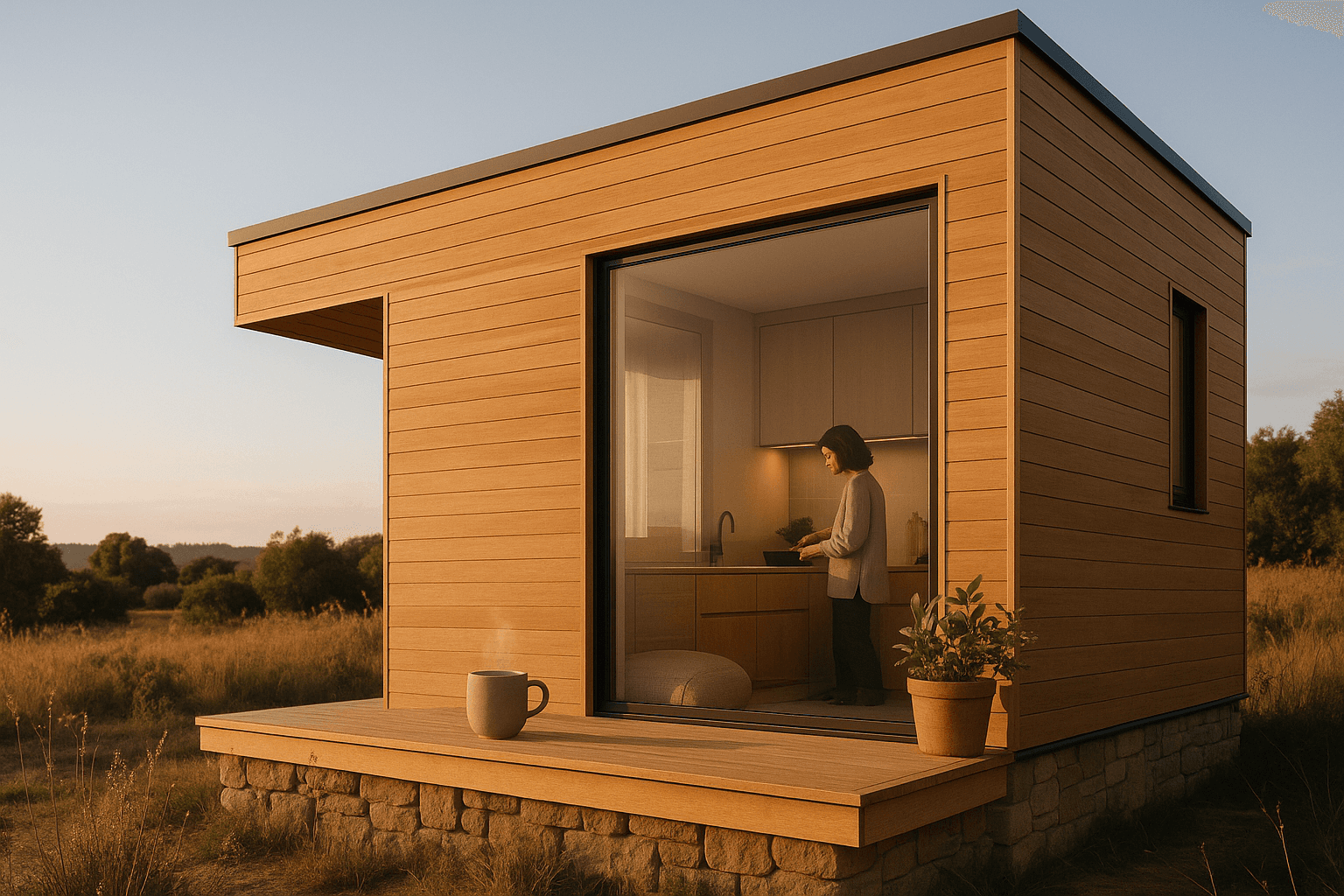
In a 200–400 sq ft tiny house, "calm luxury" isn't a look—it's a livable system: fewer things in view, 70–80% closed storage, and "soft tech" (lighting, acoustics, air comfort) that makes daily life feel quiet and premium—even with kids, pets, cooking, and screens.
What "Calm Luxury" Actually Means in a Tiny House
Calm luxury is minimalism that's warm, tactile, and forgiving—not sterile, not precious.
In tiny living, calm doesn't come from owning less in theory. It comes from designing so real life has somewhere to go:
- Calm ≠ empty: in a small footprint, an "empty" room still feels stressful if your gear has no home.
- Low visual noise: fewer materials, fewer seams, fewer small objects in sight.
- Fast-reset zones: when clutter is always in your field of view, you need storage that's one step away, not "eventually I'll organize it."
Our AI designer starts with your reality (kids/pets/WFH/cooking habits) and generates a layout that supports calm luxury—then you can browse matching rentals or homes to buy that already fit the spec.
The Calm‑Luxury Formula: Sightlines + Storage + Soft Tech
If you only copy a Pinterest palette, you'll get the vibe—until the first backpack, dog leash, or air fryer hits the counter. This formula makes calm luxury work.
Sightlines: Make It Feel Bigger Without Adding Stuff
In small spaces, your eye is always scanning the whole room. The goal is to reduce what competes for attention.
Tiny-house sightline rules:
- Keep clear paths and long views: fewer interruptions = less "busy."
- Use fewer, larger visual blocks (example: one full-height cabinet wall) instead of many small shelves.
- Stick to a consistent material palette so the room reads as one calm composition.
Practical moves that read instantly "calm luxury":
- A single "anchor" element: one warm wood wall, one stone-look counter, one linen curtain wall—not five competing features.
- Hide categories of stuff behind one continuous cabinet run rather than scattering storage everywhere.
In our AI design tool, you can request a concept like "monolithic storage wall + clean sightline to window" and generate layouts that prioritize visual quiet.
Storage: The Real Design Project
A calm tiny home is mostly storage engineering.
Target storage mix (tiny-house proven):
- 70–80% closed storage (doors/drawers)
- 20–30% open storage (one styled shelf, one rail, one intentional display)
That balance prevents two common failures:
- "Minimalist showroom" (you're afraid to live there)
- "Tiny-house chaos" (everything lives on the counter)
The "One-Step Put-Away" Rule
If putting something away takes 3 steps, it will live out.
Design one-step storage at the three daily pressure points:
- Entry: hooks + shoe drawer + bag cubby + key/charging tray
- Kitchen: appliance garage / deep drawer + trash/recycle + pantry pull-outs
- Bed/loft: laundry hamper + night drawer + charging drawer
Hidden-But-Accessible Storage That Stays Functional
- Toe-kick drawers under base cabinets (shoes, pet food, baking trays)
- Bench storage with a lift-up lid + dividers (toys, throws, board games)
- Full-height "cleaning closet" (broom, mop, vacuum, detergents) so cleaning tools don't become decor
- Charging drawer (router, cords, power strips) so tech disappears
Tell our AI the categories you need (e.g., "two kids + dog + sports gear + cooking daily"), and it will propose storage zones by frequency of use—then you can filter marketplace listings to match.
Soft Tech: Luxury You Feel
In tiny homes, "premium" is often invisible: the lighting is flattering, the room is quiet, the air stays fresh.
Lighting (Highest Luxury-Per-Dollar)
Aim for layered lighting so the home can shift from bright-and-functional to calm-and-cocooned.
A tiny-house lighting stack:
- Ambient: ceiling or wall-wash for general glow
- Task: under-cabinet lighting, reading lights, desk light
- Accent/night: toe-kick strip, stair/loft step lights
Calm-lux tip: warm light at night (often around 2700K) makes even simple finishes feel expensive.
Acoustics (Tiny Spaces Amplify Noise)
Hard surfaces + small volume = echo and clatter. Calm luxury needs softness.
Add a few square feet of absorption:
- Rug runner (washable is fine)
- Upholstered bench seat
- Linen curtains / roman shades
- Cork panel or acoustic slats in one zone (even a small section helps)
Air + Thermal Comfort
Tiny homes change temperature fast and hold odors.
Prioritize:
- Quiet ventilation (bath fan; proper kitchen ventilation if you cook)
- Simple zoning between sleeping loft and main space
- A thoughtful insulation + sealing strategy so the space feels stable, not drafty
In AI design, ask for "layered warm lighting + quiet ventilation + acoustic softening plan," and use the output as a build spec or as a checklist when comparing rentals.
Materials That Look Expensive and Live Well
Calm luxury is about matte, warm, tactile finishes that don't punish you for living.
A Calm-Lux Material Palette That Ages Well
Choose materials that patina gracefully and are easy to maintain:
- Wood veneer / quality plywood with a clear matte finish
- Why it matters: warmth without visual noise; can be refinished.
- Quartz or compact laminate counters
- Why it matters: consistent look, low maintenance, fewer stains.
- Textured upholstery + washable slipcovers
- Why it matters: pets/kids happen; texture hides wear better than flat weaves.
- Matte hardware + fewer seams
- Why it matters: less sparkle, less fragmentation, more calm.
What to Avoid
These often look great in photos and awful in real life:
- High-gloss cabinet fronts (every fingerprint announces itself)
- Mirrored finishes (double the visual noise)
- High-contrast surfaces (crumbs + pet hair become the "design feature")
- Too many competing materials (busy, not calm)
Our AI can generate a "calm luxury palette" and keep it consistent across kitchen/entry/bath so the whole home feels intentional—not pieced together.
Layout Moves That Prevent Chaos
The best calm-lux tiny houses aren't empty. They're quietly organized.
The "Monolithic Storage Wall"
Build one continuous visual zone that hides:
- Kitchen + pantry
- Wardrobe
- Cleaning closet
- Utility cabinet (router/charging)
Why it matters: it consolidates "life stuff" into one clean line, keeping the rest of the tiny home visually open.
The Concealed Utility Core
Design one cabinet zone for the unglamorous essentials:
- Litter box (with ventilation)
- Trash/recycling
- Router/modem + cable management
- Mop/vac
- Laundry hamper
Dual-Height and Convertible Surfaces
In 200–400 sq ft, every extra chair/table reads as clutter.
Options that feel modern (not "camping"):
- Flip-down desk/dining ledge with hidden support
- Sliding table that tucks under a counter
- Built-in banquette + one lightweight chair instead of a full dining set
Keep Counters Clear When You Actually Cook
A calm kitchen is usually a drawer strategy.
Design for:
- One "daily cooking" drawer (knife, oils, salt, utensils)
- One "appliance garage" zone (coffee gear, blender, rice cooker)
- One "landing strip" (small tray) so the counter isn't the junk shelf
Describe how you cook ("meal prep 4 nights/week," "espresso daily," "air fryer often") and our AI can size drawer types and appliance zones so your calm-lux kitchen stays calm.
A Real-Life "Calm Reset" Routine
A calm tiny home isn't maintained by willpower. It's maintained by fast resets built into the layout.
The 60-Second Reset (Daily)
Goal: return to "visually quiet" without a full clean.
- Entry: hang bags/coats, shoes into drawer
- Kitchen: all items into the "daily cooking" drawer or appliance garage
- One surface: clear the table/desk completely
The 10-Minute Reset (Most Nights)
Goal: prevent mess from compounding.
- Quick floor sweep (tiny homes reward this)
- Laundry into hamper (not the chair)
- Pet zone refresh (food bin closed; leashes hung)
- One bin: toys/gear into bench storage
The Weekly Reset (30–45 Minutes)
Goal: keep storage working, not overflowing.
- Wipe cabinet fronts + handles (matte finishes look better when clean)
- Refill one "consumables" bin (paper goods, pet supplies)
- Add 5 items to a donation bin (tiny living stays calm through steady outflow)
Our AI plans can include "reset zones" (hooks, drawers, hampers, bins) placed where your routine actually happens—so calm is the default.
Design Calm Luxury Around Your Routines
Most design advice starts with images. Tiny living works better when you start with inputs and generate a system.
Step 1: Feed the AI Your Real Life
Answer these before you design:
- Household: solo/couple/family, kids' ages, pets + gear
- Daily patterns: WFH? cook often? outdoor hobbies? school drop-offs?
- Mess tolerance: "I need surfaces clear" vs "a little visual life is fine"
- Storage pain points: shoes, coats, toys, pantry, laundry, cords
- Comfort priorities: quiet, warm lighting, air freshness, stable temperature
Step 2: Ask for Outputs You Can Build or Shop By
A strong calm-lux tiny plan should output:
- A zoning map (entry drop zone, kitchen work zone, calm lounge zone, sleep zone)
- A storage ratio plan (hit 70–80% closed storage)
- A material palette (2–3 core finishes + 1 accent max)
- A soft-tech plan (lighting layers, acoustic elements, ventilation)
Step 3: Use the Spec to Compare Real Tiny Homes
Once you have a calm-lux spec, you can shop smarter:
- Does it have a full-height storage wall?
- Is there a concealed utility cabinet?
- Are materials matte/warm and easy-care?
- Is lighting layered (not one overhead glare light)?
Generate two versions in our AI—"Kid/Pet-proof Calm" and "Minimalist WFH Calm"—then browse listings worldwide that match, or rent a similar setup to test the lifestyle before buying.
Design your calm-luxury tiny home with AI. Generate layouts that balance visual quiet with real-life storage—then explore matching rentals and homes worldwide at tinyhouses.to/design.